

Key Takeaways
Buying wholesale used BMW parts can reduce repair costs, but the savings depend on accurate fitment, honest condition information, and dependable logistics.
- Confirm compatibility with the VIN, part number, model year, engine, and trim.
- Compare total installed cost rather than the advertised unit price alone.
- Ask how condition grades are defined and what testing has been completed.
- Clarify minimum order quantities, shipping terms, warranties, and returns before ordering.
- Use bulk purchasing selectively for high-value parts with predictable demand.
Understanding the wholesale used BMW parts market
The wholesale used BMW parts market serves repair shops, dismantlers, fleet operators, restorers, and other buyers who need more than one component or place recurring orders. Pricing is often shaped by quantity, condition, availability, and how quickly a seller needs to move inventory. A low price can be useful, but only when the part is correct and its condition is understood. The best buying decisions balance purchase cost with fitment, testing, shipping, and the likely cost of installation.
What wholesale pricing means for BMW components
Wholesale pricing generally means a lower per-unit price in exchange for a larger order, a recurring relationship, or acceptance of available inventory rather than a single specially sourced item. The exact threshold varies by supplier, and some sellers apply different terms to engines, body panels, electronics, or smaller components. Ask whether quoted prices include core charges, handling, freight, taxes, or other fees. A written quote makes it easier to compare offers on equal terms.
Used, OEM, genuine, and aftermarket parts compared
These labels describe different things and should not be treated as interchangeable. A used part has already been installed in a vehicle, while OEM usually refers to the original equipment design or supplier standard; “genuine” is commonly used for a branded original part, and aftermarket describes a part made outside the original supply chain. Ask for the actual manufacturer, identifying marks, part number, and condition rather than relying on a label alone. That detail matters especially when a visual match hides a different connector, mounting point, or software requirement.
Why businesses and repair shops buy in bulk
Bulk purchasing can make sense when a shop sees repeated demand for particular BMW platforms or keeps common replacement components on hand. It may reduce ordering time, consolidate freight, and help a business schedule repairs with fewer interruptions. It also creates exposure to slow-moving inventory, storage costs, and parts that turn out to be unsuitable. A practical buyer starts with demand history and available storage, then orders quantities that can be used within a reasonable period.
Common BMW models and parts available wholesale
Availability changes with regional vehicle populations, salvage activity, and supplier inventory. Buyers may encounter parts for older and newer BMW cars, SUVs, and performance variants, including engines, transmissions, suspension pieces, body panels, lighting, wheels, interior components, and electronic modules. Model badges alone are not enough to establish compatibility. The chassis code, production date, engine designation, options, and part number should all be recorded before a bulk order is approved.
Choosing the right BMW parts supplier
Supplier selection is less about finding the largest catalog and more about finding a seller whose information can be checked. Inventory depth, vehicle coverage, grading practices, and communication all affect the real cost of an order. A supplier that answers fitment questions clearly is usually easier to work with when an unusual part or shipment problem appears. Before committing to volume, test the process with a small, representative order if possible.
Evaluating inventory depth and vehicle coverage
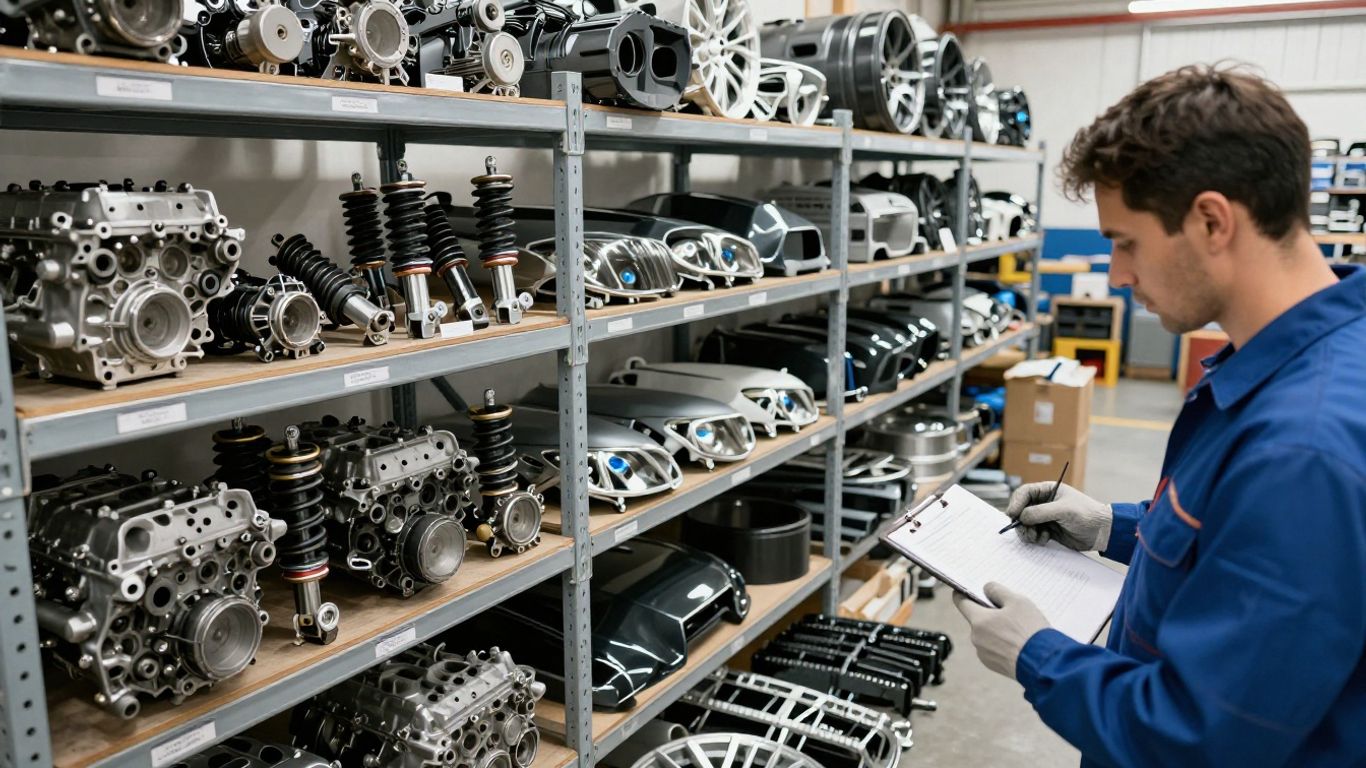
Look for inventory records that identify the donor vehicle, production details, mileage when relevant, part number, and visible condition. Broad model coverage is helpful only if the listings contain enough detail to distinguish nearby variants. Ask how often stock is updated and whether reserved or sold items are removed promptly. Consistent records reduce the risk of building a bulk list around parts that are no longer available.
Checking supplier reputation and business credentials
A supplier’s reputation should be assessed through several signals rather than one rating or testimonial. Check whether the business provides a physical contact route, clear invoices, traceable payment information, and written policies. Ask for references from trade customers when the order is substantial. Professional documentation does not guarantee perfect parts, but it gives the buyer a clearer path when a dispute needs to be resolved.
Comparing pricing, minimum order quantities, and fees
Price comparisons become meaningful only after quantity rules and extra charges are visible. One supplier may offer a lower unit price but require a larger minimum order, while another may charge more per item but provide better consolidation or more flexible quantities. Put each offer into the same worksheet so the differences are easy to see. Include freight, packing, core charges, taxes, currency conversion, and expected inspection labor.
Reviewing warranties, return policies, and support
Used-part warranties vary widely, and the fine print may distinguish mechanical failure from installation error, wear, or incompatibility. Confirm the coverage period, claim process, restocking charges, and who pays return freight. For electronic modules and drivetrain components, ask whether testing documentation is supplied and whether the buyer must preserve seals or labels. Good support is practical: it should help identify a problem quickly and explain what evidence is needed.
Verifying BMW part compatibility before ordering
Fitment is the central control point in any wholesale used BMW parts order. BMW vehicles can share appearances while differing in wiring, programming, dimensions, emissions equipment, or mounting hardware. A supplier’s catalog description is a starting point, not a substitute for vehicle-specific verification. Build compatibility checks into the purchasing workflow before quantities and payment are finalized.
Using the VIN to confirm vehicle specifications
The VIN can help confirm the vehicle’s production details, engine, body style, market, and factory equipment. Compare that information with the donor part’s vehicle record and any fitment notes supplied by the seller. For a repair shop, recording the VIN beside every requested component prevents a familiar model name from being mistaken for a complete match. If a seller cannot verify a critical specification, pause the order until the uncertainty is resolved.
Matching part numbers and supersessions
Part numbers provide a more precise reference than photographs or informal names. Check the number on the component, the supplier’s listing, and a reliable parts reference, then investigate whether the number has been superseded. A newer number may replace an older one without being physically identical in every detail, so confirm the application and required hardware. Keep records of both the original and replacement numbers for future orders and warranty conversations.
Accounting for model year, engine, and trim differences
Production-year changes can affect sensors, control units, brakes, exhaust components, interior fittings, and body panels. Engine family and transmission type can be just as important, while trim and option packages may change suspension, lighting, cooling, or electronics. Treat “fits BMW 3 Series” as incomplete information until the relevant sub-variant is identified. This extra step is usually faster than correcting a pallet of mismatched parts.
Identifying interchangeable parts across BMW platforms
Some components may cross between BMW platforms, but interchangeability should be demonstrated rather than assumed. Compare dimensions, mounting points, connectors, software requirements, load ratings, and associated hardware. A part that bolts into place may still require coding or may behave differently with another control system. When interchange is confirmed, document the source vehicles and limitations so the information remains useful to the next technician or buyer.
Inspecting the quality of used BMW parts
Condition assessment should be specific enough to support a purchasing decision. “Used” says little about mileage, storage, previous damage, testing, or remaining service life. Ask for photographs of identification marks and critical surfaces, along with test results where practical. Condition evidence matters because a cheap part with unknown history can create a second repair rather than a saving.
Grading systems and what condition labels really mean
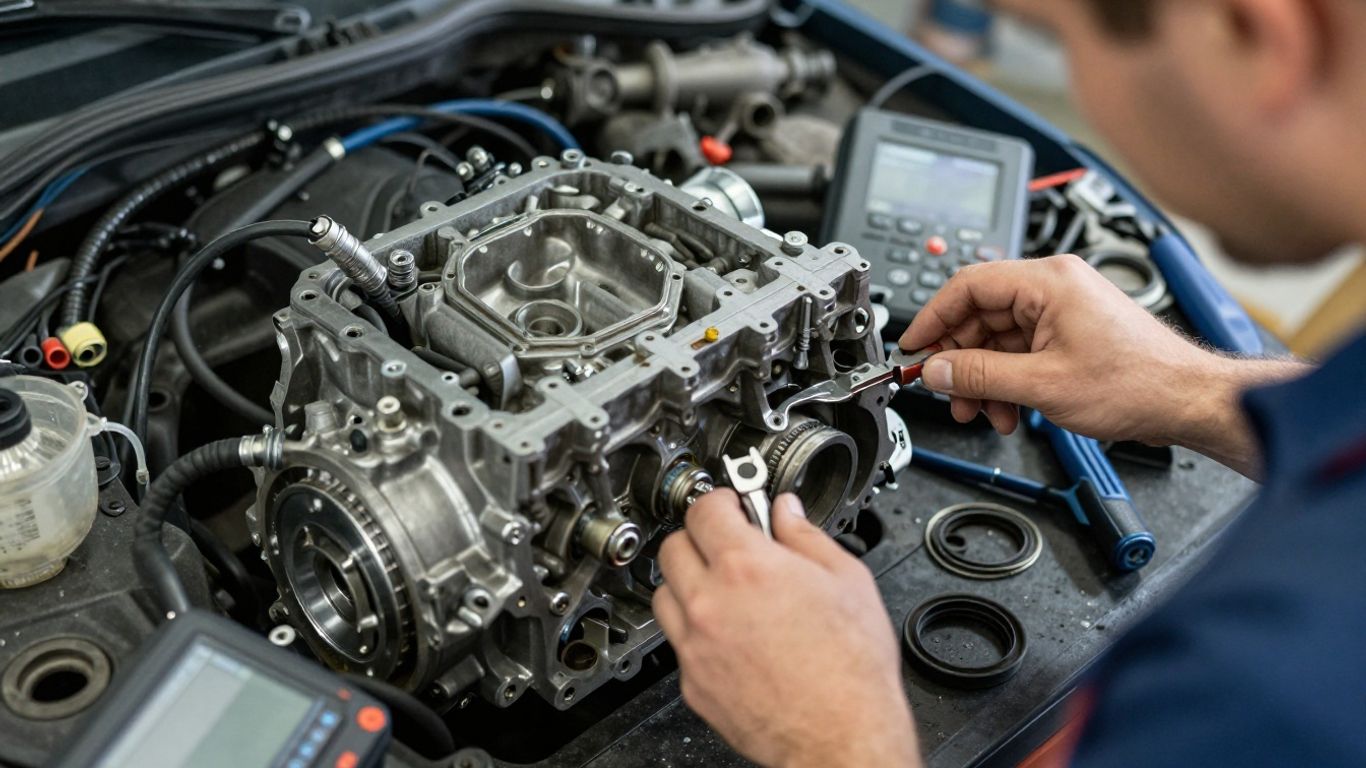
Condition grades are not universal, so a grade from one seller cannot automatically be compared with a grade from another. Ask for the written definition, including acceptable cosmetic damage, mileage ranges, missing hardware, and test status. For body parts, clarify dents, paint condition, and corrosion; for mechanical parts, ask about run testing and fluid contamination. A useful grade describes limitations as well as strengths.
Signs of wear, corrosion, accident damage, or tampering
Inspect mounting tabs, seams, connectors, threaded holes, seals, and surfaces that are hidden after installation. Uneven panel gaps, fresh paint over damage, bent brackets, cracked plastic, corrosion at electrical contacts, or disturbed fasteners can reveal a difficult history. On engines and transmissions, look for leaks, impact marks, broken sensors, and contamination. Photos taken from several angles are helpful, but they should support—not replace—written disclosure.
Testing engines, transmissions, electronics, and safety components
Testing requirements depend on the part. Engines and transmissions may need documented run testing, compression information, fluid checks, or a clear mileage record, while electronics may require bench testing and confirmation that the module is not locked to another vehicle. Airbag and restraint components deserve especially careful handling and disclosure because damage may not be obvious. Agree in advance on what “tested” means and what documentation will accompany the shipment.
When refurbished or remanufactured parts are the better choice
A refurbished or remanufactured component may offer more predictable performance when the used supply has uncertain wear or when installation is especially labor-intensive. The label still needs clarification: ask what was replaced, what was measured, who performed the work, and what warranty applies. Compare that information with the cost and availability of a tested used part. The right choice depends on failure consequences, labor access, and the vehicle’s intended service life.
Managing wholesale orders and logistics
A successful order continues beyond the moment the payment clears. Multiple parts create more opportunities for labeling errors, missing hardware, packaging damage, and storage confusion. A shared order document gives purchasing staff, technicians, and receiving personnel the same reference point. It also creates a useful record if a claim or repeat order becomes necessary.
Creating an accurate bulk parts list
Start with one line per requested component and include the customer or repair order, VIN, part description, part number, quantity, condition requirement, and acceptable substitutions. Add notes about color, left or right position, mileage, connectors, and included hardware. Before sending the list, have someone who understands the repair review it for duplicates and omissions. Clear specifications are often more valuable than a long description.
Packaging and shipping requirements for oversized components
Engines, transmissions, doors, bumpers, glass, and wheels need packaging suited to their weight, shape, and vulnerable surfaces. Ask how fluids are drained, openings are capped, glass is protected, and heavy items are secured to a pallet. Confirm dimensions and freight access before the shipment leaves the supplier. A lower shipping quote is not useful if inadequate packaging turns a usable part into a damaged one.
Coordinating delivery, storage, and inventory tracking
Plan where the shipment will be received and how each item will be identified once it arrives. Photograph pallets before opening, match labels to the purchase order, and store components in a way that protects connectors, seals, painted surfaces, and delicate trim. Update inventory records with the supplier’s part number and the vehicle information that established fitment. This discipline makes future allocation and warranty work much easier.
Handling damaged, incorrect, or incomplete shipments
Inspect the delivery promptly and record visible damage with photographs, packaging details, and the carrier’s notation when required. Compare every carton and major component with the order before parts are installed or modified. Notify the supplier within the policy window and state the requested remedy clearly: replacement, missing hardware, return authorization, or credit. Fast, documented communication usually prevents a receiving problem from becoming a shop-floor delay.
Maximizing savings without increasing repair risk
Savings are meaningful only when the part performs its intended job and does not create avoidable labor. Wholesale purchasing can lower acquisition costs, yet it can also tie up cash in items that sit unused or fail to match a vehicle. The most reliable approach is selective: buy deeply where demand and quality are predictable, and stay cautious where inspection or programming is difficult. That balance protects both margin and customer trust.
Comparing total cost instead of unit price alone
Calculate the landed cost by adding the part price, freight, inspection time, storage, core charges, taxes, and likely return expense. Then compare the result with other sourcing options for the same repair. A cheaper component may become more expensive if it arrives incomplete or requires repeated ordering. A simple cost model helps purchasing decisions reflect what the business actually pays.
Calculating expected lifespan and installation costs
A part with uncertain remaining life deserves a larger risk allowance, especially when access is difficult or the repair requires substantial disassembly. Consider mileage, testing, warranty coverage, technician time, fluids, programming, and the cost of a second installation. For routine, accessible repairs, a tested used part may be sensible. For labor-heavy work, a more predictable component can be the better financial decision even when its purchase price is higher.
Prioritizing high-value BMW parts for wholesale purchasing
Begin with components that have steady demand, meaningful per-unit savings, and manageable storage requirements. Engines, transmissions, lighting assemblies, body panels, wheels, and selected electronic modules may warrant closer review, but the best candidates depend on a shop’s actual repair history. Avoid buying volume merely because a seller offers a discount. Forecast usage and define an acceptable aging period for each inventory category.
Balancing used parts with OEM and aftermarket alternatives
Used parts are not automatically the right answer for every repair. Compare them with new original-equipment and aftermarket options by fitment confidence, warranty, availability, service life, and installation risk. A mixed purchasing strategy can reserve used inventory for suitable applications while using new alternatives where wear, safety, or programming uncertainty is unacceptable. The decision should follow the repair requirement rather than a blanket preference for one category.
Building a repeat-order relationship with a supplier
A repeat relationship becomes valuable when both sides exchange precise information and resolve exceptions fairly. Track delivered condition, fitment accuracy, response time, claims, and actual savings after installation. Share forecasted demand when that helps the supplier locate suitable inventory, but keep quality and documentation requirements in writing. Over time, a clear scorecard can reveal whether recurring orders are genuinely improving cost and reliability.
Conclusion
Wholesale used BMW parts can support lower repair costs and more efficient inventory management when buyers verify fitment, inspect condition, and account for the full logistics and installation picture. A disciplined process—anchored by VIN and part-number checks, clear supplier terms, careful receiving, and selective bulk purchasing—turns quantity buying into a practical business tool rather than a gamble.