

Key Takeaways
A trade account BMW wreckers arrangement can lower sourcing costs, but the value depends on accurate part matching, clear terms, and dependable service. Treat the account as an operating relationship rather than a discount card.
- Compare inventory depth, BMW model coverage, part condition, warranty terms, and delivery options.
- Prepare business, tax, billing, and purchasing information before submitting an application.
- Confirm compatibility with the VIN, OEM part number, generation, trim, and drivetrain.
- Calculate freight, labor, returns, core charges, and failure risk before setting a resale price.
- Build reliable communication and documented processes with the wrecker over time.
Understand how BMW wrecker trade accounts work
A trade account is usually a business purchasing arrangement between a repairer, parts reseller, dismantler, or other automotive operation and a wrecker. It may provide account-specific pricing, faster quoting, or a simpler way to manage repeat purchases. The exact benefits vary, so read the terms before assuming that every part or order receives the same treatment.
What a trade account typically includes
Most accounts begin with a business profile containing contact details, delivery information, and payment preferences. Depending on the supplier, the account may let staff request quotes, place repeat orders, receive invoices, and discuss stock that is not listed publicly. Ask whether pricing is visible online, supplied by phone, or quoted individually, because that difference affects how quickly your team can respond to customers.
A useful account should also make the practical details easy to verify. Before opening one, find out how the supplier identifies part condition, records donor vehicle information, and communicates availability. Clear account procedures save more time than a nominal discount when a repair is already waiting on a part.
How trade pricing differs from retail pricing
Trade pricing is commonly structured around the buyer’s business activity rather than a universal percentage reduction. A supplier may quote differently according to the part, condition, scarcity, order size, or purchasing history. Retail prices may include more sales support or packaging, while trade orders can involve tighter terms and fewer conveniences.
Do not compare only the number on the quote. Include shipping, taxes, core deposits, inspection time, and the cost of returning an unsuitable part. A slightly higher quote with accurate fitment and dependable delivery may produce a better result than the cheapest visible price.
Which businesses usually qualify
Independent repair shops, body shops, BMW specialists, used-parts resellers, dealerships, and vehicle recyclers are the kinds of businesses that may seek a trade account. Qualification is determined by the individual wrecker, however, and some suppliers may accept smaller operations or sole traders while others require formal business credentials.
Be ready to explain what you buy and how often you expect to buy it. A straightforward description of your repair work, customer base, and normal delivery location helps the supplier decide whether the account is appropriate. It also begins a useful conversation about stock alerts and ordering methods.
Common account terms and restrictions
Trade accounts can have minimum order values, approved-user rules, geographic delivery limits, credit checks, or payment deadlines. Some parts may be excluded from discounts, and special-order or electrical items may carry different return conditions. Used components can also have specific requirements around testing, installation, and evidence of damage.
Request the written terms before your first urgent order. Check whether quoted prices expire, whether freight is charged separately, and who carries responsibility for inspecting a part on arrival. Knowing these boundaries prevents an informal promise from becoming an expensive misunderstanding.
Compare BMW wreckers before opening an account
The best supplier is not necessarily the one offering the lowest first quote. Compare how consistently each wrecker can identify, inspect, store, and dispatch the parts your business actually installs. Coverage, communication, warranty support, and delivery reliability all affect the real cost of an account.

A short trial period can be revealing. Track quote response times, part accuracy, packaging, and how the supplier handles a problem. Those observations are often more useful than a broad promise of savings.
Part inventory and BMW model coverage
Start with the models and generations that appear most often in your workshop. A supplier with a deep supply of common engines but little coverage for newer electronics may not suit your customer mix. Ask how stock is cataloged and whether staff can search by vehicle details, part number, or donor vehicle.
Inventory changes quickly in the used-parts market. Confirm that an item is physically available rather than merely present in a database. It is also worth asking whether a quoted part is reserved for you and how long that reservation lasts while you obtain customer approval.
OEM, used, refurbished, and aftermarket options
Clarify exactly what the supplier means by OEM, used, refurbished, tested, or aftermarket. Those labels can describe different levels of origin, inspection, cosmetic condition, and expected service life. A part that is suitable for a low-cost repair may not be appropriate where appearance, coding, or long-term reliability is central.
Ask for photographs and test information when the part is expensive or difficult to replace. For body panels, color and corrosion matter; for mechanical components, mileage and inspection details may matter more. Keep the customer’s budget and the repair’s risk in view rather than treating every category as interchangeable.
Warranty, returns, and condition grading
A warranty is useful only when its scope and process are clear. Ask how long coverage lasts, what installation evidence is required, and whether labor, diagnostics, or return freight are excluded. Find out how the supplier grades cosmetic wear and whether a grade applies to the complete assembly or only its main component.
A written return process should state the notification window and packaging expectations. It should also distinguish between an incorrect part, a damaged shipment, an installation-related failure, and a component that simply does not solve the original fault.
A low purchase price is valuable only when the condition, fitment, and remedy are understood before installation.
Use the answers to decide which parts can be stocked confidently and which should be ordered only after the repair has been diagnosed. That distinction protects both cash flow and customer trust.
Local pickup versus nationwide shipping
Local pickup can reduce freight costs and let you inspect a large or fragile item before accepting it. Nationwide shipping may provide broader inventory, but packaging quality, transit damage, and delivery timing become more significant. Compare the complete delivered cost instead of treating shipping as an afterthought.
Ask how the wrecker handles oversized panels, engines, transmissions, glass, and loose trim. Confirm the carrier’s delivery procedure and photograph packages before opening them. A consistent receiving routine makes later claims easier to support.
Prepare your business application
A well-prepared application signals that your business can order, receive, and pay for parts responsibly. It also helps the supplier set up the account correctly the first time. Gather the information in advance so approval does not stall when a customer repair is waiting.
Keep digital copies of common documents and make sure the contact name on the application matches the person authorized to purchase. If more than one employee will order, establish internal approval rules before access is granted. Small details prevent duplicate accounts and billing confusion.
Documents and business details you may need
Expect to provide a legal business name, trading name if different, physical and billing addresses, phone numbers, email addresses, and the names of purchasing contacts. The supplier may also request business registration information, a resale or tax document, workshop details, and delivery instructions.
Use the address where someone can reliably receive freight. If you operate from more than one location, identify which site should be billed and which should receive the part. Accurate information at this stage reduces missed deliveries and invoice corrections.
Trade references and purchasing history
Some wreckers ask for trade references to understand how a new account manages supplier relationships. Provide references that can confirm payment habits and ordinary purchasing activity, after obtaining permission to list them. If you are a new business, explain that directly instead of filling gaps with vague claims.
A short purchasing history can be helpful even when it comes from another parts supplier. Include the types of components you buy, approximate order frequency, and whether you normally pay before dispatch or on invoice. The goal is context, not an inflated sales pitch.
Tax, billing, and payment requirements
Confirm whether prices include tax and whether invoices show freight, deposits, discounts, and credits separately. Ask which payment methods are accepted and whether credit terms require a separate review. A trade price that looks attractive can create accounting work if every invoice needs manual interpretation.
Set a clear process for purchase orders and invoice approval. Match each invoice to the vehicle, repair order, or internal job number. This makes it easier to measure supplier performance and identify where a return or core credit has not been applied.
Questions to ask before approval
Before accepting the account, ask who handles fitment questions, how quickly quotes are normally answered, and what information is needed to reserve a part. Confirm the escalation contact for damaged freight or a failed component. Ask whether account users can see order history and whether pricing is reviewed after a period of regular purchasing.
Write the answers into your supplier notes. A consistent record gives new staff something reliable to follow and makes future conversations more precise. It also gives you a fair basis for reviewing whether the account is working as promised.
Find the right BMW parts for each repair
Correct sourcing starts with the vehicle, not the part name typed into a search box. BMW vehicles can share broad component families while differing in electronics, body style, drivetrain, or production period. Take time to define the required specification before asking for a quote.
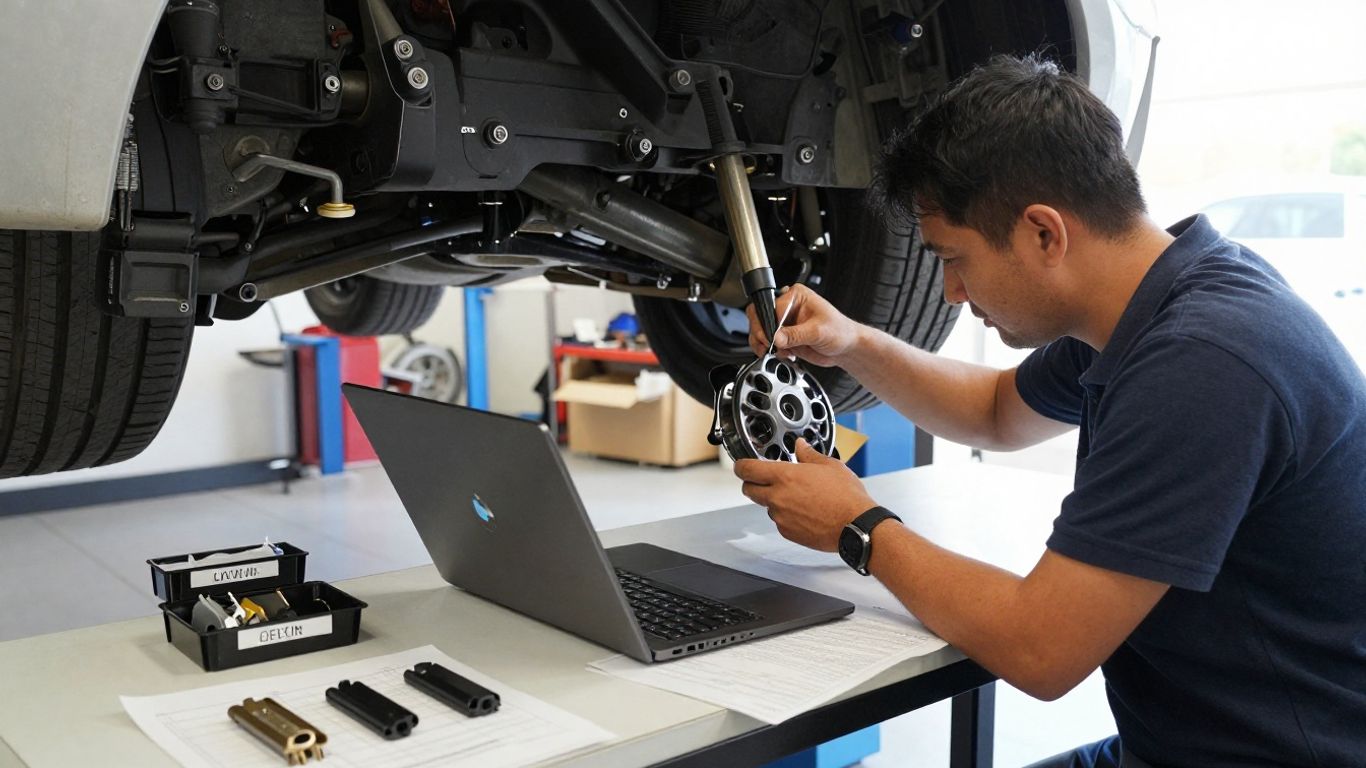
Good fitment work also protects the customer relationship. A part that arrives quickly but cannot be installed is not a successful order; it is a delay, a return, and potentially a second diagnostic appointment.
Matching parts by model, year, and generation
Record the exact model, production year, body style, and generation before contacting the wrecker. Where relevant, include engine designation and production month because a mid-generation change can affect connectors, mounts, sensors, or software. Do not rely on a model badge alone.
Use the original component as a visual reference, but remember that appearance can conceal meaningful differences. Compare mounting points, connectors, casting marks, and included accessories. If the supplier has several similar items, ask for photographs of the exact unit being offered.
Using VINs and OEM part numbers
The VIN gives the supplier a stronger starting point than a general model description. Supply the full VIN through the supplier’s approved channel and provide the OEM part number when it is available. Part numbers can change through revisions, so ask whether the offered number supersedes the original and whether that substitution is acceptable.
Do not assume that a matching number settles every fitment question. Confirm whether the part is supplied as an assembly, whether programming or coding may be needed, and whether brackets, modules, keys, or sensors are included. These details should appear on the quote or order record.
Confirming compatibility with trim and drivetrain
Trim level, options, transmission type, all-wheel-drive configuration, and left- or right-hand-drive layout can all affect suitability. Ask specifically about these variables when sourcing suspension, driveline, body, interior, or electronic parts. A supplier may have the correct general component but not the correct vehicle configuration.
Give the wrecker the repairer’s installation notes when they reveal a special requirement. If the customer has requested a particular finish or equipment level, record that requirement before the order is placed. Clear specifications reduce the temptation to accept a near match under time pressure.
Checking mileage, wear, and donor vehicle history
For engines, transmissions, differentials, steering components, and suspension, ask for mileage where known and for any available donor vehicle history. Also ask whether the unit was removed from a running vehicle, inspected after removal, or sold as untested. The answer should influence both price and warranty expectations.
Photographs can reveal leaks, corrosion, broken tabs, and storage damage, but they cannot replace a written condition description. Note what is included, what is missing, and what the buyer must transfer from the original part. This gives the technician a realistic installation plan.
Manage orders, pricing, and logistics
Once an account is active, disciplined ordering turns a supplier relationship into a repeatable process. Use one format for quote requests, record the response, and confirm the order in writing. That habit matters when several similar BMW parts are being discussed at once.
Separate urgent purchases from stock orders. A repair-critical part may justify a faster shipping method, while a non-urgent component may be grouped with other items. Making that choice deliberately keeps delivery costs from quietly eroding the margin.
Requesting quotes for individual and bulk parts
A useful quote request includes the VIN, OEM part number, vehicle details, required condition, quantity, destination, and deadline. State whether you need the complete assembly or only a component. The more specific the request, the less time is spent correcting assumptions after the price is given.
For bulk orders, ask for a line-by-line quote rather than one combined figure. This makes substitutions, freight, discounts, and unavailable items easier to identify. It also gives your team a clearer record when the shipment arrives in several packages.
Negotiating recurring or volume discounts
Negotiation works best when it follows demonstrated purchasing activity. Share realistic order patterns and ask whether recurring categories, grouped shipments, or regular monthly volume can receive different pricing. Avoid promising volume you cannot sustain, since trust is harder to rebuild than a discount is to obtain.
Discuss service terms as well as price. Faster quote responses, reserved stock, consolidated freight, or a named account contact may be more valuable than a small reduction on every line. Agree on how any revised pricing will be shown on quotes and invoices.
Coordinating shipping, pickup, and delivery
Confirm dispatch dates, carrier details, tracking information, and delivery instructions at the time of order. For pickup, arrange a collection window and check what identification or vehicle access is required. For freight, make sure the receiving team knows which packages may require inspection before signing.
Build buffer time into customer promises, especially for bulky or fragile parts. Keep photographs of packaging and the part as received, and record visible damage immediately. A calm, documented receiving process makes a difficult delivery easier to resolve.
Tracking invoices, cores, and backorders
Use a simple order record linking the supplier invoice to the repair order and vehicle. Mark whether the part is delivered, installed, returned, awaiting a core, or backordered. This prevents a credit or deposit from disappearing into an accounts-payable inbox.
Review open orders regularly rather than waiting for a customer to ask for an update. If a backorder changes the repair schedule, offer a clear choice: wait, source an alternative, or revise the estimate. Good information delivered early is part of the service.
Protect your margins and customer service
A trade account only improves the business when the savings survive the entire repair. Purchase price is one input; freight, inspection, storage, fitting time, returns, and warranty administration can be just as important. Build the habit of reviewing completed orders, not just quoted ones.
Customer expectations should be set from verified information. Explain whether a component is used, what condition is documented, and what the warranty covers. A transparent estimate may take a little longer to prepare, but it reduces unpleasant surprises after installation.
Calculating the true cost of used BMW parts
Add the part price to freight, tax, core charges, receiving labor, inspection time, and any consumables needed for installation. Allow for the possibility of a return, a second delivery, or diagnostic time if the component does not resolve the fault. This produces a more honest landed cost than the supplier quote alone.
A simple internal review can compare quoted cost with final cost across several orders. Look for recurring losses such as oversized freight, incomplete assemblies, or unclaimed core credits. Correcting those patterns may improve profitability more than chasing a slightly lower unit price.
Setting resale prices and labor estimates
Price the part and labor together with the repair’s risk in mind. A used component may require more inspection, cleaning, adaptation, or testing than a new one. Include the expected warranty administration time and state any assumptions about programming, fluids, seals, or transferred accessories.
Do not present uncertain fitment as a certainty merely to close the sale. If the supplier has not confirmed a detail, say what remains to be checked and when you expect an answer. That approach protects the estimate and gives the customer a clearer decision.
Handling faulty, damaged, or incorrect parts
When a problem appears, stop and document it before altering or discarding the component. Record the order number, photographs, packaging condition, installation status, diagnostic findings, and the date the issue was reported. Then follow the supplier’s stated process rather than relying on an informal message.
Keep the customer updated without assigning blame before the facts are known. Explain whether you are waiting for a return authorization, inspection, replacement, or credit. A prompt, factual update can preserve confidence even when the original part was unsuitable.
Building a reliable supplier relationship
Reliability grows from accurate orders, prompt payment, respectful communication, and useful feedback about fitment or condition. Share recurring problems with the supplier and ask how the process can change. Likewise, acknowledge when a difficult part was sourced or a delivery issue was handled well.
Review the relationship periodically using practical measures: quote accuracy, response time, delivery consistency, return resolution, and final cost. Keep a second sourcing option for continuity, but judge the main account on evidence gathered from your own orders. Over time, that record supports better purchasing decisions than reputation alone.
Conclusion
A trade account BMW wreckers arrangement can become a dependable part of a repair business when it is built on careful comparison, precise fitment checks, written terms, and honest costing. Choose suppliers for the whole service they provide, then manage every order closely enough to protect both your margin and the customer’s confidence.