

Key Takeaways
Used M4 carbon parts can make a visible difference without the cost of buying every component new. The safest purchase combines correct fitment, careful inspection, and a realistic installation budget.
- Confirm whether the part suits an F82 or G82/G83 M4 before discussing price.
- Separate genuine OEM parts from aftermarket and replica carbon components.
- Inspect the weave, clear coat, mounting points, and repair history in good light.
- Add shipping, taxes, hardware, refinishing, and installation to the advertised price.
- Replace carbon fiber with serious structural damage rather than trying to disguise it.
Identify the right M4 generation and carbon component
The first step is identifying exactly which M4 the part came from and what it was designed to replace. An F82 M4 and a G82/G83 M4 may share a broad performance-car shape, but their exterior panels, attachment points, and trim details are not interchangeable by assumption. A careful buyer starts with the vehicle identification number, model year, body style, and the original component. That basic information prevents an attractive bargain from becoming an expensive return.
Compare F82 and G82/G83 M4 fitment
The F82 is the two-door M4 built on the earlier generation, while the G82 coupe and G83 convertible belong to the newer generation. Their front ends, rear sections, rocker areas, and interior fittings differ, so a listing that simply says “M4 carbon” is incomplete. Ask for the donor vehicle, model year, and clear photos of the reverse side before treating a part as compatible.
Fitment can also vary within a generation. A splitter may be shaped around a particular bumper, while a diffuser can depend on the exhaust layout or rear trim. Compare the seller’s details with your own car rather than relying on a photograph taken from one angle.
Distinguish OEM, aftermarket, and replica parts
Genuine BMW parts are made for the original vehicle and normally have identifying labels, part numbers, or characteristic moulding details. Aftermarket parts are made by another manufacturer and may offer a different weave, finish, or design. Replica parts imitate a recognised style, but quality and fit can vary widely between suppliers and batches.
The distinction matters because an aftermarket part is not automatically poor, and an OEM part is not automatically undamaged. Ask what the seller means by “carbon,” whether the visible layer is genuine carbon fiber, and whether the component has been modified or refinished.
Match parts to your body style and trim
A coupe and convertible can require different trim pieces even when they share a model family. The same caution applies to standard, Competition, special-edition, and appearance packages: a bumper accessory may follow the shape of the bumper rather than the engine or badge on the boot. Interior parts can also differ according to steering wheel, seat, and dashboard specification.
Take photographs of your existing component, including its edges and fasteners. Those images help a seller compare shape and attachment points instead of making a guess from the model name alone.
Confirm whether mounting hardware is included
Used carbon pieces often arrive without clips, brackets, screws, tape, or threaded inserts. Some hardware can be reused, but fasteners exposed to weather may be corroded, while clips can lose their grip during removal. Ask for a written inventory of everything included in the sale.
A low-priced part that needs a full hardware kit may no longer be a bargain. It is also worth asking whether the previous installer drilled extra holes, used adhesive, or altered the factory mounting system.
Know which used M4 carbon parts offer the most value
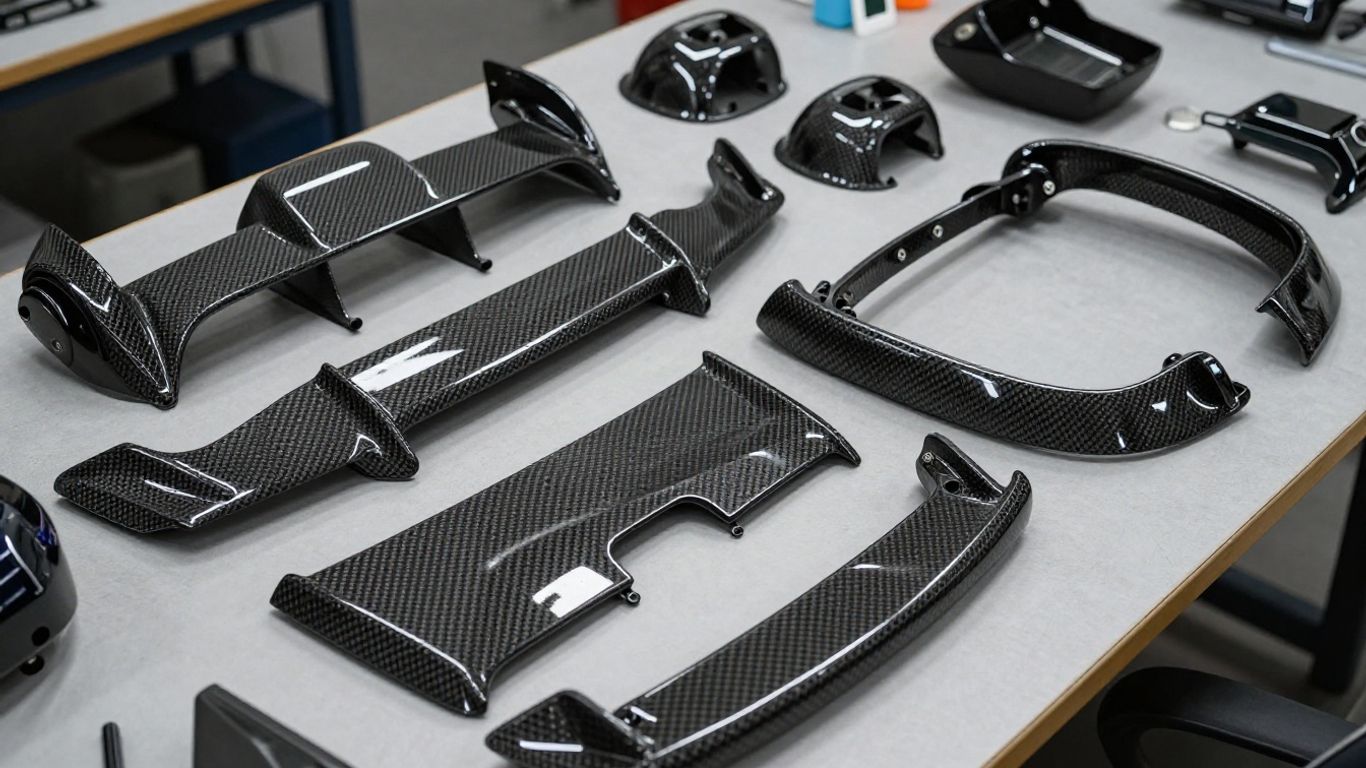
Not every carbon component gives the same return for the money. Exterior pieces are visually prominent, but they also face stone chips, kerbs, weather, and car-wash equipment. Interior trim may be easier to preserve, while a large rear wing can be costly to ship and more demanding to fit. The best choice depends on how much appearance, protection, and installation effort you want in return.
Front splitters, lips, and canards
Front splitters and lips change the car’s appearance immediately, making them popular choices in the used market. Their downside is exposure: the lowest edge can scrape on ramps, steep driveways, and parking stops. Inspect the underside as closely as the visible surface, because damage often begins where it is least visible.
Canards are smaller and usually easier to store, but their mounting position and curvature still need to match the bumper. A repaired corner or missing bracket may be more significant than a few superficial marks.
Rear spoilers, wings, and diffusers
A boot spoiler is often simpler to handle than a full rear wing or diffuser, and it usually needs less packaging. Diffusers can be valuable visual upgrades, though their lower edges and exhaust openings deserve close inspection. A wing should be checked for straightness, secure mounting hardware, and any evidence that it was installed with excessive force.
Consider the practical effect of the part on your daily use. A large aero component may complicate parking, transport, or access to the boot, even when it looks excellent in photographs.
Side skirts and mirror caps
Side skirt extensions sit close to road debris and can show scratches along their lower edge. Check whether both sides are present, whether they are mirror images, and whether the fixing holes line up. A single replacement side may be difficult to match for weave and gloss.
Mirror caps are smaller, but they are not risk-free. Look for broken clips, chips around the perimeter, and uneven gaps that could indicate a poor previous fit. Buying a pair is often preferable when the finish of a single cap would be hard to match.
Interior trim and steering wheel components
Interior carbon trim is generally shielded from road debris, yet it can suffer from sun exposure, scratches from rings, and broken clips during removal. Check the rear of each panel for tabs and locating pins. A flawless front surface does not compensate for a missing attachment point.
Steering wheel components deserve extra care because they interact with airbags, controls, and wiring. Confirm the exact wheel design and have safety-related work handled by someone who understands the vehicle’s restraint system.
Inspect used carbon fiber parts before buying
Carbon fiber can look perfect in a small online image while hiding damage at the edges or underneath. Ask for bright, close photographs taken without heavy filters, preferably from several angles. If possible, inspect the part in person and run a clean fingertip lightly along the surface to identify raised edges or rough repairs. Condition matters more than shine when comparing two similar listings.
Check for cracks, chips, and delamination
Small clear-coat chips are common on forward-facing parts, but cracks through the laminate deserve much more attention. Look around corners, mounting holes, and areas that may have contacted the ground. Delamination can appear as cloudy patches, lifted layers, bubbles, or a change in surface texture.
Do not press hard on a questionable area or flex a panel simply to test it. A seller should be able to provide underside photos and explain whether a mark is cosmetic or extends into the laminate.
Look for fading, yellowing, and clear-coat damage
Carbon fiber’s appearance comes from the weave beneath a clear finish, so sun and chemicals can change how it looks over time. Yellowing, milky patches, peeling, and uneven gloss often indicate clear-coat deterioration rather than a different weave. Compare exposed areas with protected edges where possible.
Some surface damage can be corrected through professional refinishing. The cost and final appearance depend on how deeply the clear coat has failed, so price the repair before committing to the purchase.
Examine mounting points and fastener holes
Mounting points tell you how the part was treated and whether it is likely to fit again. Elongated holes, missing inserts, stress cracks, and flattened washers can indicate overtightening or repeated removal. Check every fixing location, not only the ones visible from the front.
For a used exterior piece, ask whether the original clips and brackets are present. If the answer is no, photograph the attachment pattern and confirm that replacements are available before paying.
Assess previous repairs and refinishing quality
A repaired carbon part is not automatically unsuitable, but the work should be visible and explainable. Look for mismatched weave direction, hard transitions under the clear coat, ripples, pinholes, and paint overspray on the reverse side. A straight panel with a professional repair may be a better purchase than an untouched panel with hidden delamination.
Request details about the repair method, date, and finish. If the seller cannot distinguish between a cosmetic clear-coat repair and structural laminate work, allow for a professional inspection.
Verify fitment and construction quality
Fitment involves more than matching a part to a model name. The edges should follow the surrounding bodywork, attachment points should sit in the expected locations, and the construction should suit the way the part is used. Photos of the front alone rarely provide enough evidence. Ask for dimensions, underside views, and details of the mounting system before arranging freight.
Compare OEM part numbers and dimensions
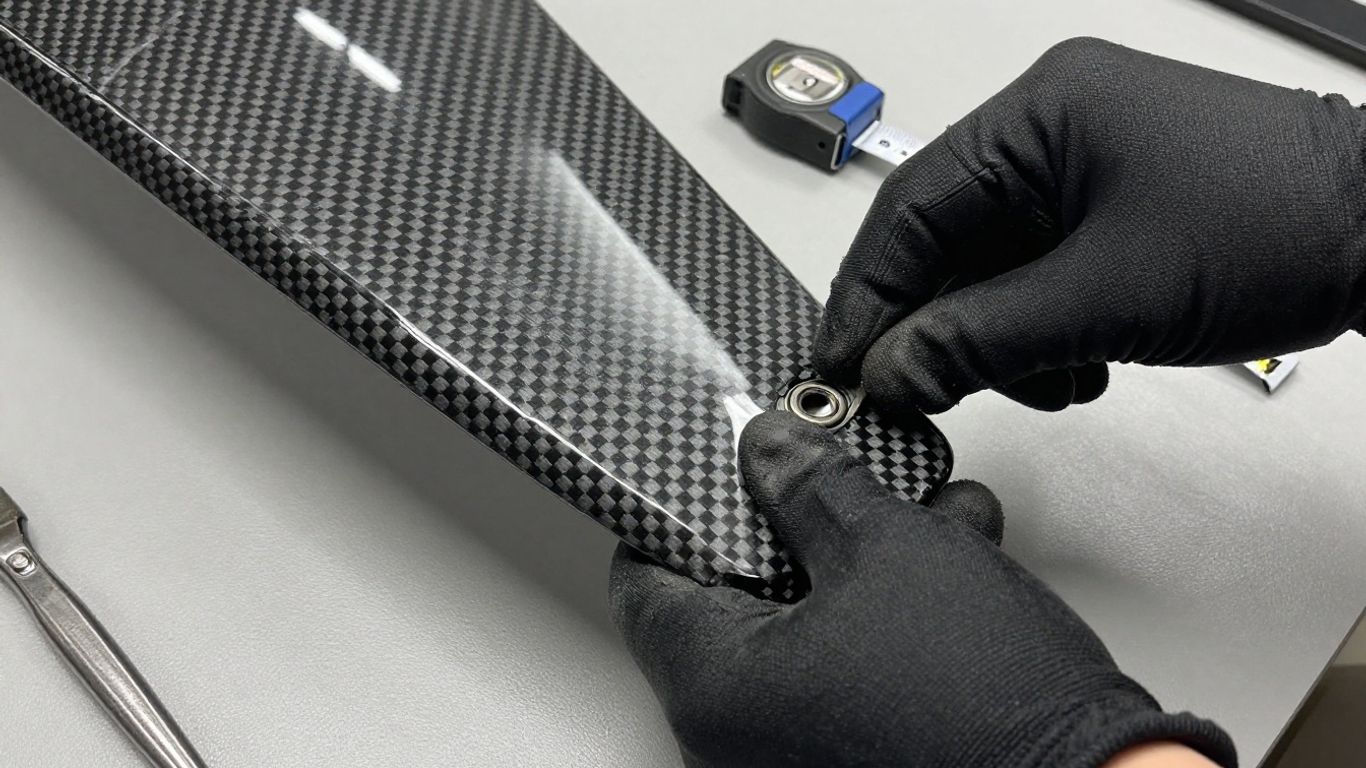
An OEM part number is one of the quickest ways to narrow down compatibility, although it should still be checked against the vehicle and component. Aftermarket parts may use a manufacturer code instead, so request that code and compare the listed dimensions. Measure length, width, depth, and key hole spacing when the seller can provide them.
A part that is only a few millimeters different at a flat edge may be impossible to align once curves and neighbouring panels are involved. Measurements are especially useful when a listing has limited vehicle information.
Evaluate weave patterns and panel alignment
The weave should generally look consistent across the visible face, with changes at corners following the shape of the mould rather than appearing random. A difference in weave direction does not prove a part is fake, but abrupt misalignment, excessive resin, and uneven edges are reasons to investigate.
Hold the part against a straight reference or inspect it on a clean, level surface. Warping can show up as rocking, uneven corners, or a gap that changes as the panel is moved.
Check dry carbon versus wet carbon construction
Dry carbon and wet carbon describe different construction approaches, not a simple good-versus-bad ranking. Dry carbon is commonly associated with a lighter composite construction, while wet carbon uses resin applied through the layup process. The actual quality still depends on the materials, mould, curing, thickness, and workmanship.
Ask what the seller means by the construction description and whether there is documentation from the manufacturer. Avoid paying a premium for a label that is not supported by clear product details or a known part specification.
Confirm compatibility with factory sensors and accessories
Exterior changes can interfere with parking sensors, cameras, radar equipment, number-plate mounts, tow fittings, or exhaust clearance. Check that openings are present and positioned correctly, and ask whether any sensor brackets must be transferred from the original part. A smooth-looking replacement may still require cutting or relocation.
The safest approach is to compare the used piece with your removed factory component before applying adhesive or drilling new holes. Once a part has been modified, returning it becomes much harder.
Choose where to buy used M4 carbon parts
The seller affects more than the price. A dismantler may know the donor vehicle and provide traceable photographs, while an enthusiast may have useful installation history. Specialty suppliers can sometimes identify hardware and fitment details, but policies and inspection standards vary. Wherever you buy, keep the listing, messages, photographs, and agreed condition in writing.
BMW dismantlers and enthusiast marketplaces
A dismantler can be useful when you need a part with known vehicle provenance or want to match several components from one car. Ask why the donor vehicle was dismantled and whether the part was removed before or after impact damage. Marketplace listings can offer variety, but they require more independent checking.
Look for sellers who show the actual item rather than catalogue images. Clear photos of labels, edges, and mounting points are more valuable than a long description filled with generic claims.
Specialty performance shops and recyclers
A specialist shop or recycler may be better placed to identify unusual trim, package variations, and replacement hardware. It may also offer inspection or installation, which can reduce the risk of a fitment mistake. That convenience should still be weighed against the shop’s return terms and the condition of the specific part.
Ask whether the item has been cleaned, repaired, or refinished before sale. A professional-looking listing is not a substitute for knowing what work has been performed.
Private sellers and BMW forums
Private sellers can provide helpful ownership history, especially if the component was removed during a documented upgrade. Forum listings may also include installation photographs and feedback from other members. Even so, payment protection, collection arrangements, and returns may be limited.
A sensible private transaction uses a clear description of condition and an agreed inspection period. Be cautious when a seller avoids close-up photographs or creates pressure to pay before questions are answered.
Questions to ask before completing the purchase
A short set of direct questions can expose most avoidable surprises. Ask for the donor model and year, part number, dimensions, repair history, included hardware, sensor compatibility, and any known cracks or delamination. Also confirm whether the photographed item is the exact item being sold.
A useful rule is simple: if the answer changes the installation cost, get it in writing before payment.
A cheap part is only a bargain when its condition, fitment, and total installed cost are understood.
That principle keeps the conversation focused on usable value rather than the lowest headline price. It also gives you a clear basis for walking away when the seller cannot answer basic questions.
Calculate the real cost of a used carbon upgrade
The purchase price is only the first line in the budget. Used carbon parts may need special packaging, freight insurance, new fasteners, refinishing, or professional installation. A part that appears to save hundreds can lose that advantage after one damaged shipment or an unexpected fitting problem. Work through the complete cost before comparing it with a new alternative.
Compare the purchase price with new alternatives
Check the current price of a comparable new part, including whether it is OEM, aftermarket, or a replica. A used OEM component may justify a higher price if its fitment and finish are strong, while a worn aftermarket part may be poor value if a new version includes hardware or support.
Compare like with like. Different weave, construction, warranty, and finish can make two visually similar listings fundamentally different purchases.
Include shipping, taxes, and installation
Large lips, wings, and diffusers can require oversized packaging, while fragile edges may need additional protection. Add shipping, insurance, local taxes, and any marketplace fees to the seller’s price. Then estimate installation time, adhesive, clips, fasteners, and possible alignment work.
If the part crosses state or national borders, allow for delays and inspect the package before signing where the carrier’s policy permits. Documenting freight damage quickly can make a claim much easier.
Budget for refinishing or replacement hardware
A faded clear coat, chipped edge, or missing bracket may be repairable, but the quote should come before the purchase. Include sanding, carbon repair, clear coating, colour matching where relevant, and curing time. Replacement hardware can be inexpensive individually but costly when a complete set is unavailable.
Keep a small contingency for hidden issues. Used body parts often reveal their most expensive problem during removal or test fitting, not during the initial photograph review.
Evaluate resale value and long-term durability
A recognised part number, documented fitment, and clean condition generally make a component easier to sell later. Keep receipts, photographs, unused hardware, and any repair invoices. Avoid drilling extra holes or applying permanent changes unless the modification is genuinely necessary.
Resale value should not override durability. A component that requires constant touch-ups or cannot withstand normal use may cost more over time than a sound part bought at a higher initial price.
Install and maintain used M4 carbon parts
Installation is where fitment assumptions become real. Dry-fit the component before removing protective film, drilling, or applying permanent adhesive. Compare all edges and holes with the original piece, and plan how the car will be supported while the part is aligned. Patience here can prevent a cosmetic upgrade from becoming bodywork.
Decide between professional and DIY installation
A confident DIY owner may handle a simple trim replacement with the right tools, clean workspace, and time. Bumper-mounted parts, structural wing supports, sensor-related work, and components requiring drilling are better candidates for an experienced installer. The decision should reflect the consequence of a mistake, not only the labour price.
Ask the installer whether they have fitted the same type of component before. Confirm what happens if a used part needs modification or does not align as expected.
Prepare surfaces and use the correct hardware
Clean mating surfaces with a suitable product and remove old adhesive without gouging the paint or composite. Use the specified clips, washers, screws, and bonding materials rather than improvising with hardware that can crack the laminate or sit proud of the surface. Protect exposed edges while positioning the part.
Tighten fasteners gradually and evenly. After the first drive, recheck accessible fixings and look for new gaps, movement, or rubbing before treating the installation as finished.
Protect carbon fiber from UV exposure and chemicals
Wash carbon components with mild automotive cleaning products and a soft cloth. Avoid harsh solvents, abrasive compounds, stiff brushes, and automatic equipment that can catch an edge. Dry water from seams and fastener areas so it does not sit against damaged clear coat.
UV exposure gradually stresses the finish, especially on cars parked outdoors. A compatible protective coating or wax can help preserve the surface, but follow its instructions and do not apply it over lifting or contaminated clear coat.
Know when a damaged part should be replaced
Replacement is usually the sensible choice when the laminate is cracked through, the part has lost its shape, mounting points are torn away, or delamination is spreading. A cosmetic scratch or isolated clear-coat defect may be repairable, but structural uncertainty should not be hidden beneath a new finish.
When in doubt, have a composite repairer inspect the component. The cost of a professional opinion is small compared with a part that fails during driving or damages adjacent bodywork.
Conclusion
Used M4 carbon parts reward a measured buying process: identify the generation, verify the construction, inspect every mounting point, and price the upgrade as a complete project. When condition and fitment are confirmed before payment, a pre-owned carbon component can deliver the appearance you want without turning a bargain into an ongoing repair job.