

Key Takeaways
Buying second hand M2 seats can save money, but the right choice depends on chassis, equipment, condition, and installation requirements.
- Confirm whether the seat is intended for an F87 or G87 BMW M2.
- Check bolsters, cushions, wiring, airbags, sensors, and adjustment hardware.
- Compare a complete working seat with the cost of a bare shell and missing parts.
- Verify mounts, connectors, occupancy sensors, and warning-light requirements before purchase.
- Use clear photos, vehicle details, written terms, and protected shipping to reduce risk.
Identify the right BMW M2 seat for your car
The first step is matching the seat to the exact M2 generation and equipment level. A seat that looks close in a listing may differ in its rails, wiring, restraint hardware, or adjustment system. Record your car’s model year, chassis code, interior specification, and driver or passenger position before contacting sellers.
A careful match also preserves the character of the cabin. Upholstery, trim, stitching, and seat style can matter just as much as physical fit, particularly when replacing one damaged seat rather than changing the complete interior.
F87 and G87 seat differences
The F87 and G87 M2 are different generations, so their seats should not be treated as automatically interchangeable. Compare the floor attachments, rail layout, connector arrangement, restraint components, and seat dimensions rather than relying on a seller’s broad description. Ask for the donor vehicle’s model year and a clear photograph of the underside.
A listing with a chassis code is a useful starting point, not final proof of compatibility. Equipment can vary within a generation, and the driver’s seat may have different hardware from the passenger seat. The following comparison keeps the initial check practical.
| Checkpoint | F87 M2 | G87 M2 | Why it matters |
|---|---|---|---|
| Vehicle generation | Earlier M2 platform | Later M2 platform | Helps avoid assuming parts interchange |
| Seat design | Varies by specification | Varies by specification | Appearance alone is not enough |
| Floor hardware | Confirm rails and mounts | Confirm rails and mounts | Physical attachment must match |
| Electrical equipment | Verify connectors and sensors | Verify connectors and sensors | Wiring can affect installation and warnings |
Use the table as a screening tool, then confirm the details against your vehicle and the actual seat photographs. A seller who cannot identify the donor car or show the underside is offering too little information for a confident purchase.
Standard, sport, and carbon bucket seat options
Decide whether you want a like-for-like replacement or a change in seating position and support. Standard and sport-style seats may suit a daily-driven car, while carbon bucket seats can bring a more focused feel but may require closer attention to entry height, side bolsters, and occupant comfort. The best option is the one that fits your driving habits as well as the car.
Carbon or composite shells also deserve a close inspection for cracks, repairs, and damage around mounting points. Do not assume a premium-looking finish means the structure is sound. Ask for detailed images of the shell, cushion, trim, and underside before agreeing to buy.
Manual and powered adjustment compatibility
Manual sliders and powered adjustment systems are not interchangeable simply because the seat shell is similar. Check for motors, switches, memory equipment, wiring looms, and the correct rail assembly. If your car has powered functions, a bare replacement seat may leave you paying for missing controls or conversion work.
The position of the seat matters too. Confirm whether the listing is for the driver or passenger side, and ask whether lumbar adjustment, height adjustment, heating, or memory functions are included. A complete seat with known working controls is usually easier to assess than a stripped shell.
Upholstery, trim, and color considerations
Compare the seat’s material and color with the rest of the cabin in natural light. Leather, Alcantara, cloth, contrast stitching, plastic side panels, and trim inserts can age at different rates, so a replacement may look noticeably newer or darker than the opposite seat. Ask for close photographs taken without filters.
Small differences can affect the finished result. If you are replacing only one seat, matching the pattern and wear level may be more valuable than choosing the most aggressive style. Keep the original seat until the replacement has been checked and fitted successfully.
Check the condition before you buy
Condition is where an apparent bargain can become expensive. Seats are exposed to repeated entry and exit, belt friction, sunlight, spilled drinks, and the weight of passengers, even when the car has low mileage. Request photographs from the front, rear, both sides, underneath, and around every adjustment point.
Ask the seller to describe faults plainly rather than relying on phrases such as “good for age.” A clean seat can still have a damaged frame, intermittent motor, or missing sensor. Photographs are evidence, not a guarantee, so combine them with specific questions and a clear return position.
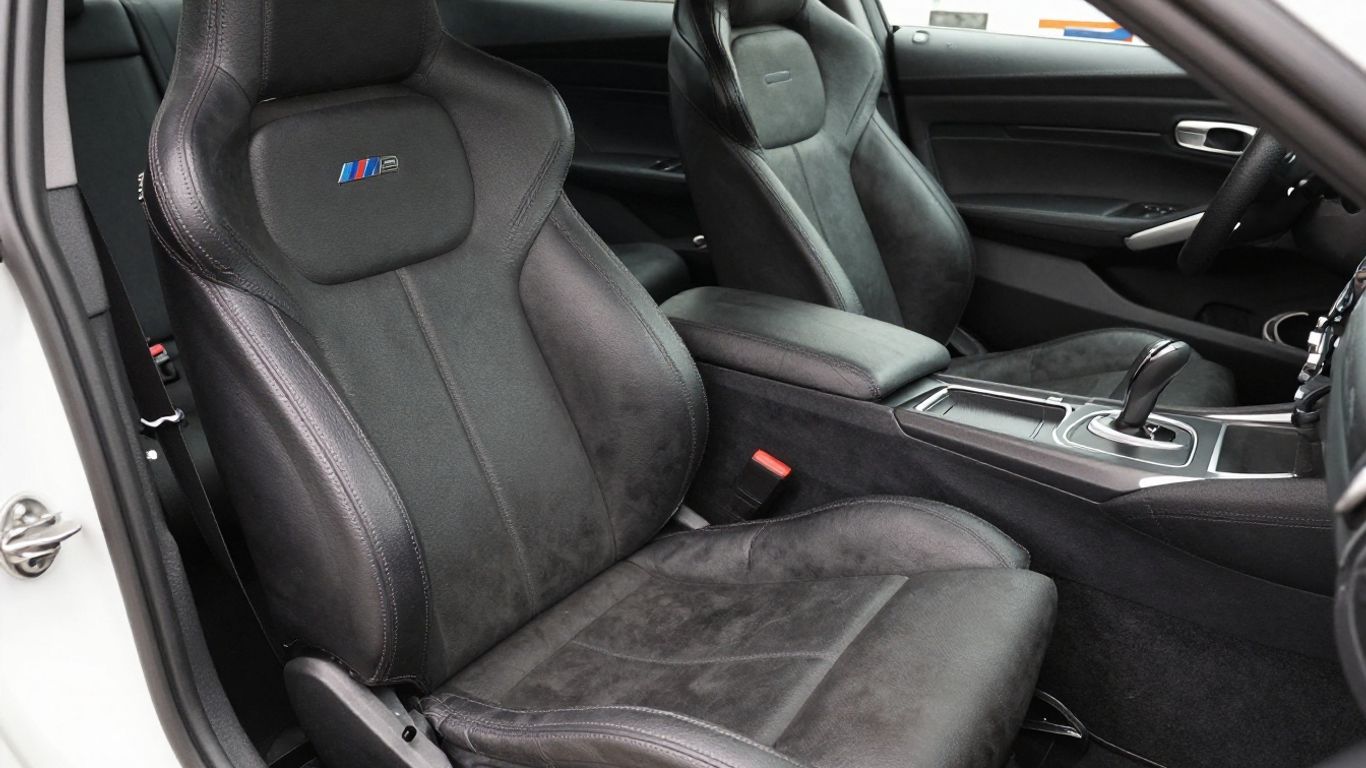
Common wear points on used M2 seats
The outer driver’s bolster usually sees the most contact, especially where the driver slides across it while entering and exiting. Look for flattened padding, scuffed leather or Alcantara, shiny patches, fading, and distortion in the side support. Passenger seats may be cleaner but can still show pressure marks or staining.
Inspect the rear plastic shell, lower seat plastics, belt guide area, and exposed edges of the cushion. Scratches are often cosmetic, while a loose trim panel or bent bracket may indicate impact or rough removal. Ask whether the seat came from a running car or a dismantled vehicle with unknown history.
Inspecting bolsters, stitching, and cushions
Run your eyes along every seam and ask for close-ups where stitching changes direction. Broken threads, pulled seams, repaired panels, and uneven gaps deserve clarification before purchase. Press the cushion and bolsters gently to compare their firmness from side to side.
A cushion that has collapsed on one side may be uncomfortable even if the upholstery cleans up well. Check for moisture damage, smells, discoloration beneath removable trim, and evidence of amateur repairs. Refurbishment can help with surface wear, but it will not correct every structural or electronic fault.
Testing motors, heating, and electronic controls
If the seat is still connected to a vehicle, ask for a video showing every adjustment working from end to end. The video should include forward and backward travel, height, recline, lumbar support, heating, memory controls, and any other equipment claimed in the listing. Listen for grinding, clicking, hesitation, or movement that stops before reaching the full range.
For a disconnected seat, ask whether the seller can arrange a controlled test or provide a written statement about what was tested. Do not connect unfamiliar wiring to a battery without the correct knowledge and precautions. A cheap seat that needs several motors or switches can quickly lose its financial advantage.
Verifying airbags, sensors, and seat-belt hardware
Ask whether the seat-mounted airbag, occupancy sensor, belt receiver, and associated wiring are present and undamaged. These components relate to occupant safety, so missing or deployed equipment should be treated as a major issue rather than a minor deduction. Confirm exactly what is included in the sale.
Look for torn airbag covers, cut wires, crushed connectors, and bent belt hardware. A seat removed from a crash-damaged car needs especially careful scrutiny, even if the upholstery appears perfect. Safety-related repairs should be handled by a qualified technician using appropriate parts and procedures.
Confirm fitment and installation requirements
Physical fitment is only one part of a seat swap. The floor mounts, rails, connectors, restraint equipment, and vehicle electronics all need to work together. Before paying, compare the proposed seat with your original unit and identify every component that will be transferred or replaced.
Take photographs under your current seat and make a note of connector colors, mounting points, and visible modules. This preparation gives an installer something useful to review and helps expose missing hardware in a seller’s photographs.
Floor mounts and rail compatibility
The seat must attach securely to the vehicle’s existing mounting points, with rails that locate correctly and hardware that is suitable for the application. Compare the rail spacing, brackets, bolts, and underside shape. A seat that sits in the cabin but requires improvised drilling or fabricated brackets should not be treated as a straightforward replacement.
Also consider driving position and clearance. Check the relationship between the seat, steering wheel, pedals, center console, and door. A different shell or cushion height may change comfort and visibility even when the bolt pattern appears workable.
Wiring, connectors, and occupancy sensors
Inspect the complete wiring loom rather than only the largest plug. Seat heating, motors, airbags, belt receivers, and occupancy sensors may use separate circuits and connectors. A missing section of loom can be difficult to source and may prevent the seat from operating as expected.
Ask for photographs of every connector and compare them with your original seat. Never assume that a connector which physically fits has the same pin arrangement or function. Occupancy-sensor differences are particularly important because they can affect vehicle warnings and restraint-system operation.
Coding and warning-light considerations
Some replacements may require electronic configuration after installation, especially when equipment differs between the original and replacement seats. Warning lights, stored faults, or non-functioning controls should be investigated rather than ignored. Clearing a warning without resolving its cause does not make the installation safe.
Ask an experienced BMW technician what diagnostic work may be needed before buying. Keep the original seat and its modules until the replacement has been tested, since they may be useful for comparison or troubleshooting.
Professional installation versus DIY fitting
A competent home mechanic may be comfortable with mechanical seat removal, but airbags, belt hardware, occupancy sensors, and vehicle diagnostics raise the stakes. Review the job honestly, including whether you have the correct tools, service information, and a safe way to handle the seat. Avoid experimenting with restraint-system wiring.
A seat is not properly fitted until it is secure, electrically compatible, and free of unresolved safety warnings.
That principle is useful when comparing quotes. A professional installation may cost more at the outset, but it can reduce the chance of damaged connectors, incorrect fasteners, or a warning light that remains after the work is finished.
Evaluate the price and overall value
The cheapest listing is rarely the best comparison. Price reflects the seat’s generation, trim, completeness, mileage, wear, working equipment, and provenance. Shipping a large, heavy, delicate component can also change the final figure substantially.
Set a budget that includes inspection, transport, fitting, diagnostics, and likely cosmetic work. This prevents a low advertised price from overshadowing the total cost of putting the seat into reliable service.
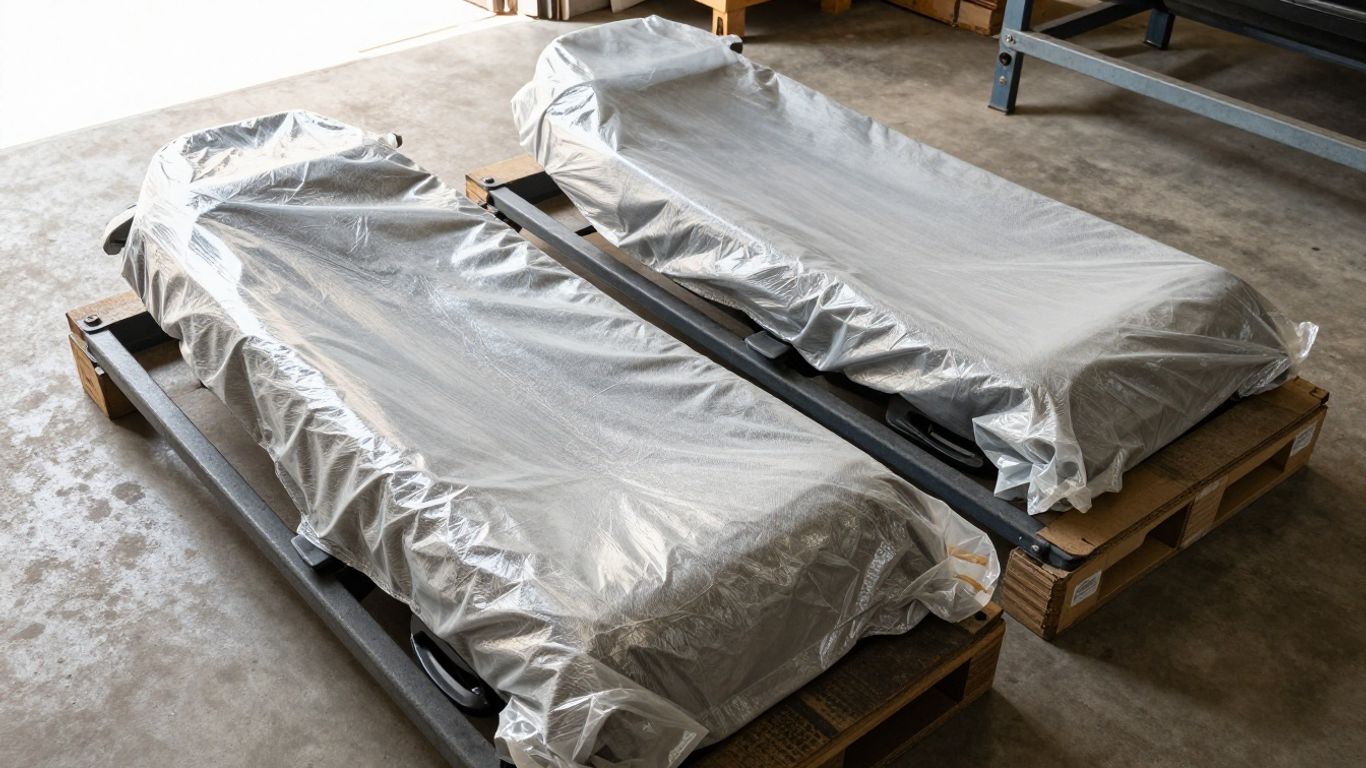
Typical factors that affect second hand M2 seat prices
A complete seat with intact upholstery, working controls, included rails, and documented donor details will generally be more useful than an unidentified shell. Rare trim, low wear, matching pairs, and desirable adjustment equipment can also affect asking prices. On the other hand, stains, damaged bolsters, missing modules, and unclear history should reduce the value.
Compare several listings with similar equipment rather than using the highest or lowest price as your benchmark. Ask sellers to separate the price of the seat from freight and any additional hardware, so you can compare like with like.
Comparing complete seats with bare shells
A bare shell can make sense for a specialist project or when you already have compatible cushions, trim, rails, and electronics. For a direct replacement, however, a complete seat is usually easier to assess and install. Count every missing component before deciding that the shell is cheaper.
Consider compatibility as well as completeness. Your existing parts may look similar but still differ in mounting points, wiring, or sensor equipment. Confirm the transfer plan with an installer before buying a stripped seat.
Estimating shipping, refurbishment, and installation costs
Get a freight quote based on the packed dimensions, not just the seat’s weight. Proper protection should cover the bolsters, recline mechanism, rails, and trim, while the package should remain stable during handling. Add possible cleaning, upholstery repair, replacement hardware, diagnostic work, and installation to the purchase price.
Request photographs of the packaging method if the seat is being shipped privately. A seller who plans to place an unprotected seat directly into a large box may be saving time at your expense. The cheapest freight option is not useful if it creates new damage.
When an expensive seat is worth the premium
Paying more can be sensible when the seat is complete, verified, clean, and supported by clear donor information. It may also be worthwhile when the alternative is refurbishing a damaged seat or sourcing several missing electronic and trim components separately. The premium should buy reduced uncertainty, not merely a more persuasive description.
Before agreeing, write down what the price includes and what has been tested. A documented, working seat with suitable packaging can offer better value than a lower-priced item whose condition remains unknown.
Find reputable second hand M2 seats
The seller matters almost as much as the part. A reputable source should be willing to identify the donor vehicle, show detailed photographs, answer fitment questions, and explain how the seat will be packed. Vague listings and pressure to pay immediately deserve caution.
Search across specialist dismantlers, enthusiast communities, and established marketplaces, but apply the same verification standard everywhere. A polished listing is not a substitute for evidence.
BMW dismantlers and specialist breakers
Dismantlers may be able to provide donor details, part descriptions, and photographs of the actual seat rather than a generic image. Ask whether the vehicle was running before dismantling, whether the airbags deployed, and which components are included. Clarify whether the seat has been tested and how faults are handled after delivery.
Specialist breakers can also help locate a matching passenger or driver seat when a single replacement is needed. Still, confirm the information in writing. Staff knowledge varies, and a verbal assurance may not cover the exact equipment you need.
Enthusiast forums and private sellers
Enthusiast communities can offer useful first-hand context and may connect you with owners who have upgraded their interiors. Private sellers often know the seat’s history, but the quality of descriptions varies widely. Ask for current photographs with a handwritten date or another simple way to show that the images are recent.
Keep payment and collection arrangements clear. If possible, inspect the seat in person, operate its controls, and compare it with your vehicle before handing over funds. For a remote sale, use a method that offers appropriate buyer protection rather than an irreversible transfer.
Salvage auctions and online marketplaces
Salvage channels can have attractive prices, but they carry greater uncertainty around impact history, missing components, and electronic faults. Read the listing condition carefully and distinguish between “untested,” “unknown,” and “working.” Those descriptions do not carry the same level of risk.
Online marketplaces make comparison easier but also encourage rushed decisions. Save the listing, photographs, seller messages, and payment record. These records can be useful if the received seat differs materially from what was advertised.
Questions to ask before purchasing
A short, specific message often reveals whether the seller has actually inspected the part. Ask for the donor VIN or at least the chassis and model year, the seat position, included components, known faults, and proof that the controls and safety-related hardware were checked.
Also ask about packaging, dispatch timing, returns, and damage claims. If the answers remain vague after reasonable follow-up, move on. There will be other second hand M2 seats, and uncertainty is rarely worth accepting for a part this expensive to ship and fit.
Complete the purchase safely
A safe transaction starts before payment. Match the seat to your vehicle, verify its history, document its condition, and agree on delivery terms in writing. These steps may feel slow when a desirable listing appears, but they protect both your budget and your car.
Keep copies of the advertisement and all messages until the seat has been inspected, installed, and tested. If the seller changes the description after you ask questions, treat that as a reason to pause.
Matching the seat to the vehicle identification number
Provide the seller with your vehicle identification number when fitment confirmation depends on equipment or production details, while sharing it through a sensible and trusted channel. Ask the seller to compare the donor information and explain any uncertainty. A VIN match does not replace checking the physical seat, but it can reduce generation and specification errors.
Confirm left-hand-drive or right-hand-drive context where relevant, along with driver or passenger position. Small omissions in these details can result in receiving a seat that looks correct but does not suit your cabin or controls.
Checking accident and salvage history
Find out whether the donor vehicle was involved in a collision, flood, fire, or theft recovery. Ask specifically about deployed airbags, bent rails, crushed floor mounts, and damaged belt hardware. A clean-looking seat may have been exposed to forces that are not visible in the upholstery.
If the seller cannot provide history, price the part as an uncertain component rather than a verified replacement. Safety-related unknowns should never be hidden by a discount.
Protecting the seat during shipping
Agree on protection for the bolsters, cushion, trim, rails, and connectors before dispatch. Foam, cardboard, blankets, and a stable outer carton can help prevent rubbing and impact, but the packaging must suit the seat’s size and weight. Photograph the packaged seat when the seller provides that option.
Inspect the parcel before signing where the carrier permits it. Photograph crushed corners, punctures, exposed hardware, and other visible damage immediately. Notify the seller and carrier promptly, following the claims process rather than discarding the packaging.
Understanding returns, warranties, and buyer protection
Read the terms before payment, including whether electrical faults, cosmetic discrepancies, and shipping damage are covered. A return policy may exclude installed parts, modified wiring, or items damaged after delivery, so ask how inspection and testing should be handled. Written answers are more useful than assumptions.
When the seat arrives, compare it with the listing before fitting it. Record missing parts and damage, then contact the seller within the stated timeframe. A careful transaction leaves you with a clear path if the seat is materially different from what you bought.
Conclusion
The best second hand M2 seat is not simply the one with the lowest price or most attractive photograph. It is the seat that matches your chassis and position, arrives with its important hardware, has a credible history, and can be installed and tested without unresolved safety concerns. Take time to verify the details, and the search becomes a manageable comparison rather than an expensive gamble.