

Key Takeaways
A used M Sport steering wheel can be a worthwhile BMW upgrade, but the right choice depends on compatibility, condition, included parts, and installation requirements.
- Match the wheel with your BMW’s model, production year, VIN, and part number.
- Confirm whether the airbag, trim, buttons, wiring, and paddles are included.
- Inspect leather, stitching, mounting points, and signs of refurbishment.
- Calculate shipping, taxes, replacement parts, coding, and labor before buying.
- Test every safety and control function after installation.
Understand what an M Sport steering wheel used listing includes
A listing for an M Sport steering wheel used can describe anything from a bare wheel rim to a nearly complete assembly. The name alone does not tell you whether the airbag, trim, wiring, buttons, or paddle shifters are included. BMW steering wheels can look similar while differing in connectors, controls, and fitment. Read the listing as a parts inventory rather than assuming the photographs show everything for sale.
Differences between standard, M Sport, and M Performance wheels
Standard BMW wheels may have a thinner rim and simpler trim, while M Sport versions commonly have a sportier shape, thicker grip, and distinct spoke or trim details. M Performance wheels may add different materials, stitching, or design features, but the exact specification depends on the vehicle and original equipment. Compare the rear casting, spoke layout, button arrangement, and finish instead of relying only on the seller’s title.
A replacement should also suit the way you drive. A thicker rim may feel different in daily use, and a wheel with a changed button layout can affect convenience even when it physically mounts to the column. Appearance is only one part of the decision; the electrical and safety systems matter just as much.
Common BMW generations and compatible models
BMW fitment varies across generations and model lines, so a wheel from one vehicle should not be assumed to fit another simply because both are labeled M Sport. Production year can matter within the same model family, particularly when BMW changed airbag shapes, wiring, control modules, or steering-column connections. Treat model badges and trim names as starting points, not final proof.
The most useful comparison is between the donor vehicle and your car: model code, body style, production date, transmission, heating, multifunction controls, and paddle-shifter equipment. A clear photograph of the rear and the original part number can reveal differences that are invisible from the front.
Components that may or may not be included
Used listings vary widely in what they include. One seller may offer only the leather-covered wheel, while another may include the airbag, lower trim, multifunction switch packs, wiring, and paddles. Some components may be removed for separate sale or retained because they are not compatible with the buyer’s vehicle.
Ask the seller to state the contents in plain language. If the airbag is absent, price a compatible replacement before committing. If trim or buttons are missing, check whether your existing pieces can be transferred and whether their connectors match the replacement wheel.
Why trim, buttons, and paddle shifters matter
Trim is not merely cosmetic when it affects how buttons and switch packs mount. Button layouts can differ for cruise control, audio, driver information, phone functions, or other equipment. Paddle shifters also require suitable openings, wiring, and vehicle support, so a wheel prepared for paddles may still need additional components.
Photographs should show the front, rear, spoke openings, button modules, and paddle areas. Compare these details with your current wheel before deciding that a visually similar used part is a direct replacement.
Confirm fitment before you buy
Fitment should be settled before discussing price. A steering wheel connects to safety equipment, electrical controls, and the steering column, so a small mismatch can turn a seemingly inexpensive purchase into an incomplete project. Gather your vehicle information first, then ask the seller or a qualified BMW technician to verify the specific part.
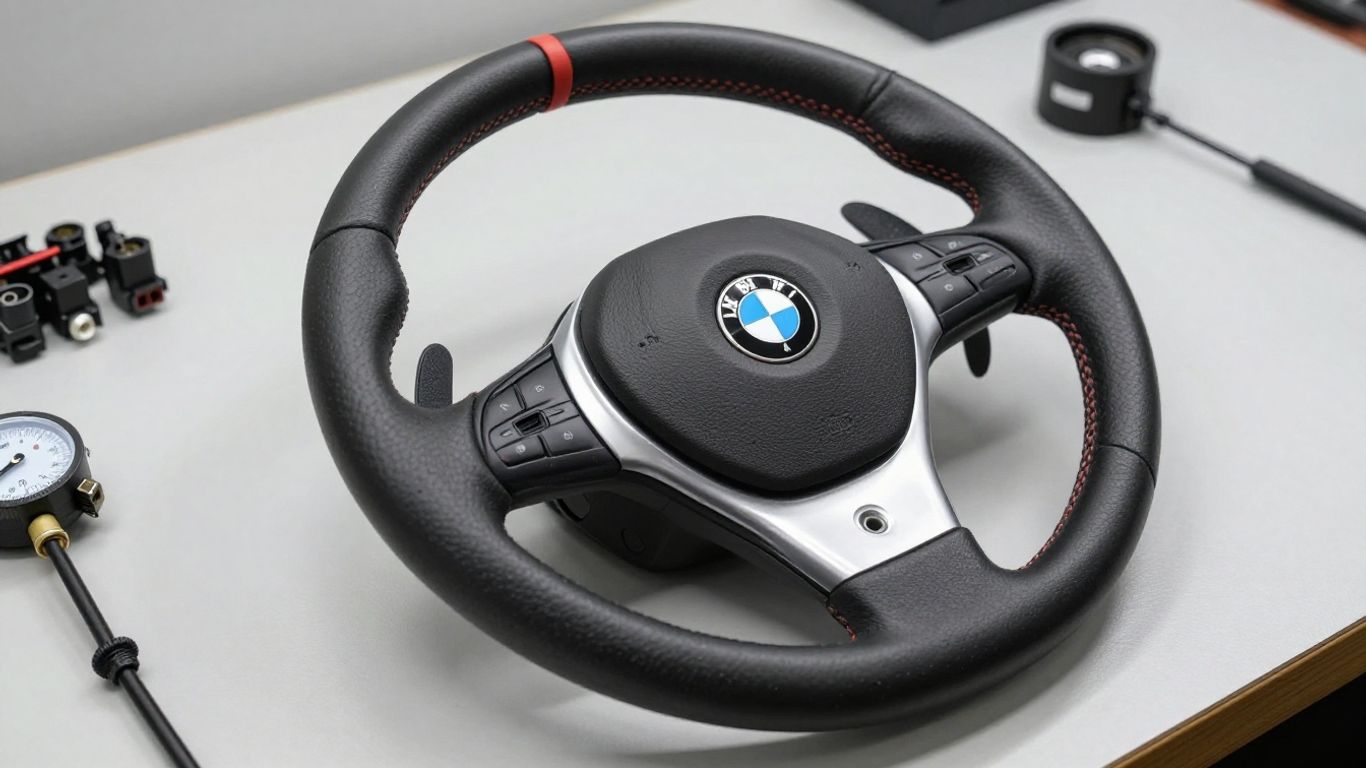
Match the wheel to your BMW model and production year
Start with the exact BMW model, body code if known, production month and year, transmission type, and current steering-wheel equipment. Two vehicles with the same badge can have different wheel assemblies across a model update or equipment package. The donor car’s details are equally useful, especially when the listing identifies them.
Do not depend on statements such as “fits all BMWs” without supporting information. A correct match should account for the wheel’s physical mounting, airbag shape, electrical connections, and control features. When those details are unavailable, uncertainty is a reason to pause rather than guess.
Check airbag, wiring, and connector compatibility
The airbag is a critical compatibility item, not an accessory to improvise later. Compare its shape, retaining method, connector arrangement, and part information with the equipment in your BMW. Wiring looms and switch connectors should also be checked, since a wheel can mount mechanically while leaving functions disconnected.
Never assume that an airbag from a visually similar wheel is interchangeable. Ask for clear images of the rear of the wheel, connectors, and airbag mounting area, and have the combination checked by someone familiar with the vehicle’s restraint system.
Verify heating, multifunction controls, and paddle support
Heated wheels, multifunction buttons, and paddles each add another fitment question. Confirm whether your BMW has the relevant wiring and control hardware, and whether the replacement wheel contains the switches or only the openings for them. A seller may describe a wheel as “fully loaded” without listing every function.
Make a simple comparison with your existing wheel before purchase. Note which functions you use, which components are included, and which items would need to be transferred. This prevents paying for a feature that cannot operate in your car.
Use the VIN and part number for final confirmation
The VIN is the strongest reference for identifying the equipment originally specified for your BMW, while the part number helps compare the proposed replacement. Give both the vehicle information and the seller’s part details to a BMW parts specialist or technician when possible. They can identify a mismatch that a general marketplace description overlooks.
Part numbers should be read carefully because a minor suffix or revision can matter. Keep screenshots of the listing and the seller’s confirmation so that the agreed specification is clear if the item arrives differently from described.
Evaluate the wheel’s condition
Condition affects both comfort and value. A wheel may be structurally suitable but still feel disappointing if the leather is glossy, flattened, sticky, or poorly reworked. Used parts deserve a close inspection because photographs often soften wear and hide damage around the rear of the assembly.
Inspect leather wear, stitching, and flattened sections
Look closely at the areas touched most often: the upper rim, thumb rests, lower spokes, and side grips. Shiny leather can indicate heavy handling, while flattened padding may change the wheel’s feel. Check for torn stitching, loose seams, discoloration, deep scratches, and uneven texture across the rim.
A clean photograph taken in natural light is more useful than a heavily edited image. Ask whether the wheel has been exposed to smoke, heat, moisture, or cleaning products, since those details can affect odor and surface condition even when the leather appears intact.
Look for damage around the airbag and mounting points
The rear of the wheel deserves as much attention as the front. Inspect mounting points, airbag retainers, connector housings, spoke backs, and the central hub for cracks, distortion, missing hardware, or evidence of impact. Damage in these areas can make an attractive wheel unsuitable for installation.
Ask whether the wheel came from a collision vehicle and whether the airbag deployed. A seller who cannot answer basic questions about the donor vehicle or rear-side condition may not be able to confirm the assembly’s safety-related history.
Identify refurbished, rewrapped, and original-condition wheels
A refurbished or rewrapped wheel is not automatically a poor purchase. It may offer fresh leather and a better grip than a heavily worn original, but the work should be disclosed and shown clearly. Look for uneven thickness, altered stitching, mismatched materials, paint on trim, or a surface that does not match factory texture.
Original-condition wheels can also vary greatly. “Original” describes history, not quality. Compare the seller’s description with the photographs and ask whether any section has been repaired, recolored, or replaced.
Review listing photos and seller descriptions carefully
Good listings show enough detail to evaluate the actual part rather than a stock image. Useful views include the complete front, complete rear, hub, connectors, airbag area, button packs, paddles, trim, and close-ups of worn sections. The description should identify what is included and disclose damage.
If the wording is vague, build a written list of unanswered questions before making an offer. The more expensive or safety-sensitive the component, the less sensible it is to buy based on one front-facing photograph.
Find a reliable used M Sport steering wheel
The seller matters almost as much as the part. A BMW specialist may provide better identification and technical context, while a marketplace can offer more choice but requires closer checking. Private sellers may know the donor vehicle well, although their return terms and documentation can be limited.
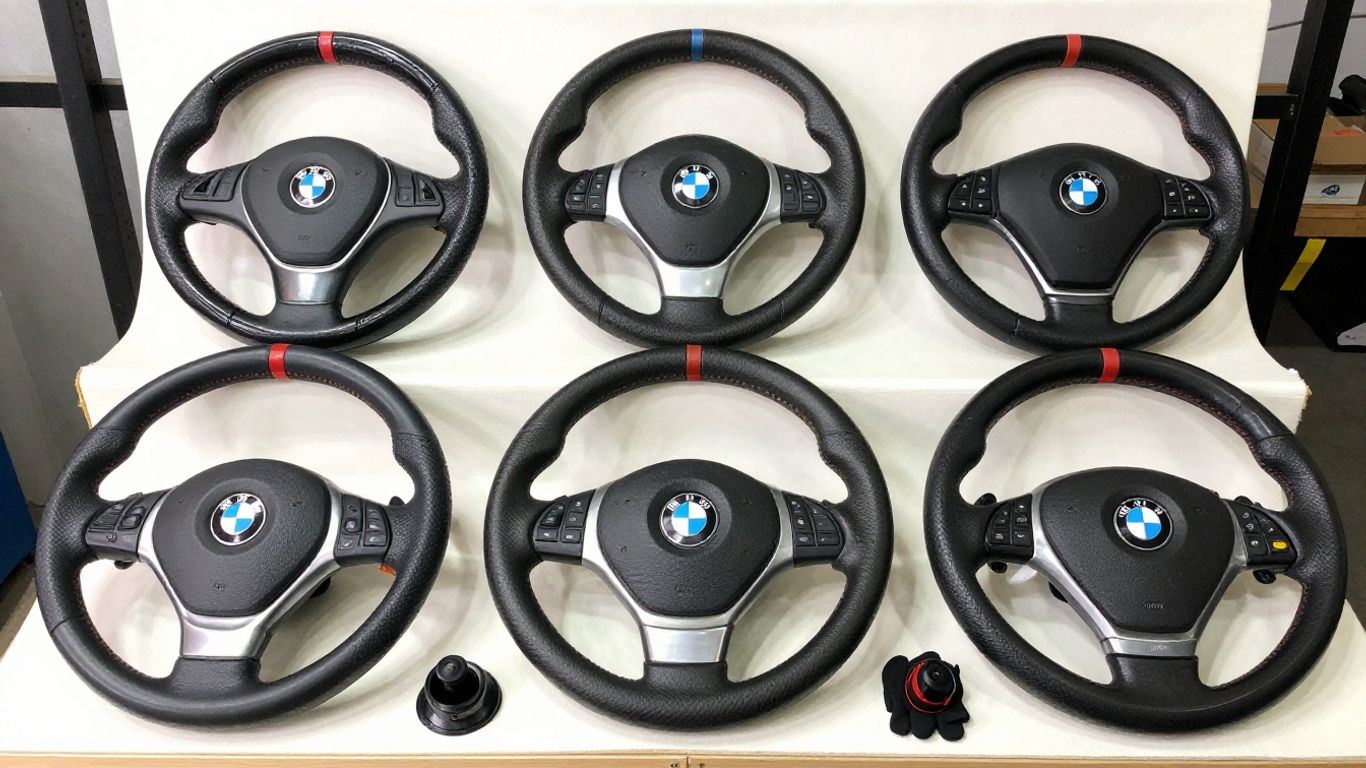
Compare BMW specialists, marketplaces, and private sellers
Begin with the type of support you need. A specialist may be useful when you need part-number guidance or a complete assembly, whereas a marketplace may suit a buyer who already knows the exact specification. A private seller can sometimes provide detailed history from the vehicle the part came from.
Compare like with like. A bare wheel should not be judged against a complete wheel with airbag and controls, and a newly rewrapped item should not be priced as an untouched original without considering the quality of the work.
Assess seller ratings, return policies, and buyer protection
Ratings are helpful, but read the written feedback for clues about descriptions, packaging, communication, and returns. Confirm whether the seller accepts returns for incorrect fitment, whether electrical or safety parts have special exclusions, and who pays return shipping.
Buyer protection is most useful when the listing is specific. Save the photographs, part number, included-parts list, and messages exchanged before payment. That record makes it easier to show whether the delivered item matches the agreement.
Recognize misleading or incomplete listings
Warning signs include stock photos, unexplained gaps in the wheel, phrases such as “may fit,” and prices that do not clarify whether the airbag is included. A listing can also be technically accurate while leaving out costly essentials, such as wiring, trim, or switch packs.
Be cautious with claims about “plug and play” installation. That phrase may describe physical mounting only and may not account for coding, calibration, missing controls, or a different airbag connector. Ask what was tested and on which vehicle.
Ask for essential photos and part details
A concise request can save a great deal of time. Ask for the rear of the wheel, the part-number label, connectors, airbag mounting area, stitching, rim wear, trim, buttons, and paddles. If the listing includes an airbag, request its identifying information and a clear view of its condition.
The seller’s response is useful evidence in itself. Detailed, consistent answers suggest the part has been examined; evasive replies leave you carrying the fitment risk. Do not allow urgency or a low price to replace missing information.
Estimate the total purchase cost
The advertised price is only the first figure. A wheel that appears inexpensive may need an airbag, trim, wiring, buttons, refinishing, or specialist installation. Build the full cost before deciding whether the upgrade makes financial sense.
Compare prices for the wheel, airbag, and trim
Separate the assembly into its major parts when comparing listings. A wheel-only price may look attractive beside a complete assembly, but the missing airbag or trim can cost more than expected. Also check whether your existing components can be reused without compromising fit or appearance.
Condition should be part of the comparison. A worn original may need rewrapping, while a clean refurbished wheel may be ready to use but still require compatible controls. Price the actual result you want, not just the cheapest initial listing.
Account for shipping, taxes, and replacement components
Oversized or carefully packaged parts can have meaningful shipping costs, and taxes or import charges may apply when buying across regions. Add possible replacement fasteners, clips, wiring, button modules, or trim pieces to the estimate. Damaged packaging can also create a dispute, so check the seller’s packing method.
Keep a small contingency for items discovered during installation. Used parts rarely arrive with every small fitting unless the listing specifically says so, and an otherwise correct purchase can stall over one missing connector or retaining piece.
Budget for coding, installation, and professional labor
Some installations are straightforward for an experienced technician, while others need diagnostic work after the physical swap. Labor may include removing the original wheel, transferring components, checking restraint faults, coding compatible equipment, and verifying steering-wheel controls.
Ask for an estimate based on your exact BMW and the parts included. A quote for fitting a complete, compatible assembly may not cover troubleshooting a mixed collection of parts. Clarify that difference before booking the work.
Decide when a new or refurbished wheel offers better value
A new wheel usually offers the clearest condition and parts history, but it may cost more than the rest of the upgrade justifies. A professionally refurbished wheel can be a sensible middle ground when the work is disclosed and the specification is correct. An original used wheel makes sense when its wear is honestly shown and the price reflects it.
The best value is the option that arrives complete, fits your car, and avoids repeated labor. A low purchase price loses its appeal if the wheel must be returned, reworked, or paired with several incompatible components.
Plan the installation and coding process
Installation involves more than removing one wheel and fitting another. The work touches the restraint system, steering controls, and sometimes vehicle configuration. Decide in advance whether you will use a qualified technician, and make sure the replacement parts and tools are ready before the vehicle is taken apart.
Prepare the correct tools and replacement hardware
Use the correct tools for the steering-wheel fastener, trim clips, electrical connectors, and any component transfer. Replace single-use or damaged hardware when the vehicle or repair guidance calls for it, and protect the interior from tools or removed trim.
Have the replacement wheel and every supporting component on hand before starting. Discovering that a button pack or airbag connector is missing after removal can leave the vehicle unusable until the correct part arrives.
Follow airbag safety procedures
Airbag work should be treated as safety-critical. Follow the vehicle-specific service procedure, isolate the electrical system as instructed, and allow the required waiting period before handling restraint connectors. Do not probe, modify, or substitute airbag wiring casually.
If you are not trained to work with restraint systems, professional installation is the safer choice. A steering wheel is not an appropriate place to learn by trial and error, particularly when the donor and recipient vehicles differ.
Disconnecting a safety system is only the beginning; correct identification, handling, reconnection, and testing all matter.
That principle applies even when the wheel appears to be a direct replacement. Keep removed parts organized, avoid forcing connectors, and stop if the assembly does not seat as expected. A small delay is preferable to hiding a mismatch behind trim.
Transfer buttons, trim, and paddle shifters correctly
Transfer only components that are confirmed compatible. Note the position and routing of wiring before removal, and make sure trim clips, button packs, and paddle connections sit securely without pinching wires. A wheel can look finished while a poorly routed harness creates a later fault.
If the replacement has different openings or switch mounts, do not modify structural or safety-related areas to make it fit. Obtain the correct component or have the job assessed by a technician who understands the specific BMW assembly.
Determine whether coding or calibration is required
Coding needs depend on the vehicle, the wheel’s equipment, and what was changed. New or different button modules, heating functions, paddles, or steering-related components may require diagnostic configuration, while some swaps may only need a fault check. Do not promise yourself a coding-free installation without verifying the parts.
Ask the installer what will be checked after the physical work. A proper plan includes clearing or diagnosing faults, confirming communications with the steering-wheel controls, and calibrating any system that the vehicle requires after the repair.
Check safety, legality, and performance after installation
The job is not finished when the wheel is tightened. Check the restraint system, controls, horn, steering position, and clearance before returning to normal driving. A short, methodical inspection can identify a connector, alignment, or coding issue before it becomes a larger problem.
Confirm that the airbag warning light stays off
Switch the vehicle on according to the applicable service procedure and check the instrument display for warning lights. An airbag warning may indicate a connector problem, stored fault, incompatible component, or an issue introduced during installation. It should be diagnosed rather than ignored or simply cleared.
If the warning returns, stop treating the wheel as complete and arrange a proper diagnostic check. Do not disconnect the warning system or conceal the light, since the restraint system may not operate as intended.
Test buttons, paddles, heating, and horn functions
Test each fitted control individually: audio or phone buttons, driver-information controls, cruise-related switches, paddles, heating, and the horn where equipped. Compare the result with the functions present before the swap and confirm that no button is sticking or sitting unevenly.
Write down any missing function instead of assuming it needs only a software change. The cause may be an absent module, different wiring, incompatible coding, or a damaged component, and each requires a different remedy.
Check steering alignment and wheel clearance
With the vehicle stationary, confirm that the wheel is centered and that it turns smoothly without rubbing. Check the clearance between the rim, column shroud, paddles, and nearby trim throughout the steering movement. A wheel that sits slightly off-center may point to installation or alignment trouble.
A road test, when appropriate and safe, should begin at low speed in a controlled area. Pay attention to unusual resistance, vibration, noises, or warning messages, and stop if anything feels abnormal.
Understand inspection and insurance considerations
Rules for modified or replaced steering wheels vary by location and vehicle. Ask a qualified local technician or inspection authority whether the change affects inspection requirements, especially if the wheel changes safety equipment, controls, or the vehicle’s original specification.
Tell your insurer about modifications when the policy requires disclosure. Keep invoices, part details, photographs, and installation records with the vehicle documents. Clear records can help establish what was fitted and how the work was completed.
Conclusion
Choosing a used M Sport steering wheel is mainly an exercise in careful matching. Verify the BMW specification, inspect the actual part, account for the complete cost, and treat airbag work and post-installation testing seriously. When those steps are handled patiently, a used wheel can be a practical way to refresh the cabin without turning a simple upgrade into an expensive fitment problem.