

Key Takeaways
A replacement dashboard is not simply a cosmetic panel. Fitment, safety components, shipping, and the seller’s return terms all deserve attention before money changes hands.
- Match the dashboard to the BMW model, generation, body style, market, and driving position.
- Use the VIN and original part number rather than relying on a broad model description.
- Inspect the surface, mounting points, airbag areas, and included trim before buying.
- Compare the complete cost of a used part with repair, refurbishment, and professional fitting.
- Confirm warranty, returns, packaging, and freight arrangements in writing.
Understanding second hand BMW dashboards
A dashboard replacement can range from a visible upper panel to a large assembly containing vents, trim, wiring, and instrument-related components. The right choice depends on what failed, what was damaged, and how closely the replacement matches the original interior. A careful buyer treats the dashboard as both a finish component and a fitment problem.
What a BMW dashboard includes
The word dashboard can describe several different things in a listing. It may mean the padded upper shell, a dashboard panel with attached trim, or a more complete assembly that still has vents, ducts, brackets, glovebox sections, and other fittings attached. Ask the seller to identify exactly what is included rather than assuming the photograph shows every part that will arrive.
Some dashboards also have openings or provisions for instrument clusters, passenger airbags, speakers, displays, and climate vents. Those openings need to correspond with your car’s equipment and interior specification. A clean-looking panel is of limited use if the required brackets or ducts are missing.
Common BMW models and dashboard generations
BMW dashboards changed across model generations, facelifts, body styles, and equipment packages. An older 3 Series dashboard may look broadly similar to one from another year while differing in vent shape, instrument opening, airbag arrangement, surface texture, or mounting points. The same caution applies to 5 Series, 7 Series, X models, and sports cars.
Treat the generation and body style as separate checks. A dashboard from a coupe, sedan, touring model, convertible, or right-hand-drive vehicle may not be interchangeable, even when the model family and interior color appear identical. Photos help with an initial comparison, but they do not replace part-number verification.
Dashboard panels versus complete dashboard assemblies
A panel-only purchase can be sensible when the underlying ducts, brackets, vents, and electronics are undamaged. A complete assembly may save dismantling time, but it can also cost more to ship and may include parts you do not need. Clarify whether attached components are included, removed, damaged, or sold separately.
Before choosing, compare the labor involved in transferring your original components. Clips can break during removal, and hidden fasteners may be difficult to access. The cheapest listing is not always the cheapest repair once missing trim and extra labor are included.
Why owners choose used dashboards over new parts
Used dashboards are often considered when a new original part is expensive, unavailable, or difficult to source for an older vehicle. A salvaged component may also retain the correct factory texture, color, and shape, which can be hard to reproduce with a generic replacement. That does not make every used part a bargain.
Age, sun exposure, storage, and previous removal all affect value. A dashboard with minor wear may be a practical solution for a driver’s car, while a collector or carefully restored vehicle may justify a cleaner example or professional refurbishment.
Identifying the correct dashboard for your BMW
Correct identification should happen before condition and price become distractions. Small differences in dashboard design can affect airbags, vents, wiring, and the way the assembly attaches to the body. Gather the vehicle details and compare them with the seller’s information in a methodical way.
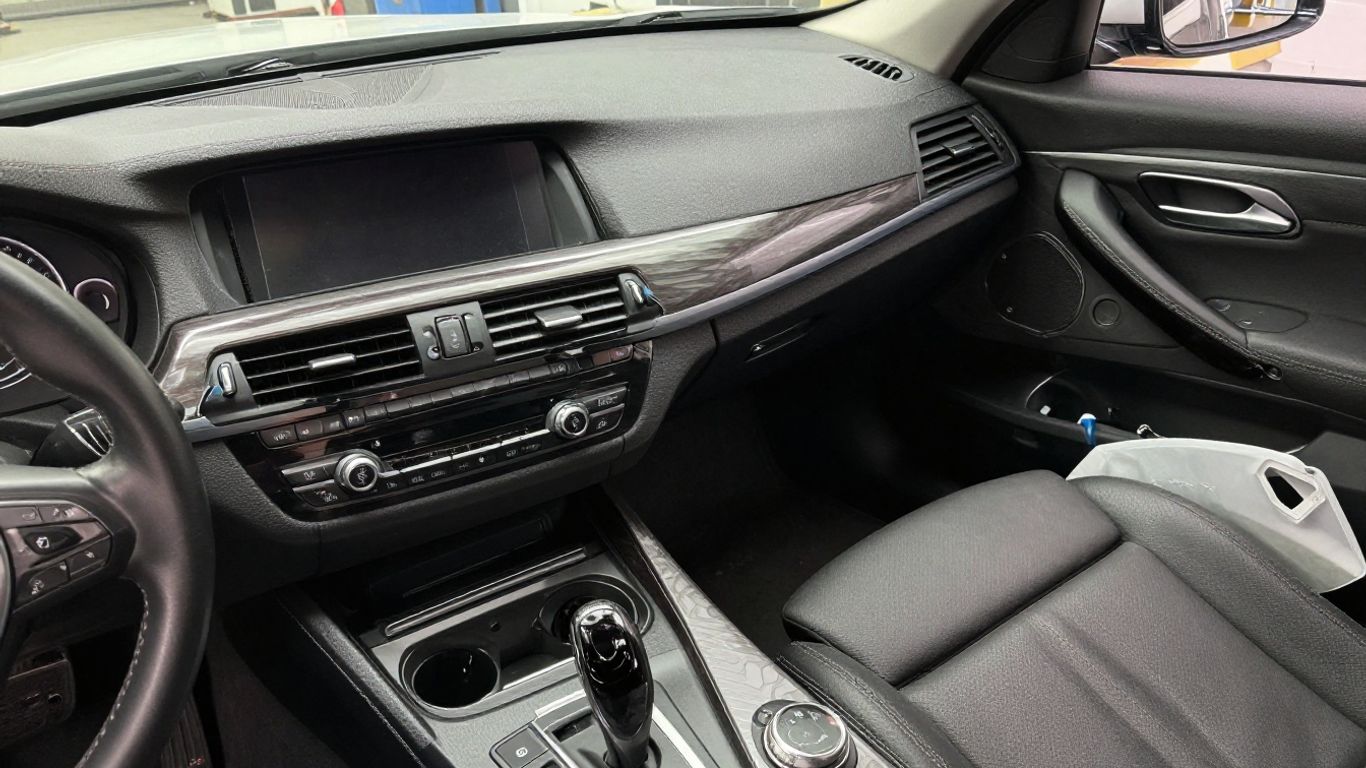
Matching the model, generation, and body style
Start with the exact model designation, production year or build date, chassis generation, body style, and engine or equipment variant where relevant. A listing that says only “BMW dashboard” leaves too much uncertainty. Compare the shape of the instrument opening, center vents, glovebox area, speaker grilles, and end panels with your original part.
Facelift changes deserve special attention because they can occur within one generation. If the seller provides a donor vehicle identification number, use it as an additional reference, not as a substitute for checking the actual part number and physical design.
Checking left-hand-drive and right-hand-drive compatibility
Driving position changes the layout of the dashboard and often affects the passenger airbag, glovebox, steering-column opening, vents, wiring routes, and mounting details. A left-hand-drive dashboard should not be treated as a direct replacement for a right-hand-drive car simply because the model name is the same.
Ask for a clear view of both ends, the steering-column area, and the passenger side. If the dashboard has been partially stripped, confirm whether the seller knows which market and driving position the donor vehicle used.
Using the VIN and original part number
The VIN can help identify the car’s production specification, while the original part number gives you a more direct way to compare the replacement. Record the number from your existing dashboard or its related documentation, including suffixes and revision markings where visible. Do not rely on a title such as “fits E90” without further evidence.
Send the seller your VIN and ask for written confirmation of compatibility. A responsible answer may still include a request for photographs or a parts-catalogue check, which is preferable to an automatic promise based on a broad model range.
Confirming compatibility with airbags, vents, and electronics
A dashboard may have the correct outer shape but incorrect openings, brackets, airbag provisions, or wiring paths. Check whether the replacement is supplied bare or with the components shown in the photographs. Instrument clusters, display units, sensors, and airbags may require separate verification and should never be assumed to transfer without inspection.
This is also where the vehicle’s options matter. Different audio, navigation, climate-control, and passenger-safety configurations can change the visible and hidden structure. Put every uncertainty in writing before purchase so there is a clear record if the part proves unsuitable.
Assessing the condition before buying
A used dashboard can look excellent in a small listing photograph and still have damage that becomes obvious in daylight. Examine the surface from several angles, then inspect the rear and underside wherever possible. Condition is not only about appearance; hidden damage can make fitting slow, unsafe, or impossible.
Inspecting cracks, warping, fading, and heat damage
Look for cracks around vents, speaker openings, instrument apertures, and corners because those areas experience stress during removal and installation. Check for rippling, raised edges, shrinkage, discoloration, sticky surfaces, and gloss differences caused by heat or prolonged sunlight. A dashboard that has warped may not sit correctly even if the damage is subtle.
Ask whether the photographs were taken recently and whether the part was stored indoors. Compare the color under consistent lighting, since shadows and phone-camera processing can make a faded panel appear closer to the original than it really is.
Checking mounting points, clips, and fasteners
The rear of the dashboard often tells you more than the front. Request photographs of mounting tabs, screw holes, brackets, clips, duct connections, and threaded inserts. Missing or repaired mounting points can create rattles, gaps, or stress in the replacement, while broken clips may force you to transfer hardware from your original dashboard.
Ask the seller to identify any known broken fasteners rather than describing the part as complete without qualification. If a mounting point has been repaired, find out what material was used and whether the repair was made before or after removal.
Looking for damage around airbags and instrument panels
Areas surrounding airbag openings and instrument panels deserve a separate inspection. Look for torn material, lifted seams, distorted edges, cuts, deployment marks, heat damage, or evidence that a panel was altered after a collision. A dashboard from a vehicle with deployed airbags may require much more than a cosmetic repair.
Do not buy an airbag or safety-related component based only on a clean photograph. Confirm what the listing includes and have safety systems assessed by an appropriately qualified professional before the vehicle returns to the road.
Evaluating photos and requesting additional evidence
Good photographs show the front, rear, underside, ends, mounting points, airbag areas, and any flaws mentioned in the description. If only one front-facing image is available, ask for more before making an offer. Request close-ups of scratches, seams, color differences, labels, and part numbers rather than accepting a general statement about condition.
Use the seller’s response as evidence of how carefully the part has been handled. Clear, specific answers are useful; vague assurances are a reason to slow down. Keep the listing and messages until the dashboard has been inspected after delivery.
A used interior part should be judged by its hidden attachment points as well as its visible finish.
That principle is especially useful when two dashboards look similar in a marketplace photograph. The one with documented mounting points and honest flaws may be a safer purchase than the prettier listing with no underside evidence.
Finding reliable second hand BMW dashboards
The source of the part affects the quality of the description, the accuracy of fitment information, and the support available after purchase. Salvage yards, specialist dismantlers, and general marketplaces can all produce worthwhile leads, but they do not offer the same level of inspection or accountability. Compare the seller as carefully as the dashboard.
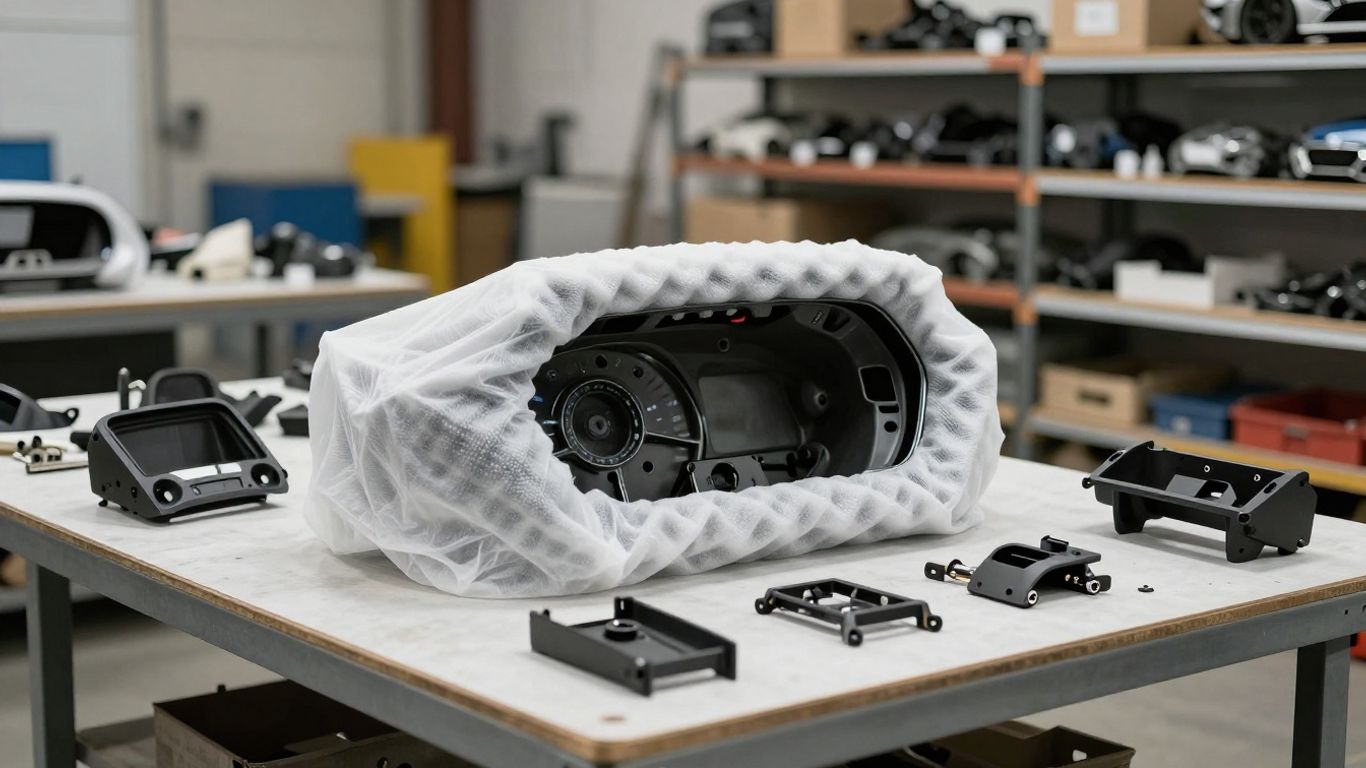
Comparing salvage yards, specialist dismantlers, and marketplaces
A professional dismantler may know the donor vehicle, record the removal process, and label the part with a stock or original number. A general marketplace may offer more choice and lower advertised prices, but descriptions can vary widely between sellers. Local yards may also let you inspect a large dashboard before arranging transport.
Consider how each source handles damaged, incomplete, or incorrectly described parts. The best source is not automatically the one with the lowest price; it is the one that gives you enough information to judge fitment and condition with reasonable confidence.
Reviewing seller ratings, warranties, and return policies
Read recent feedback for comments about packaging, accuracy, communication, and how disputes were handled. A warranty may cover defects but exclude cosmetic wear, installation labor, or damage caused during fitting. Return policies can also differ for oversized freight items, special orders, and parts removed from a vehicle.
Ask who pays return shipping, whether a restocking charge applies, and how long you have to report a problem. Get those answers before payment, particularly when the dashboard is costly or difficult to ship back.
Asking about vehicle history and storage conditions
The donor vehicle’s history can explain why a dashboard is available and whether it may have been exposed to collision damage, floodwater, smoke, or prolonged outdoor storage. Ask whether the car was dismantled indoors, how long the part has been stored, and whether it was protected from heat and moisture.
Storage does not guarantee condition, but it gives useful context. A seller who can describe the donor car and show consistent removal photographs is generally providing more usable evidence than one offering only a generic stock image.
Recognizing misleading listings and counterfeit parts
Be cautious when a listing uses broad fitment language, copied photographs, inconsistent part numbers, or unusually perfect condition claims. “OEM style” and similar wording may not mean the part was made for the original vehicle. Check molded markings, labels, texture, stitching, and construction against your original dashboard where possible.
Do not let scarcity pressure you into skipping verification. A rare dashboard still needs a clear identity, a realistic condition description, and terms that protect you if the item differs materially from the listing.
Understanding costs and shipping considerations
The advertised price is only one part of the purchase decision. Dashboards are large, awkward items that may require freight handling, special packaging, and careful unloading. Build a delivered-and-fitted estimate before comparing two listings that appear far apart in price.
Comparing dashboard prices by BMW model and rarity
Prices vary with model age, production volume, interior color, trim level, driving position, and demand for a particular generation. Rare colors and unusual body styles can command more, while common panels may be easier to find at lower prices. A dashboard with attached vents and trim may cost more than a bare shell but reduce the work of sourcing separate pieces.
Compare like with like: same specification, similar condition, and the same included components. A low price for an incomplete dashboard is not directly comparable with a tested or documented assembly.
Factoring in delivery, insurance, and packaging
Ask for a firm shipping quote that includes the destination, dimensions, delivery method, and any residential or liftgate charges. Confirm how the dashboard will be protected from bending, abrasion, and impact. Photograph the packaging before opening it, then inspect the part for transit damage while the delivery paperwork is still available.
Insurance terms matter because oversized freight claims may have strict reporting windows. A seller who separates the part price from freight is not necessarily charging more overall, but the full amount should be understood before checkout.
Estimating removal, fitting, and refurbishment costs
Professional removal and fitting can be significant because the dashboard may sit around wiring, trim, vents, instruments, and safety equipment. Add possible costs for replacement clips, missing fasteners, surface repair, color matching, cleaning, and electronic diagnosis. If the existing dashboard can be repaired in place, compare that quote with the entire replacement process.
A simple cost worksheet can prevent wishful arithmetic. Include the part, delivery, consumables, specialist labor, refurbishment, and a reserve for broken clips or unexpected damage. The result is more useful than the listing price alone.
Deciding when a more expensive verified part is worthwhile
A higher-priced dashboard may be sensible when it has a confirmed part number, clear photographs, known donor history, intact mounting points, and usable warranty terms. Those details reduce the chance of paying twice for freight or discovering that the part cannot be installed. Verification has practical value when the dashboard is rare or the job is labor-intensive.
For a common model, a cheaper part may still be reasonable if the seller supplies strong evidence and the return process is workable. The decision should reflect risk, not just the difference between two numbers.
Installing and refurbishing a used BMW dashboard
Dashboard work is a major interior repair, and preparation usually determines whether the job stays controlled. Before removing anything, identify the components that must be transferred and photograph their positions. Allow more time than the seller’s removal estimate if the vehicle has complex trim or electronic equipment.
Preparing the vehicle and documenting existing connections
Use a clean, well-lit workspace and protect the seats, console, doors, and glass from tools and removed parts. Photograph every connector, ground point, bracket, clip location, and cable route before disassembly. Bag fasteners by area and label them, since similar screws can have different lengths or functions.
Compare the replacement with the original while both are available. This is the best time to discover that a vent, duct, bracket, trim piece, or opening differs from the listing photographs.
Handling airbags, wiring, trim, and electronic components safely
Airbags and associated wiring require the procedures specified for the vehicle and should not be treated like ordinary trim. Disconnect the vehicle as directed by the manufacturer or a qualified technician, avoid probing safety-system connectors, and keep removed components secure. Do not modify an airbag opening or wiring route to force an apparently similar dashboard into place.
Trim can be brittle, especially in older interiors. Use appropriate removal tools, support panels from behind, and replace damaged clips rather than relying on improvised fasteners. Electronic components should be protected from static, impact, and careless connector handling.
Checking fitment before final assembly
Set the replacement in position before tightening everything and check the alignment of the windshield edge, instrument opening, vents, glovebox, console, side panels, and steering-column area. Confirm that wiring reaches its intended connectors without tension. This dry fit is slower than immediately finishing the installation, but it can reveal a mismatch while correction is still easy.
After the dashboard sits correctly, inspect for uneven gaps, creaks, trapped wiring, and obstructed vents. Test relevant functions according to the vehicle’s service procedure before reinstalling every trim panel, then address any warning lights with proper diagnostics.
When to use a BMW specialist or qualified technician
Professional help is appropriate when the job involves airbags, uncertain wiring, electronic programming, collision damage, or a dashboard that requires structural repair. A technician can also identify a parts mismatch before it becomes an expensive reassembly problem. The right specialist should be familiar with the vehicle generation and the safety procedures involved.
Even if you do the interior preparation yourself, arrange professional inspection for safety-critical systems when you are not fully confident. Saving labor is not worthwhile if it compromises occupant protection or leaves a warning light unresolved.
Making the final purchase decision
A good decision brings together identity, condition, price, logistics, and installation risk. No single photograph or seller promise can answer every question. Use a written comparison so an attractive price does not overshadow a major compatibility gap.
Building a compatibility and condition checklist
Record the model, generation, body style, build date, driving position, interior color, equipment openings, original part number, and replacement part number. Add notes about cracks, fading, mounting points, airbag areas, included components, donor history, photographs, warranty, returns, and shipping. This turns a vague search into a clear pass-or-pause decision.
If any essential detail remains unknown, ask the seller before ordering. A dashboard should not move into the “buy” column merely because it is available today.
Comparing a used dashboard with repair or refurbishment
Repair may be preferable when the original dashboard is correctly fitted, structurally sound, and affected by limited cosmetic damage. Replacement can make more sense when the panel is warped, badly cracked, contaminated, or damaged around key openings. Obtain estimates for both paths, including removal and refitting rather than comparing repair material with the dashboard price alone.
A specialist can advise whether a surface can be repaired without creating a visible texture or color mismatch. For a valued vehicle, the quality and consistency of the finished interior may matter more than the initial saving.
Confirming the seller’s warranty and return terms
Before paying, save the listing, photographs, messages, invoice, and agreed part number. Confirm the inspection period, acceptable evidence for a claim, return address, shipping responsibility, and any restocking or special-order exclusions. Oversized freight returns can be expensive, so ambiguity here deserves a pause.
Read the terms alongside the condition description. A warranty that covers a defective component may not cover a part that was ordered for the wrong specification or damaged during buyer installation.
Planning for future maintenance and resale value
Keep records of the dashboard’s source, part number, repairs, and installation. Use suitable interior-cleaning products, limit prolonged heat and sun exposure, and address new rattles or trim movement early. These simple habits help preserve the replacement and make later diagnosis easier.
If you sell the car, documentation can reassure a buyer that the dashboard was sourced and fitted thoughtfully. A tidy record will not eliminate questions about a used part, but it can support the vehicle’s overall history and credibility.
Conclusion
Choosing among second hand BMW dashboards is a matter of matching the exact part, verifying its condition, and pricing the whole job rather than the listing alone. With careful photographs, part-number checks, honest seller terms, and qualified help around safety systems, a used dashboard can be a practical replacement instead of an expensive gamble.