

Key Takeaways
Recycled BMW door trims can be a sensible way to repair an interior while keeping usable materials in circulation. The right choice depends on exact fitment, honest condition details, and safe installation.
- Match the trim to the BMW model, body style, production year, door position, and interior specification.
- Compare OEM part numbers and confirm openings for switches, speakers, lighting, and controls.
- Inspect clips, mounting points, surfaces, color, texture, and signs of warping before buying.
- Include shipping, returns, installation, hardware, and warranty terms when comparing prices.
- Disconnect electrical systems and work carefully around airbags, wiring, and fragile trim fasteners.
Understanding recycled BMW door trims
Recycled BMW door trims are interior panels recovered from vehicles, then inspected, cleaned, and resold for continued use. They may retain original materials and hardware, although their condition can vary considerably from one panel to another. A good purchase begins with understanding what “recycled” means in the specific listing. It is not automatically the same as new, refurbished, or simply used.
What recycled door trims are made from
Door trims commonly combine molded plastic, fabric, vinyl, leather, foam, decorative inserts, and small metal or plastic fasteners. The exact mix depends on the vehicle’s interior design and equipment level. Some panels include attached wiring, light housings, speaker grilles, pockets, or switch surrounds, while others are sold as the panel only. Read the description closely so you know which pieces are included.
Recovered material can have a useful second life even when the surrounding vehicle is no longer roadworthy. The panel itself may be original to the car, with its shape and mounting points formed for that particular interior. That original construction is often more valuable than a vague promise that a replacement “looks similar.”
How recycled trims differ from used and aftermarket parts
“Used” generally describes a part that was removed from another vehicle, whether or not it was cleaned or tested. “Recycled” often highlights the recovery and reuse process, but sellers use the term differently, so ask what work was actually performed. An aftermarket panel is made by a separate manufacturer and may differ in texture, fit, color, fastening, or provisions for interior equipment.
A recycled panel can still show ordinary wear, while an aftermarket panel can be unused yet require adjustment. Neither label alone establishes quality. The part description matters most: it should identify the source vehicle, position, finish, included hardware, and known defects.
Which BMW models and generations they fit
Fitment is tied to more than the BMW badge. Model series, generation, body style, production period, market, interior trim, and equipment can all affect the panel. A door trim from a sedan may not fit a coupe, convertible, wagon, or SUV even when the model family appears similar.
Treat photos as supporting evidence rather than proof of compatibility. Confirm the donor vehicle details and compare the panel’s shape, handle area, storage pocket, fastener locations, and openings with your original part. If any of those details differ, pause before ordering.
Why material quality and construction matter
A door panel must sit securely, resist everyday contact, and leave switches and handles correctly aligned. Crushed foam, brittle plastic, loose decorative inserts, or stretched upholstery can make a replacement feel poor even when the outline is correct. Construction also affects how easily the panel can be installed without creating rattles.
Look for clear photos of the front, rear, edges, and mounting side. A seller who documents those areas gives you a better chance of judging whether the trim is ready to install or will need repair. Small defects may be acceptable for a budget repair, but hidden structural damage deserves a lower price or a pass.
Assessing compatibility before you buy
Compatibility is the most consequential check when shopping for recycled BMW door trims. A clean panel that does not match your car can become an expensive return, especially after international or oversized shipping. Gather your vehicle information and original-part details before comparing listings. That small amount of preparation usually saves more time than trying to correct a mistaken order later.
Matching the model, body style, and production year
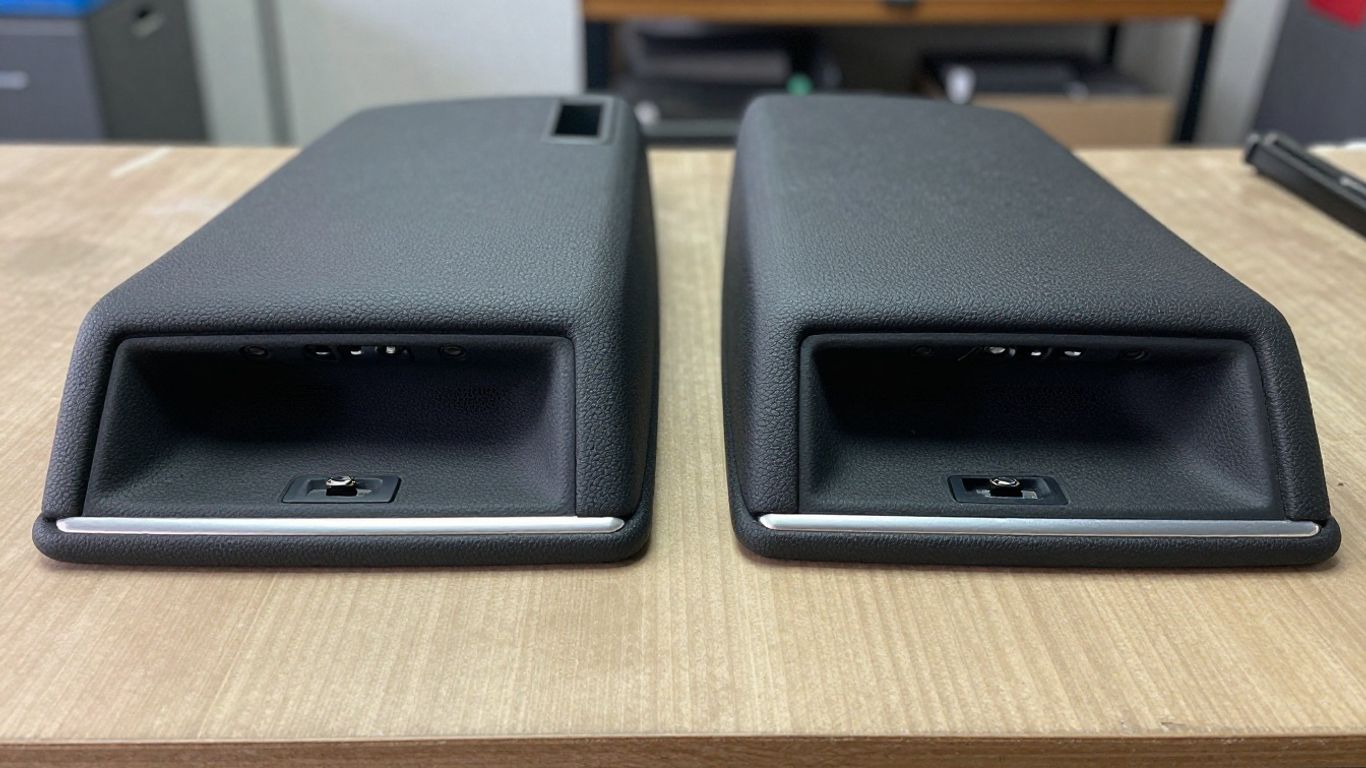
Start with the model designation, generation, body style, production year, and, where available, the vehicle identification number. Production changes can alter mounting points or electrical provisions within what appears to be the same model run. Ask the seller to confirm fitment against those details rather than relying on a broad title such as “BMW interior panel.”
A donor panel from the same body style and nearby production period is a useful starting point, not a final confirmation. Compare the donor and recipient interiors directly, including the armrest contour, door pull, lower pocket, and trim insert.
Checking front, rear, left, and right door positions
Door position must be treated as a primary specification. Front and rear panels often have different lengths, contours, pockets, and control openings, while left and right panels are mirror images rather than interchangeable parts. Driver-side equipment can also make one front panel different from its passenger-side counterpart.
Before purchase, make a simple visual comparison using your original panel and the listing photographs. Check the top edge, handle opening, speaker area, lower corner, and every visible clip location. If the listing does not clearly identify the position, request confirmation in writing.
Comparing OEM part numbers and trim specifications
Part numbers provide a stronger reference than appearance alone, although suffixes and revisions still need attention. Record the number from your original panel if it is visible, then compare it with the number supplied by the seller. Also verify finish names, material, color code, and whether the listing covers a complete assembly or a panel only.
The following comparison keeps the essential checks together without treating any one detail as conclusive:
| Check | What to compare | Why it matters |
|---|---|---|
| Vehicle identity | Model, generation, body style, year | Narrows the correct fitment range |
| Door position | Front or rear, left or right | Prevents mirror-image and location errors |
| Part reference | OEM number and suffix | Helps identify revisions and specifications |
| Interior finish | Color, material, insert, package | Reduces visible mismatch after installation |
| Equipment openings | Switches, lights, speakers, controls | Confirms the panel supports your car’s hardware |
Use the table as a screening tool, then ask the seller to resolve any mismatch. A part number that differs by one character may reflect a revision, a different market, or a genuinely incompatible component, so it should never be dismissed casually.
Identifying differences in lighting, speakers, and controls
Interior equipment can change the panel even when its exterior silhouette is nearly identical. Compare ambient-light strips, courtesy lamps, speaker grilles, window switches, mirror controls, seat controls, memory buttons, and child-lock or rear-door provisions where applicable. Also check whether wiring and housings are included or must be transferred.
Photographs should show the panel face and its rear side when electrical provisions matter. If you cannot see the relevant opening or connector, treat that as an unanswered question rather than assuming the missing feature is hidden.
Evaluating condition and sustainability
A recycled panel has value because it avoids making a usable component from new material, but sustainability does not remove the need for inspection. A damaged panel may require extra shipping, repair materials, or replacement hardware that weakens both its financial and environmental advantage. Consider the part’s remaining service life, not just its purchase price. The best choice is usually the panel that can be installed and used reliably.
Inspecting clips, mounting points, and fasteners
Inspect the rear of the trim for broken clips, torn mounting sockets, missing screws, bent brackets, and cracked plastic around attachment points. These areas are easy to overlook because listing photos often focus on the visible surface. A panel with minor cosmetic wear may be perfectly usable, while one with damaged mounts can rattle or fail to sit flush.
Ask whether the pictured fasteners are included. If not, price the required clips and retainers before deciding. Matching replacements are usually preferable to forcing unsuitable hardware into delicate mounting points.
Checking surfaces for scratches, fading, and warping
Look at the panel in even light and ask for close images of high-contact areas such as the armrest, door pull, upper edge, and storage pocket. Check for deep scratches, dye transfer, fading, peeling, stains, dents, and separation between materials. A wide-angle photograph can hide surface damage, so close-ups are worthwhile.
Warping deserves special attention. A bowed edge or distorted opening can indicate heat exposure, impact, or weakened backing material. Minor marks may be acceptable when the panel is otherwise straight and secure, but warping is harder to disguise after installation.
Understanding recycled content and refurbishment methods
The word recycled may refer to a recovered vehicle part, reused hardware, refurbished surfaces, or a combination of these. Ask whether the panel was merely cleaned, professionally recolored, repaired, reupholstered, or modified. Each method affects appearance, durability, and how closely the finished panel matches the rest of the cabin.
A practical environmental assessment includes the work still required after purchase. Reusing an original panel can reduce demand for a new replacement, but shipping a poorly described part back and forth or discarding it after an unsuccessful repair adds avoidable waste.
A sustainable replacement is one that remains useful, fits correctly, and lasts through normal service.
That principle keeps the decision grounded. Recycled content is valuable, but it should be considered alongside fit, condition, repairability, and expected longevity rather than treated as a substitute for those checks.
Balancing environmental benefits with replacement needs
Replacing only the damaged trim can be more sensible than changing an entire interior, especially when the existing panels are otherwise sound. Matching a recovered panel to the cabin may extend the life of several original components at once. However, a badly worn or structurally damaged part may need more work than it is worth.
Compare the recovered option with repairing your current panel. Cleaning, replacing a few clips, or repairing a loose insert may preserve the best match. If the original is cracked, soaked, or badly warped, a well-documented recycled replacement may be the more responsible long-term choice.
Where to source recycled BMW door trims
The source affects the quality of the information you receive as much as the price. Automotive recyclers may document donor vehicles and stock numbers, while specialist sellers may know the differences between interior packages. Online marketplaces offer broader choice but require more independent checking. Whichever route you use, favor listings that show the actual part rather than a generic catalog image.
Salvage yards and automotive recycling centers
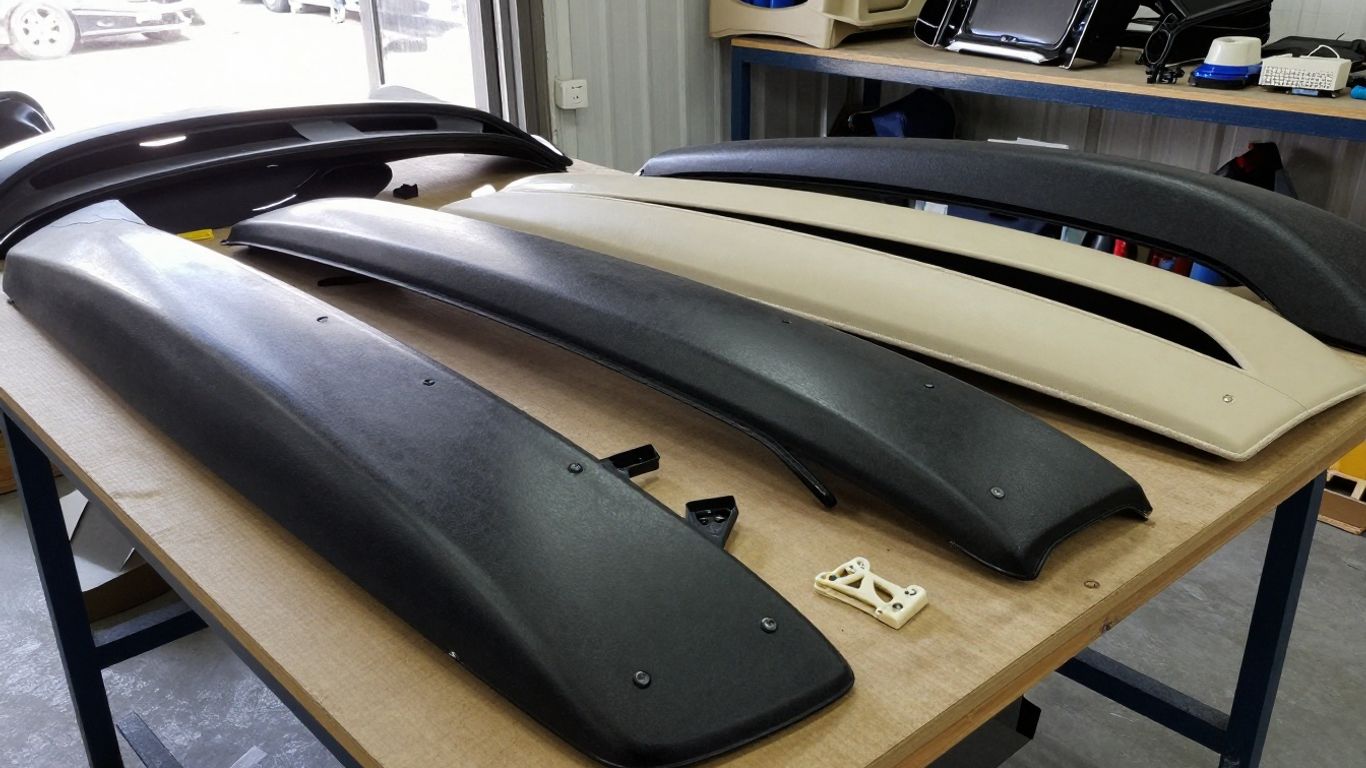
Salvage yards and automotive recycling centers can provide useful donor-vehicle details, including model year, body style, mileage, and visible condition. Some allow you to inspect or photograph the panel before removal, which is especially helpful for checking rear mounting points. Ask whether the part remains attached to the vehicle and how it will be packaged after removal.
Local collection can also reduce shipping risk for large, easily scuffed panels. If you collect in person, bring measurements or photographs of your original trim and inspect the replacement before accepting it.
Online used-parts marketplaces and BMW specialists
Online marketplaces make it easier to compare several colors, positions, and production years at once. BMW-focused specialists may provide more precise terminology and recognize differences that a general listing misses. Still, the buyer should verify the actual part number, photos, condition grade, and included components.
Read the return policy before paying, particularly where the seller describes fitment as “ believed to fit” or uses broad compatibility language. Save the listing and photographs in case the delivered part differs from the advertised condition.
Dealer takeoffs and certified refurbishment programs
Dealer takeoffs may be removed from vehicles during upgrades or repairs and can have limited use, but the term does not guarantee a perfect match. Certified refurbishment programs, where available, may include documented inspection or surface work. Ask what certification covers and whether it applies to clips, wiring, upholstery, and decorative inserts or only to the visible panel.
These sources can cost more than informal salvage listings, yet clearer documentation may reduce installation surprises. The value depends on what is actually inspected and guaranteed, not on the label alone.
Questions to ask sellers before purchasing
Good questions are specific enough to produce useful answers. Request the donor model and year, exact door position, OEM number, interior color or trim code, condition of every mounting point, included hardware, and photographs of the rear side. Also ask about prior repairs, smoke or moisture exposure, returns, and packaging for shipment.
A seller’s response can reveal as much as the part itself. Detailed answers and consistent photos suggest that the listing was prepared carefully, while vague replies should prompt more caution or a different source.
Comparing costs and long-term value
The cheapest listing is not always the least expensive solution. Door trims are large, delicate parts, and a low purchase price can be offset by oversized shipping, missing clips, refinishing, or professional installation. Compare the full cost of receiving a usable panel. Then consider whether it will match the cabin and remain secure over time.
How recycled trims compare with new OEM parts
New OEM parts offer predictable condition and, in many cases, a direct ordering process, but availability and price vary by model and production age. A recycled original panel may provide the same basic factory shape at a lower acquisition cost, while carrying cosmetic wear or uncertain hardware. The right comparison is between a complete, ready-to-use recycled part and the actual new-part cost for your vehicle.
Do not compare a panel-only listing with a complete assembly without adjusting the numbers. If switches, grilles, lights, or wiring must be transferred, the labor and risk belong in the calculation.
When aftermarket alternatives make sense
An aftermarket alternative may be reasonable when an original panel is unavailable, unusually expensive, or needed only for a temporary repair. Check its materials, fastening method, surface finish, and provisions for your vehicle’s equipment. The lower price is useful only if the part fits without extensive modification.
For a visible interior component, texture and color can matter as much as basic attachment. A panel that requires cutting, drilling, or improvised fasteners may create more trouble than a properly matched recycled original.
Factoring in shipping, returns, and installation costs
Calculate the delivered price rather than the advertised price. Include packing, freight, taxes, return shipping, replacement clips, cleaning supplies, and labor if you will not install the part yourself. Oversized packaging can also increase the chance of corner damage, so ask how the seller protects edges and trim inserts.
A return policy is meaningful only if the part can be returned economically and within the stated period. Photograph the package when it arrives and inspect the panel before removing protective wrapping or transferring hardware.
Evaluating warranties and seller guarantees
A warranty may cover breakage, defects, or fitment, but those terms are not interchangeable. Read the duration, exclusions, claim process, and responsibility for shipping. Ask whether cosmetic wear, missing clips, electrical components, and previous repairs are included.
Seller guarantees should be specific enough to test. “Fits your BMW” is less useful than a written fitment statement tied to your model, year, body style, door position, and part number. Keep all messages and the original listing until the installation is complete.
Installing and maintaining recycled BMW door trims
Installation is easier when the replacement has been checked beside the car before the original panel is removed. Work slowly, protect painted surfaces, and keep fasteners organized as they come out. Recycled trim can be just as straightforward to install as a new panel, but older clips and connectors deserve extra care. Never rush a panel that is still attached by hidden wiring or a restraint-related component.
Tools and preparation for a safe installation
Prepare trim-removal tools, suitable screwdrivers, a small container for fasteners, masking tape, a work light, and protective cloths. Review the vehicle’s service information for disconnection procedures before touching electrical connectors. Take photographs of switch locations and cable routing so transfers are easier to reverse if something does not line up.
Work in a dry, well-lit area with the window position and seat adjusted for access. Compare the new and old panels one more time, including every opening and mounting point, before beginning removal.
Removing the original door trim without damaging clips
Remove visible screws and covers carefully, then release the panel with a trim tool at the designated attachment points rather than pulling randomly from one corner. Support the panel as it loosens because cables and connectors may still be attached. Keep each clip with the panel until you can assess whether it is reusable.
If a clip remains in the door, remove it with the proper tool instead of leaving it to interfere with refitting. Excessive force can crack the panel backing or bend the door skin, turning a simple replacement into a larger repair.
Transferring switches, lights, speakers, and hardware
Transfer components one at a time and compare each connector, screw location, and retaining tab with the replacement panel. Do not assume that a switch bezel or speaker grille is interchangeable simply because it looks close. Test-fit components without forcing them, and replace brittle or distorted retainers.
Reconnect wiring only after the panel is positioned correctly and cables are routed away from pinch points. Before final fastening, check that handles move freely, switches sit flush, and the panel meets the door evenly around its perimeter.
Cleaning and protecting recycled trim surfaces
Clean the replacement before installation with a product suitable for its material, testing an inconspicuous area first. Use gentle methods on dyed vinyl, leather, fabric, and soft-touch coatings because aggressive solvents can create shiny patches or remove color. Avoid soaking the panel, particularly around lights, switches, and speaker areas.
After installation, wipe dust away regularly with a soft cloth and keep harsh cleaners away from decorative finishes. Address loose edges and new rattles early; they are easier to correct before clips or mounting sockets become further stressed.
Avoiding common purchasing and installation mistakes
Most problems arise from assumptions that seem harmless at first. A familiar model name, a nearly matching color, or a low price can distract from the details that determine fit. Slow comparison is usually more efficient than correcting an incorrect purchase. Treat every unknown specification as something to verify.
Buying a visually similar but incompatible panel
A panel can share the same general shape while differing in door length, handle position, fastener layout, or equipment openings. This is common when listings group several years or body styles under one title. Use the VIN, OEM number, donor details, and measured features to establish compatibility before payment.
If the seller cannot identify the panel’s original application, do not rely on a photograph taken from a distance. A return may be possible, but avoiding the mismatch is safer and usually cheaper.
Overlooking color, texture, and interior package differences
Black is not one universal interior finish, and matching color alone may not match grain, sheen, stitching, insert material, or package-specific details. Compare the replacement with an undamaged area of your cabin in natural light. Consider whether a single replacement panel will look acceptable beside the remaining three.
When an exact finish is unavailable, ask about recoloring or swapping compatible inserts before buying. That work should be priced and assessed realistically rather than treated as a guaranteed cosmetic fix.
Reusing damaged clips or missing hardware
Old clips can be brittle even when they appear intact, especially after removal. Missing screws, retainers, seals, or brackets can leave the panel loose and create noises that are difficult to trace. Count the hardware and inspect each attachment point before final assembly.
Buy the correct replacement fasteners rather than improvising with oversized screws or generic retainers. The wrong hardware can damage the panel, interfere with wiring, or prevent the trim from sitting flush.
Ignoring airbag and electrical safety precautions
Door interiors may contain wiring, speakers, lights, switches, and restraint-related equipment. Follow the vehicle-specific procedure for disconnecting power and waiting before working near airbag circuits. Never probe unknown connectors or pull on wiring by its cables.
If the panel will not release, stop and look for a hidden fastener or connected component. When the work involves an airbag system or unfamiliar electrical fault, professional assistance is the safer choice. A careful installation protects both the replacement panel and the people in the vehicle.
Conclusion
Choosing recycled BMW door trims works best as a careful matching exercise rather than an impulse purchase. Verify the donor details and part number, inspect condition and hardware, calculate the complete cost, and install the panel with appropriate electrical and restraint precautions. Done that way, a recovered interior component can provide a practical repair while keeping a usable part in service longer.