

Key Takeaways
A recycled BMW grille can be a sensible way to restore the front of a vehicle without automatically buying new. The best results come from matching the exact part, inspecting it carefully, and understanding the seller’s terms.
- Match the grille to the BMW’s model, generation, year, and body style.
- Inspect clips, mounting points, finish, inserts, and hidden damage before buying.
- Compare the complete cost, including shipping, installation, and possible refinishing.
- Ask for clear photos, part numbers, condition details, and return terms.
- Install the grille carefully and protect its finish with gentle regular cleaning.
Understanding recycled BMW grilles and their benefits
Recycled BMW grilles are typically removed from vehicles that are being dismantled, repaired, or taken off the road. They may show ordinary signs of previous use, but they can still be structurally sound and visually suitable for another BMW. The key is to separate a genuinely usable part from one that only looks acceptable in a quick listing photo. For many owners, recycled BMW grilles offer a practical balance between originality, cost, and waste reduction.
What makes a BMW grille recycled or reused
A recycled grille has already served on a vehicle and is being sold for another use rather than discarded. It may come from a collision-damaged car whose grille escaped damage, or from a vehicle dismantled for parts. The part should be described honestly, including any repairs, missing tabs, fading, scratches, or changes to its finish. A used grille is not automatically refurbished; cleaning and resale do not necessarily mean that it has been rebuilt or restored.
OEM, refurbished, and aftermarket grille differences
An OEM grille was made for the vehicle manufacturer and is generally the closest match for factory shape, fit, and finish. A refurbished grille is a previously used part that has received some form of repair, cleaning, refinishing, or component replacement. An aftermarket grille is made by another manufacturer and may offer a different finish or styling detail, even when it is advertised as compatible.
The terminology matters because two grilles can look similar in a listing while differing substantially in fit and condition. Use the comparison below as a starting point, then confirm the actual part number and seller description.
| Part type | Typical source | Main advantage | Main concern |
|---|---|---|---|
| Recycled OEM | Dismantled BMW or used-parts seller | Factory-origin part | Wear or hidden damage |
| Refurbished OEM | Used part prepared for resale | Improved appearance or function | Quality of refurbishment varies |
| New OEM | BMW parts channel | New factory-origin component | Usually the highest price |
| Aftermarket | Independent manufacturer | More styles and price points | Fit and finish may differ |
This distinction helps keep the purchase realistic. If an advert uses several labels at once, ask which one accurately describes the item in the box and what work, if any, was performed before sale.
Environmental benefits of choosing reused parts
Reusing a serviceable grille keeps an existing component in circulation and can reduce the need to manufacture and ship a replacement. It also gives dismantlers a reason to recover smaller exterior parts instead of treating an entire damaged vehicle as waste. The environmental benefit is strongest when the part is durable, shipped efficiently, and used for a long time after purchase.
That benefit does not require treating a recycled part as automatically superior in every situation. A damaged grille that must be returned, repaired, or replaced may create more transport and waste than a well-matched part bought from a nearby source. Condition and fit remain central to the sustainability calculation.
When a recycled grille offers better value
A recycled grille often makes the most sense when the original is cracked, missing, or cosmetically worn but the rest of the front end remains sound. It can also be useful for an older BMW where a new factory part is difficult to source or disproportionate to the vehicle’s value. Owners who want to preserve a factory appearance may prefer a used OEM piece over an inexpensive replacement with a visibly different pattern.
Before deciding, compare the purchase price with likely refinishing, shipping, installation, and return costs. The lowest listed price is not always the lowest finished cost, especially when the grille arrives with broken clips or a mismatched surround.
Choosing the right grille for your BMW
BMW grilles can look deceptively similar across nearby model years, yet small changes in shape, mounting, trim, and camera or sensor provisions can prevent a clean installation. Start with the vehicle identification number when possible, then verify the model code, generation, production date, and body style. Photos are helpful, but they should support—not replace—part-number checking.
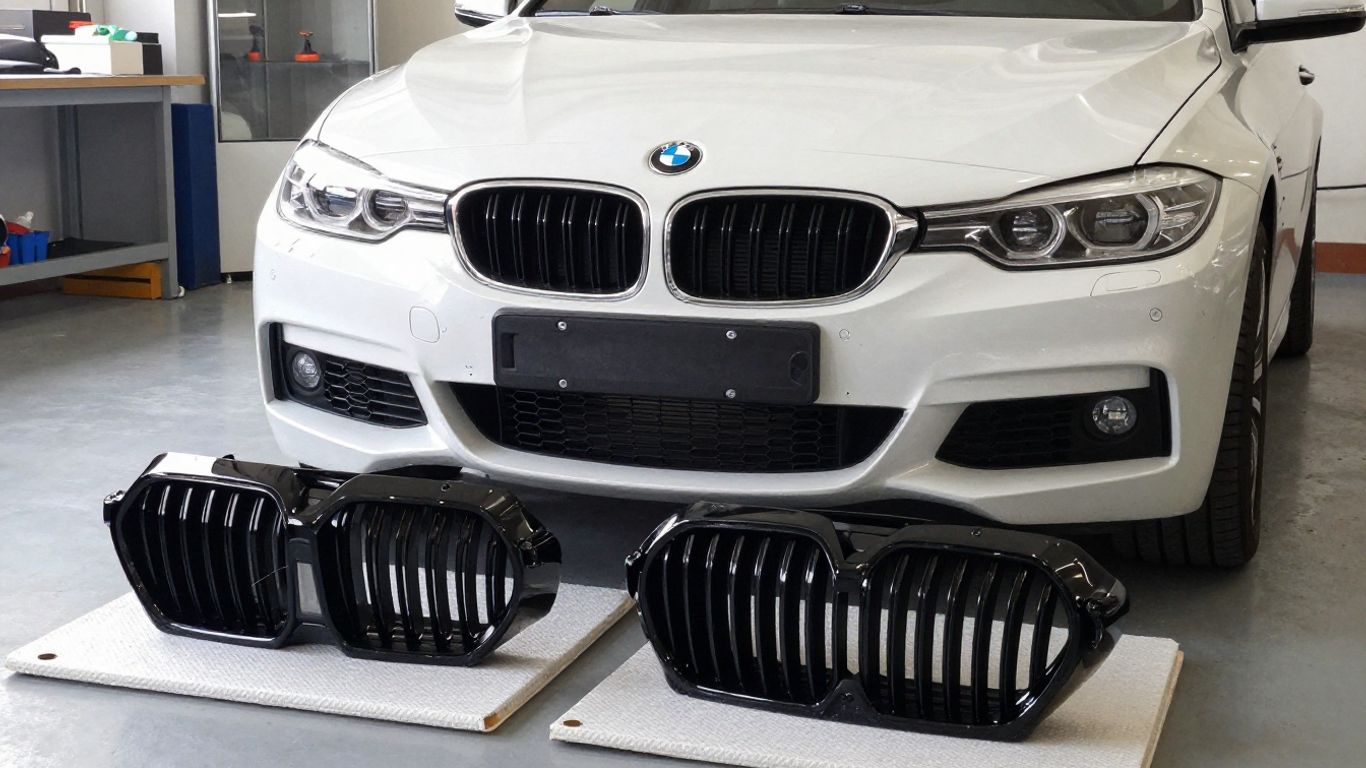
A careful match also protects the car’s visual balance. Kidney grille proportions, finish, and surrounding trim can vary between standard and sport-oriented versions, so buying by the word “BMW” alone is rarely enough.
Matching the grille to the model and generation
Identify the BMW model and generation before searching listings. A 3 Series grille, for example, should not be selected solely because the seller says it fits a different 3 Series year. Facelift updates can alter the outline, fastening points, bars, surrounds, or provisions for nearby equipment.
Use the vehicle’s VIN, the old grille’s markings, and a reputable parts catalogue to narrow the search. If the seller cannot confirm the generation, treat the listing as a lead rather than a confirmed match.
Checking the production year and body style
Production year and body style can matter even when two vehicles share a model name. Sedan, coupe, wagon, convertible, SUV, and touring versions may use different front-end components. A mid-cycle update can also create a subtle mismatch that becomes obvious once the grille is held against the bumper.
Record the vehicle’s build month if available, not just the registration year. When a listing covers a broad year range, ask the seller why those years are grouped together and whether the part number applies to every listed body style.
Comparing standard, M Sport, and M Performance designs
Standard, M Sport, and M Performance designs may differ in slat arrangement, surround shape, texture, and finish. Some owners want a strictly original appearance, while others are replacing a damaged grille and are open to a styling change. Decide that point before shopping, because a visually attractive grille can still look wrong against the car’s bumper and trim.
Look at full-front photographs rather than isolated grille images when possible. The surrounding bumper openings, headlights, and trim provide useful clues about how the design will sit on the finished vehicle.
Identifying compatible kidney grille sizes and finishes
Measure the old grille only as a reference; dimensions alone do not prove compatibility. Confirm the outline, left and right sections, joining points, clips, and surface finish. Gloss black, satin black, chrome, and painted trim can look different under outdoor light, so request photographs taken without heavy filters.
If the BMW has a camera, sensor, active grille component, or other equipment near the opening, verify whether the replacement accommodates it. Do not assume that a similar-looking insert has the same clearance or mounting arrangement.
Inspecting the condition before you buy
A recycled grille deserves the same calm inspection as any other used exterior part. Damage may be obvious on the face, but the hidden clips and rear mounting structure often determine whether installation is straightforward. Ask what happened to the donor vehicle and compare that story with the photographs. A transparent description is usually more useful than a vague promise that the part is “like new.”
Looking for cracks, broken clips, and warped sections
Examine the grille’s corners, slats, frame, and rear edges for cracks or repaired breaks. Broken clips can be easy to miss because they are hidden once the grille is installed, while warped plastic may indicate heat or impact damage. Pay particular attention to areas close to the bumper contact points, where a small distortion can create uneven gaps.
A seller should be able to say whether every tab is present. If a clip is missing, find out whether it is replaceable separately or whether the grille will need an improvised repair.
Evaluating paint, chrome, gloss, and trim quality
Inspect the surface for peeling, deep scratches, cloudiness, discoloration, and inconsistent texture. Chrome-like finishes can reveal pitting or lifting around edges, while gloss-black surfaces often show fine scratches more clearly than they do in small listing images. A used part can still be attractive, but its condition should match the asking price.
Ask whether the grille has been repainted or coated. Refinishing may improve its appearance, yet it can also hide repairs or alter the way the part matches the vehicle’s original trim.
Checking mounting points and grille inserts
Turn the grille over, or request a clear photograph of its rear side. Check the mounting rails, tabs, guides, fastener locations, and individual inserts for damage or looseness. If the grille has separate trim pieces, make sure they are included and seated correctly rather than merely placed in position for the photograph.
The rear view can also reveal repairs that are invisible from the front. Compare it with a reference image of the correct part whenever possible, especially if the listing does not show a readable part number.
Requesting clear photos and part numbers
Good photos should show the front, rear, corners, clips, mounting points, and any blemishes in ordinary light. Ask for close-ups of the areas that matter most rather than relying on a single polished image. The part number, moulded marking, or label should be readable and consistent with the vehicle application.
Save the listing and the seller’s written answers before paying. That record can make a return discussion much easier if the delivered part differs from the description.
Finding reliable sources for recycled BMW grilles
The source of a used grille affects the quality of the information you receive as much as the price. A dismantler may know the donor vehicle, while a marketplace seller may only have a short description and a few photographs. Specialist shops can sometimes verify fitment more carefully, but their prices may include additional preparation. The right source is the one that can explain what the part is, where it came from, and what happens if it does not fit.
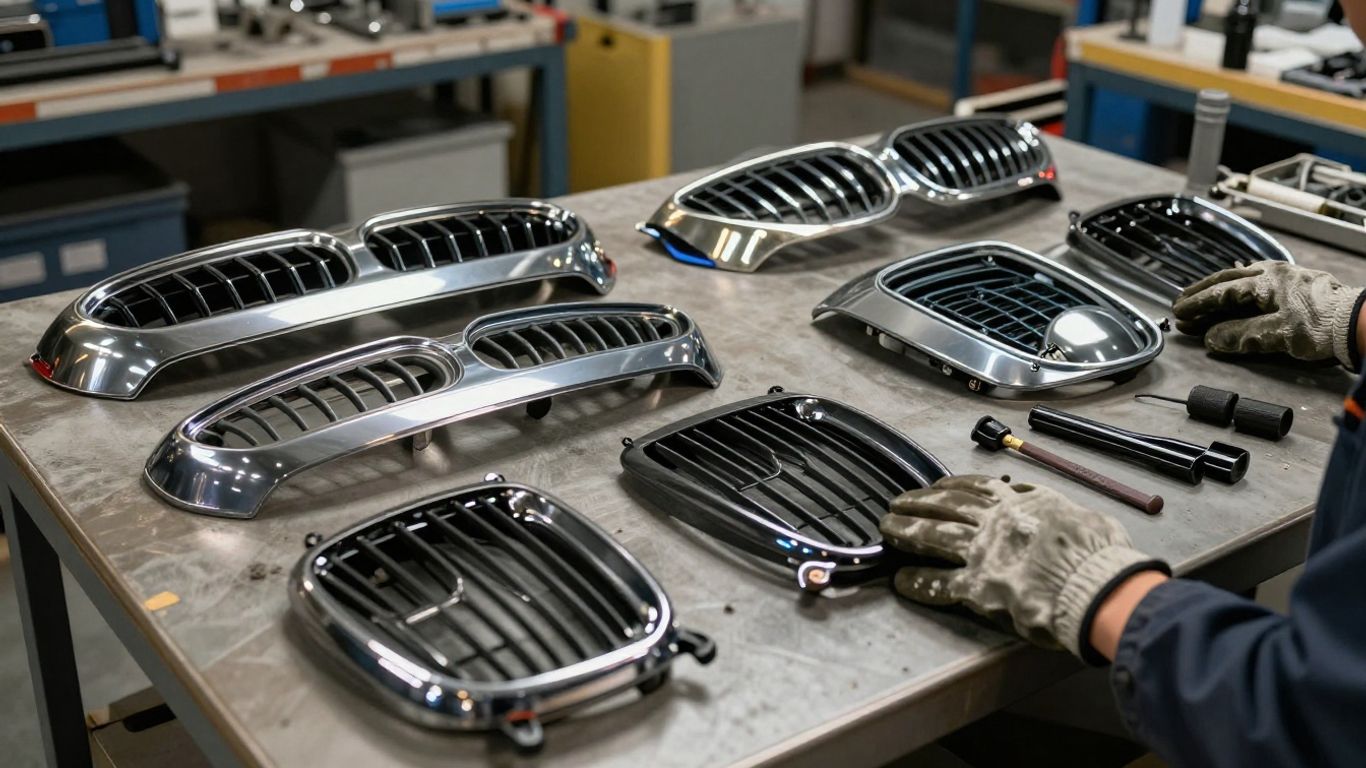
Keep notes on stock numbers, promised condition, dispatch timing, and the seller’s return process. Clear records reduce confusion when several similar grilles appear in search results.
Salvage yards and vehicle dismantlers
Salvage yards and vehicle dismantlers can be useful because they may identify the donor car and photograph the grille before removal. Ask whether the vehicle was struck in the front, exposed to weather, or stored indoors. A grille from a rear-damaged vehicle may have a more predictable history than one removed from a heavily impacted front end, though every part still needs inspection.
If you can inspect the grille in person, bring measurements and photographs of your own vehicle. That simple preparation can prevent a long trip for a part that belongs to another generation.
Online used-parts marketplaces
Online marketplaces provide broad selection, but listing quality varies widely. Search using the model code, generation, production range, body style, finish, and part number instead of a general phrase. Read the complete description for wording about repairs, missing tabs, cosmetic damage, and compatibility exclusions.
Review seller ratings for patterns rather than focusing on one complaint or one glowing review. A seller who answers specific questions and posts consistent photographs is easier to evaluate than one who relies on generic stock images.
BMW specialist recyclers and repair shops
A BMW specialist recycler or repair shop may have stronger familiarity with model-specific changes and common fitment problems. They can sometimes compare the used grille with vehicle records or advise whether a particular finish belongs to the requested trim level. That knowledge can justify a higher price when it reduces the chance of ordering the wrong part.
Still, ask for the same evidence you would request elsewhere: a part number, condition photographs, included components, and written terms. Expertise is valuable, but it should be paired with a clear description of the actual item.
Questions to ask a seller before purchasing
A short, specific set of questions usually produces more useful answers than asking whether the grille is “good.” Ask where it came from, whether it has been repaired or refinished, whether all clips and inserts are present, and whether the photographed item is the one being shipped. Also confirm the part number, dispatch location, shipping protection, and return window.
A seller’s response can tell you as much as the grille itself. General guidance is simple: clear answers are evidence of a more careful transaction, while evasive replies deserve caution.
A used part is only a bargain when its identity, condition, and terms are clear.
Apply that principle before payment, not after the package arrives. If important details remain uncertain, keep searching or request photographs that resolve the specific question.
Comparing costs, warranties, and return policies
The purchase price is only the first figure in a recycled-grille comparison. Two apparently similar listings may differ because one includes all inserts, offers stronger packaging, or has a workable return policy. Estimate the complete job before choosing the cheapest item. A slightly higher price can be reasonable if it substantially lowers fitment and installation risk.
Estimating the price of a recycled grille
Prices vary with model, age, trim level, finish, rarity, and condition. A common standard grille with visible wear may cost less than a scarce sport-style grille in excellent condition. A complete pair can also be priced differently from a single left or right section, so confirm exactly what the listing includes.
Compare several genuinely compatible parts rather than averaging every BMW grille in a search result. The useful comparison is between parts that match the same generation, design, finish, and equipment requirements.
Calculating shipping and installation expenses
Add shipping, insurance, taxes, local fees, and any packaging surcharge to the advertised price. Grilles can be awkward to package, and a poorly protected corner may arrive damaged even when the part left the seller in good condition. If the seller is far away, a local option may be cheaper after delivery is included.
Installation costs depend on access, fastener condition, and whether the bumper or surrounding trim must be loosened. Ask a repair shop for an estimate based on your exact BMW rather than assuming every grille is a quick snap-in replacement.
Reviewing guarantees and return conditions
Read the warranty or guarantee for coverage length, exclusions, and the evidence required for a claim. Some terms may cover fitment or defects but exclude cosmetic wear, damage caused during installation, or modifications made after delivery. Keep the packaging until the grille has been checked and test-fitted.
Return conditions deserve equal attention. Confirm who pays return shipping, how many days you have to report a mismatch, whether restocking fees apply, and whether the part must remain uninstalled. Photograph the package and grille when it arrives in case damage needs to be documented.
Comparing recycled parts with new OEM and aftermarket options
A new OEM grille offers predictable unused condition, while an aftermarket option may provide a different price or appearance. A recycled OEM grille can sit between those choices, especially when preserving factory fit and styling matters more than having an untouched surface. The right option depends on the car’s age, intended use, budget, and tolerance for cosmetic wear.
Make the comparison on completed cost and expected service life, not on the listing price alone. If a recycled part needs refinishing and several replacement clips, a new or aftermarket alternative may become more attractive; if it is complete and clean, reuse may remain the strongest value.
Installing and maintaining a recycled BMW grille
Installation should begin only after the replacement has been compared with the original. Lay both parts on a clean, padded surface and check their outline, clips, inserts, and finish before removing anything from the car. Use the vehicle’s repair information when available, since access and fastener arrangements vary by model. Taking photographs during disassembly can also help when several clips or trim pieces look alike.
Tools and preparation for grille replacement
Prepare a trim-removal tool, suitable screwdrivers or sockets, a flashlight, protective gloves, masking tape, and a clean cloth. Work on a cool vehicle in a well-lit area, and protect painted bumper edges with tape or padding. Keep removed fasteners in a small container rather than placing them on the ground.
Before starting, test-fit the replacement visually and confirm that it includes every insert and trim piece promised in the listing. If something is missing, resolve it before the original grille is removed.
Removing the original grille safely
Follow the access route appropriate to the BMW model instead of forcing the grille from the front. Some designs release through the opening, while others require surrounding trim or fasteners to be loosened first. Apply even pressure to clips and use a trim tool where necessary; twisting a cold plastic tab can break it.
Move slowly around the perimeter and note the position of each fastener. If the grille resists, stop and look for a hidden attachment rather than increasing force.
Securing clips, tabs, and fasteners during installation
Compare every clip and tab on the recycled grille with the original before fitting it. Clean dirt from the mounting area, align the guides, and press the part home gradually from one side to the other. The grille should sit evenly without large gaps, rocking, or excessive pressure.
Replace damaged fasteners with the correct type where possible. Once installed, check the bumper line, both grille sections, and the surrounding trim from several angles before tightening everything fully.
Cleaning and protecting the replacement grille
Wash the grille with clean water, mild automotive soap, and a soft microfiber cloth. Avoid abrasive pads and harsh solvents that can dull gloss, disturb coatings, or damage chrome-like surfaces. Dry around the clips and seams so trapped moisture does not remain against the bumper.
Inspect the grille during routine washing for new cracks, loose inserts, or lifting finish. Gentle cleaning and prompt attention to small problems will help a recycled part remain presentable for longer.
Conclusion
Recycled BMW grilles can be a smart, lower-waste choice when the part is correctly identified and honestly assessed. Verify the model and finish, inspect the hidden mounting structure, compare the complete cost, and keep the installation gentle. With those steps, a reused grille can restore a BMW’s front-end appearance without turning a simple repair into an avoidable source of frustration.