

Key Takeaways
Choosing second hand BMW bonnets is mainly a matching exercise, followed by a careful condition check. The cheapest panel is not always the most economical once transport, paintwork, and fitting are included.
- Match the bonnet to the BMW’s model, generation, body style, and trim.
- Use the VIN and part number to reduce compatibility mistakes.
- Inspect the panel, underside, edges, and mounting points before buying.
- Treat paint color and previous repairs as part of the total cost.
- Confirm delivery, returns, warranty coverage, and included components.
Understand what makes a second hand BMW bonnet suitable
A used BMW bonnet needs to fit the vehicle mechanically and visually. Small changes between generations, facelifts, and trim levels can affect mounting points, grille openings, insulation, and the shape of the front edge. Begin with the car’s exact identity rather than choosing a panel because it appears similar in a photograph.
Match the bonnet to your BMW model and generation
Start with the BMW series, model code, and generation. A 3 Series bonnet, for example, should not be selected solely because the seller lists the same engine size; the generation and body design are equally important. BMW model names can cover several distinct shapes over time, and a panel from an earlier or later generation may not align with the wings, grille, or headlights.
Ask the seller to confirm the donor vehicle details, including its model year and generation code where available. Compare photographs of the front edge, hinge area, and underside with your existing bonnet. That extra comparison is often enough to identify a mismatch before money and transport are involved.
Check the production year and facelift differences
Production year matters because a facelift can change the bonnet’s leading edge or the way it meets the surrounding panels. Even when the bonnet looks broadly familiar, revised grilles, headlights, badges, or crease lines may alter compatibility. Check whether your vehicle is pre-facelift or facelift before accepting a listing described only by a broad model name.
A seller should be able to explain the donor vehicle’s year or provide a stock reference that can be checked. If the listing gives only a vague description, treat that as a reason to ask questions rather than as confirmation that the part will fit.
Confirm the body style, trim, and engine configuration
Saloon, Touring, coupe, convertible, and SUV body styles can use different exterior panels, even within one BMW series. Trim also matters: standard and M Sport cars may have different surrounding components or styling details. Engine configuration is less likely to change the outer panel on some models, but it can affect ventilation, insulation, or clearance, so it should still be included in the compatibility check.
Write down the full vehicle description before searching: model, generation, body style, build year, trim, and engine. This gives a used parts seller enough information to compare the donor panel properly instead of relying on a partial registration description.
Compare OEM and aftermarket replacement options
A genuine original-equipment panel may offer the most predictable shape and mounting arrangement, particularly where the bonnet includes specific bracing, insulation, or openings. An aftermarket replacement can be a practical alternative, but its finish, panel gaps, and included fittings may vary. Ask whether it is supplied bare or with hinges, insulation, grilles, badges, or other attached parts.
The right choice depends on the vehicle’s age, the intended standard of repair, and the difference in delivered cost. A lower purchase price loses its appeal if the panel needs extensive preparation before it can be aligned and painted.
Identify the correct BMW bonnet part
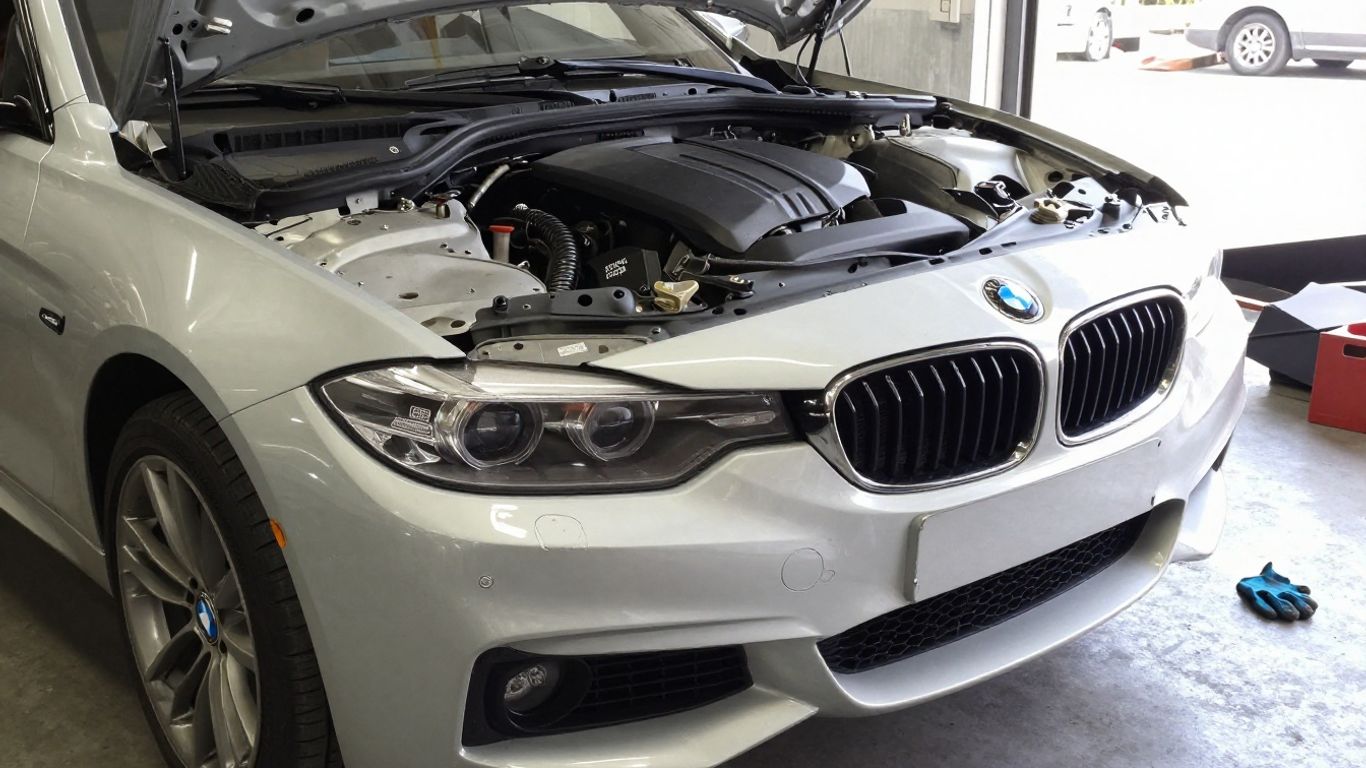
Once the vehicle has been identified, narrow the search to the exact bonnet part. A photograph can help, but it should support—not replace—the technical checks. Part numbers, VIN details, donor information, and the condition of the panel together provide a much safer basis for buying.
Use the vehicle identification number for accurate matching
The vehicle identification number can help a seller distinguish between closely related BMW variants. Provide the full VIN where the seller offers a compatibility check, and ask what information was used to match the part. This is especially useful when the model name covers multiple generations or when a facelift sits within the same registration range.
The VIN is not a substitute for inspecting the actual panel. It helps establish what should fit your car, while photographs and part details establish what the seller actually has in stock.
Verify the bonnet part number and compatibility
Look for a part number stamped, labelled, or otherwise recorded on the bonnet or its listing. Compare it with the number associated with your vehicle, allowing for superseded references where applicable. A seller may identify a replacement number, but that relationship should be confirmed rather than assumed.
A useful compatibility check should cover more than the outer silhouette. Confirm the hinge positions, latch arrangement, front-edge shape, and any openings or mounting points. Exact part verification saves money by reducing the chance of paying for transport, fitting, and return handling on an unsuitable panel.
Check differences between standard, M Sport, and M models
Standard, M Sport, and M models can share a basic body family while differing in surrounding trim and front-end details. The bonnet itself may be interchangeable in some applications, but the grille, badge, insulation, hinge hardware, and adjacent panels may not be. Do not treat an M-related listing as automatically suitable for a standard vehicle, or the reverse.
Ask the seller to state whether the donor car was standard, M Sport, or an M model. If the listing uses only a broad series name, request photographs of the leading edge and underside before deciding.
Account for bonnet hinges, grilles, badges, and insulation
A listing may describe the bonnet panel alone or include several attached components. Hinges, grilles, badges, insulation, clips, and hardware can affect both price and installation time. Their presence does not automatically make a bonnet better, since damaged or missing fittings may still need replacement.
Request an itemised description of what is included. If you already have usable hinges or insulation, a bare panel may be sufficient; if your existing parts were damaged in the same incident, a more complete assembly could reduce the number of separate items you need to source.
Assess the condition before buying
Condition is where two apparently similar second hand BMW bonnets can differ most. A straight panel with minor cosmetic wear may be ready for preparation, while a cheaper example can conceal stretched metal, corrosion, or repairs around the mounts. Read the description carefully, then use photographs and direct questions to fill in the gaps.
Inspect the outer panel for dents, creases, and scratches
Look at the panel from several angles, preferably in clear daylight. Long reflections can reveal shallow dents that disappear in a straight-on photograph, while sharp creases may indicate metal that has been stretched and will need more than simple paint preparation. Check the front edge, corners, centre bulge, and areas around the badge or grille opening.
Surface scratches are usually easier to assess than distortion, but their depth still matters. Ask whether a mark has reached the metal and whether the seller knows if the panel has already been repaired. Clear photographs taken across the whole surface are more useful than close-ups of only the best-looking section.
Look for rust, corrosion, and previous repairs
Inspect the folded edges, seams, underside, and areas where moisture or road debris may collect. Bubbling beneath the paint can point to corrosion, while uneven primer, sanding marks, or a change in reflection may suggest a previous repair. Aluminium and steel panels can show different forms of damage, so the absence of obvious red rust does not prove that the panel is sound.
Ask directly whether the bonnet has been filled, welded, straightened, or repainted. A repaired panel is not necessarily a poor purchase, but the repair should be reflected in the price and in the amount of preparation you expect to pay for.
Examine the underside, edges, and mounting points
The underside often reveals problems that are hidden from a front-facing photograph. Check the inner frame, hinge mounting areas, latch reinforcement, insulation clips, and folded perimeter. Look for cracks, bent metal, missing fasteners, and signs that the panel has been forced out of alignment.
The mounting points deserve particular attention because damage there can make adjustment difficult even when the outer skin looks respectable. Ask for underside photographs if they are not already included. A seller who cannot show those areas may simply lack the images, but the uncertainty should be considered before purchase.
Check whether the bonnet includes attached components
Confirm whether the bonnet is supplied bare, partially assembled, or complete with hinges, insulation, grilles, badges, washer jets, and other fittings. Components can be useful if yours are damaged, but they can also add cost without adding value when they are worn or incompatible. The description should make clear which parts are physically attached and which are shown only for reference.
Use the included-parts information when comparing listings. Two prices cannot be compared fairly if one covers a bare panel and the other includes usable hardware, although the condition of those extra parts still needs to be established.
A bonnet that fits well with modest cosmetic work is usually a better buy than a visibly cheaper panel that creates uncertainty at every stage.
That principle is useful when the photographs look incomplete or the seller’s description is brief. It does not mean paying the highest price automatically; it means placing a value on predictable fitting and fewer surprises after delivery.
Evaluate color, finish, and repair requirements
Paint can change the economics of a used bonnet. A panel in the correct color may still need blending because older paint fades, while a different-color panel can be perfectly sound but require a full refinish. Think about the condition of the metal and the likely paint process separately from the color shown in the listing.
Decide whether a matching paint code is important
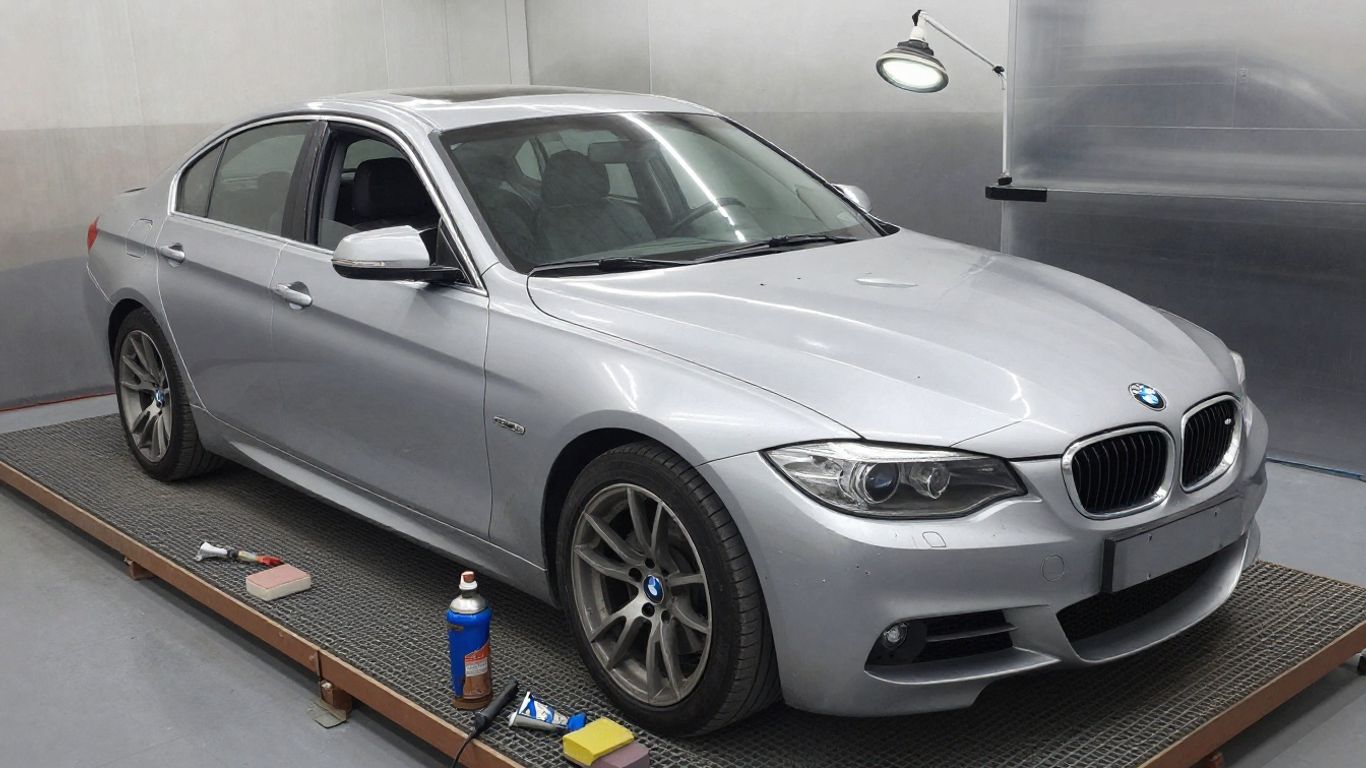
A matching paint code is most useful when you want to minimise refinishing and the existing vehicle’s paint is in good condition. Confirm the code from the vehicle or its records rather than relying on a seller’s description of the color. Names such as black, silver, or blue can cover several BMW finishes.
Even with the same code, a direct swap may not look perfect on an older car. The bonnet may have spent years exposed to sunlight while the surrounding wings and bumper weathered differently. Treat a matching code as helpful information, not a guarantee of an invisible repair.
Understand the impact of faded or weathered paint
Sun fading, oxidation, stone chips, and water marks can make a panel appear worse—or occasionally better—than it is. A dull finish may improve with cleaning or correction, but deeper scratches, peeling clear coat, and extensive chips usually require more preparation. Photographs taken in shade can also hide differences in gloss and color.
Ask for images in even natural light and, if possible, a close view of the bonnet beside a known painted section. The purpose is not to demand showroom condition from a used panel, but to estimate whether the finish can be corrected or must be refinished.
Allow for paint correction, refinishing, or respraying
Paint correction may be enough for light marks and surface dullness, whereas exposed metal, peeling clear coat, repairs, or a non-matching color can require preparation and respraying. The body shop may also need to blend adjacent panels so the replacement does not look isolated from the rest of the car.
Ask a repairer for an opinion before buying if the paint decision is central to the budget. A used bonnet that appears ready to fit may still need sanding, priming, corrosion treatment, and adjustment before the final finish is applied.
Compare the cost of cosmetic repairs with a cleaner bonnet
Compare the delivered price of the rougher panel with a cleaner example, not just the sticker price. A small increase for a straight, well-presented bonnet can be sensible if it avoids dent repair and reduces preparation time. Conversely, paying extra for a matching color may not help if the surrounding paint is already faded and the vehicle will need blending.
A simple comparison should include the purchase price, transport, likely preparation, painting, and fitting. Once those figures are visible, the cosmetic condition becomes easier to judge in practical rather than emotional terms.
Buy from a reliable used parts seller
The seller affects the buying experience as much as the panel itself. A useful listing explains the donor vehicle, part condition, included components, and delivery method without leaving major assumptions for the buyer. Reliability also means having a clear process when the part arrives differently from its description.
Review salvage yard and specialist BMW supplier listings
Start with listings that identify the BMW model, generation, year, trim, and condition in specific terms. Salvage yards may have broad stock and donor-car information, while specialist suppliers may organise parts by model and reference. In either case, read the actual description instead of relying only on a search result or title.
Look for consistency between the written details and the photographs. If the title says one generation but the images appear to show another, pause the purchase and request clarification before ordering.
Ask for clear photos from multiple angles
Request photographs of the outer face, underside, front edge, rear edge, corners, hinge areas, latch area, and any visible damage. Ask for close-ups of repairs, scratches, corrosion, or missing trim. This is a reasonable request for a large body panel because packaging and transport can be costly.
Images should show the actual bonnet rather than a stock photograph. If the seller cannot provide every angle, ask which areas are unavailable and decide whether the remaining uncertainty is acceptable.
Confirm the return policy and parts warranty
Before payment, check the period allowed for reporting damage or incompatibility and whether a large panel can be returned. Clarify who pays return transport, what condition the part must be in, and whether paint or fitting work affects eligibility. A parts warranty may cover defects but not incorrect ordering, installation damage, or cosmetic expectations that were not agreed.
Save the listing, photographs, messages, and order details. Those records make it easier to resolve a genuine discrepancy and help you remember exactly what was promised.
Clarify collection, delivery, and packaging arrangements
A bonnet is large, easily marked, and awkward to handle, so delivery arrangements deserve attention. Ask how the panel will be protected, whether delivery is kerbside, whether collection is available, and whether the carrier requires inspection at arrival. Confirm the delivery address and any access limitations before dispatch.
Inspect the packaging and panel as soon as it arrives. Photograph external damage before opening, then check the corners, edges, mounts, and painted surface against the listing. Early documentation is useful if transit damage needs to be reported.
Calculate the total replacement cost
The purchase price is only one part of the replacement decision. A bonnet may need transport, paint preparation, fitting, alignment, hardware, and disposal of the damaged panel. Comparing the complete job gives a clearer answer than comparing headline prices alone.
Compare the bonnet price with new and reconditioned alternatives
Set the used panel beside new, reconditioned, and repair options using the same assumptions. A new panel may arrive without paint or fittings, while a reconditioned item may include preparation that a cheaper used panel does not. The labels alone do not establish which option is best.
Ask for like-for-like details: bare or assembled, painted or unpainted, genuine or aftermarket, and delivered or collection-only. This prevents a low advertised price from looking better simply because important costs have been left out.
Include shipping, fitting, painting, and adjustment costs
Build a short written estimate covering delivery, inspection, removal of the old bonnet, installation, alignment, paint preparation, refinishing, and final adjustment. Include small items such as clips, fasteners, seals, or damaged insulation if they are likely to be needed. Large panels can also carry higher transport charges than ordinary parts.
Once the estimate is complete, add a modest allowance for unexpected preparation. The aim is not to predict every dollar perfectly, but to avoid making the decision on the panel price alone.
Check whether hinges, latches, and gas struts need replacement
A damaged bonnet can transfer force to its hinges, latch, striker, or gas struts. Check whether the replacement panel is compatible with the existing hardware and whether the old parts still operate smoothly. Weak struts, a bent hinge, or a damaged latch can make a good bonnet seem poorly fitted after installation.
Ask the fitting shop to inspect the surrounding structure before final alignment. Replacing a worn support or latch at the same time may be more efficient than removing the bonnet again later, but it should be treated as a separate cost from the panel itself.
Decide when a second hand bonnet offers the best value
A second hand bonnet is often strongest as a value choice when the part is correctly matched, structurally sound, and priced with its cosmetic work in mind. It becomes less attractive when the panel has uncertain mounts, extensive corrosion, incomplete components, or a delivery cost close to the price of a better alternative.
Use the finished estimate and the seller’s evidence to make the decision. If the panel is a close match, has a clear history, and needs only manageable preparation, it can be a sensible repair route. If several key details remain unknown, paying more for certainty may be the cheaper outcome overall.
Conclusion
The best second hand BMW bonnet is not necessarily the oldest, cheapest, or best-looking listing; it is the panel that matches the vehicle, has a condition you can verify, and still makes financial sense after delivery, paint, fitting, and adjustment. Confirm the VIN and part details, inspect the structure and finish, and choose a seller who explains what is included and how problems will be handled.