

Key Takeaways
Buying used BMW boots can save money, but only when the pair still fits your riding needs and has usable protective structure.
- Match the boot style and protection level to your regular riding.
- Inspect soles, closures, seams, membranes, and crash damage carefully.
- Measure your feet and allow room for motorcycle socks before buying.
- Verify the seller, model, condition, and full delivered cost.
- Clean used boots gently and replace unsafe or badly worn components.
Define your riding needs before shopping
The best used boot is not necessarily the tallest, stiffest, or most expensive pair. It is the one that suits how you ride, how long you stay on the motorcycle, and what happens when you step off. Start with those practical details before browsing listings, because a bargain is less useful when the boot spends most of its life in a cupboard.
Match the boots to your riding style
Think through a typical ride rather than an idealized one. A short urban commute may call for easier walking and flexible closures, while long touring days may reward more coverage, stable support, and weather resistance. Riders who regularly leave paved roads should also consider how well the boot handles dirt, loose surfaces, and repeated standing on the pegs.
A boot that works well for occasional road riding can feel restrictive during frequent walking. Conversely, a casual-looking pair may not provide the structure you want for long-distance or mixed-surface use. Write down your most common conditions and use them as a filter for every listing.
Choose the right level of protection
Motorcycle boots can differ greatly in height, stiffness, reinforcement, and coverage. Look for secure support around the ankle, a sole that will not fold easily, and protective panels that have not softened, shifted, or cracked with age. Protection should match risk, not simply appearance.
Avoid assuming that a tall boot is automatically in better condition than a shorter one. Examine the actual materials, seams, closures, and sole attachment. If a seller cannot show those areas clearly, treat the missing information as a reason to ask questions rather than as evidence that everything is fine.
Consider weather, distance, and terrain
Weather changes the value of a used pair. A waterproof membrane may be useful for touring in wet regions, but it cannot compensate for a sole that is nearly smooth or a lining that has been badly damaged. For hot-weather commuting, ventilation and manageable walking comfort may matter more than maximum insulation.
Distance also affects tolerance for small fit problems. A slight pressure point that seems harmless during a ten-minute try-on can become painful after several hours. If your routes include gravel, trails, or frequent stops, consider how the tread, ankle support, and ease of movement will perform away from the highway.
Set a realistic budget
Set a spending range that includes inspection, delivery, and likely upkeep. Used footwear can need new insoles, replacement fasteners, cleaning products, or professional attention even when the outer shell looks presentable. Leave enough room for those costs instead of using every dollar on the purchase price.
A simple budget also helps you walk away from listings that are cheap only because important details are missing. The right pair should remain affordable after shipping and minor repairs, not just look inexpensive in the search results.
Understand BMW motorcycle boot options
Used BMW motorcycle boots appear in different shapes and intended uses, so the name alone does not tell you whether a pair will suit your riding. Compare the design, materials, height, and closure system with the conditions you actually face. Photos can make similar boots look interchangeable when their walking comfort and protective structure are quite different.
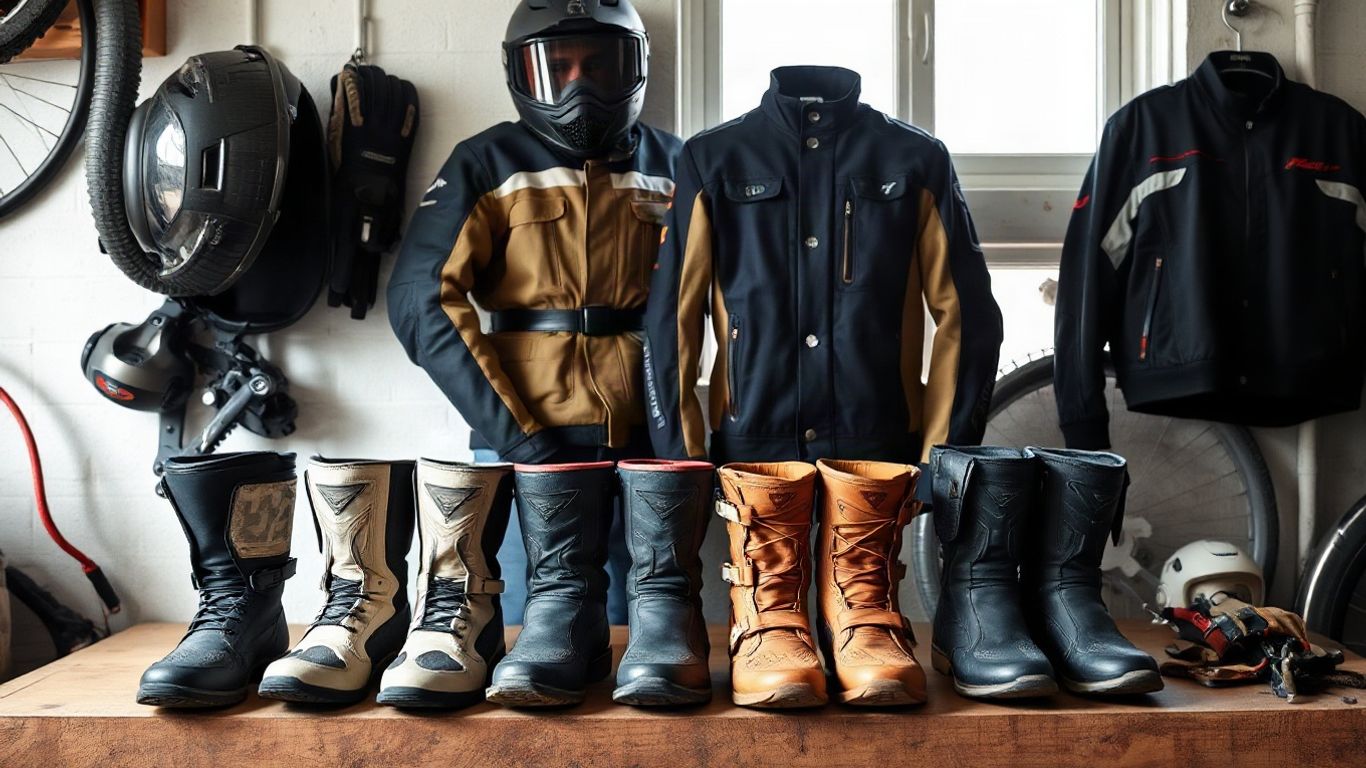
The following distinctions are useful when reading a listing. They are not a substitute for inspecting the individual pair, since age, wear, and previous use can change how a boot performs.
Compare touring, adventure, and sport-focused designs
Touring-oriented boots often prioritize long hours in the saddle and practical weather protection. Adventure-oriented designs may offer more substantial coverage and tread for mixed surfaces, while sport-focused boots commonly emphasize a close fit and structured support. These are broad design tendencies, not guarantees about a particular used pair.
Study the photos for sole shape, ankle articulation, shin height, and the amount of external reinforcement. A boot that looks suitable for your motorcycle may still be awkward when walking or too flexible for the terrain you ride.
Evaluate waterproof and breathable materials
Ask whether the waterproofing is part of the boot’s construction or supplied by a separate liner. Check for peeling, delamination, brittle fabric, damp odors, and repairs around seams. Breathable materials can also lose comfort when the lining is compressed or contaminated by long-term storage.
Do not treat a waterproof label as proof that the used boots remain waterproof today. The membrane, seam treatment, and closure area all need to be in sound condition. If possible, ask the seller how the pair was stored and whether it has been exposed to prolonged rain.
Check protection around the ankle and shin
Ankle and shin coverage deserve close attention because these areas receive substantial movement and contact with the motorcycle. Look for intact reinforcement, even padding, and a shaft that has not collapsed or developed deep permanent creases. Check both boots, since one side may have taken more wear from shifting or stopping.
Run your hand along the internal and external protective zones. Any hard insert that moves unexpectedly, feels sharp, or appears cracked should be treated cautiously. Surface scuffs are not automatically disqualifying, but structural damage is a different matter.
Consider comfort features for walking and commuting
Commuters often discover that motorcycle boots spend as much time on pavement as on the bike. Examine the flex point, heel height, tread pattern, and closure adjustability. A pair can be protective yet frustrating if it pinches when climbing stairs or cannot be loosened after a long ride.
Try to distinguish normal break-in from permanent deformation. Leather may soften, but a crushed heel counter or distorted ankle opening is unlikely to return to its original shape. Comfort should come from a sound fit, not from hoping damaged materials will settle.
Inspect the condition of used BMW boots
Condition is where the value of used boots is decided. A clean exterior can hide worn tread, failed waterproofing, stretched closures, or damage from a previous crash. Inspect both boots methodically and ask for close-up photographs when an online listing does not show a key area.
You do not need specialist equipment for a first assessment. Good light, a careful hand, and a willingness to compare both boots will reveal many warning signs. When something seems uncertain, price the pair as though that component may need attention.
Examine the soles, heels, and tread
Start underneath. Look for uneven wear, missing tread blocks, separation between the sole and upper, and a heel that has worn down at an angle. Uneven wear may reflect the rider’s gait or motorcycle use, but it can also affect stability and shorten the remaining service life.
Flex the sole gently without forcing it. It should not feel brittle, spongy, or detached from the upper. Small cosmetic marks are usually less concerning than deep cracks, exposed layers, or a tread pattern that has become too shallow for wet conditions.
Check seams, membranes, and waterproofing
Inspect stitching around the toe, ankle, shaft, and sole edge. Pulled threads, open seams, bubbling layers, or patches that have begun to lift deserve a clear explanation from the seller. Smell can also provide a clue: a strong musty odor may indicate damp storage, though it does not prove membrane failure by itself.
Ask how the boots were tested or maintained rather than accepting a vague claim that they are waterproof. A pair that has not been used recently may still look excellent while its adhesives or seam treatments have aged. If water resistance matters, include the possibility of future reproofing in your budget.
Inspect buckles, zippers, and closure systems
Open and close every fastening several times. Zippers should move without catching, buckles should engage securely, and hook-and-loop panels should still hold firmly. Check the surrounding material too, because a working buckle attached to stretched or torn fabric is not a reliable closure.
Replacement hardware may be possible, but availability and labor vary. Ask whether the seller has altered the closures or replaced parts. A missing pull tab is a smaller concern than a zipper that separates under light tension or a buckle mount that is pulling away from the boot.
Look for signs of crashes, heat damage, or improper storage
Scrapes on a toe or outer ankle may be ordinary wear, but deep abrasion, melted sections, crushed padding, or asymmetry can point to a crash or heat exposure. Examine areas close to exhaust components for glossy, hardened, or discolored material. Also look for mildew, flattened shafts, and creases caused by long-term compression.
A seller does not need to have used the boots irresponsibly for damage to occur. They may have been stored near a heater, left damp, or packed under heavy objects. The condition matters more than the story, so compare what you see with what the listing promises.
Get the sizing and fit right
Fit is difficult to correct after purchase, especially when buying online. Foot length is only one part of the equation; width, instep height, ankle shape, and calf opening can all affect comfort. Measure carefully and compare the result with the seller’s stated information before making an offer.
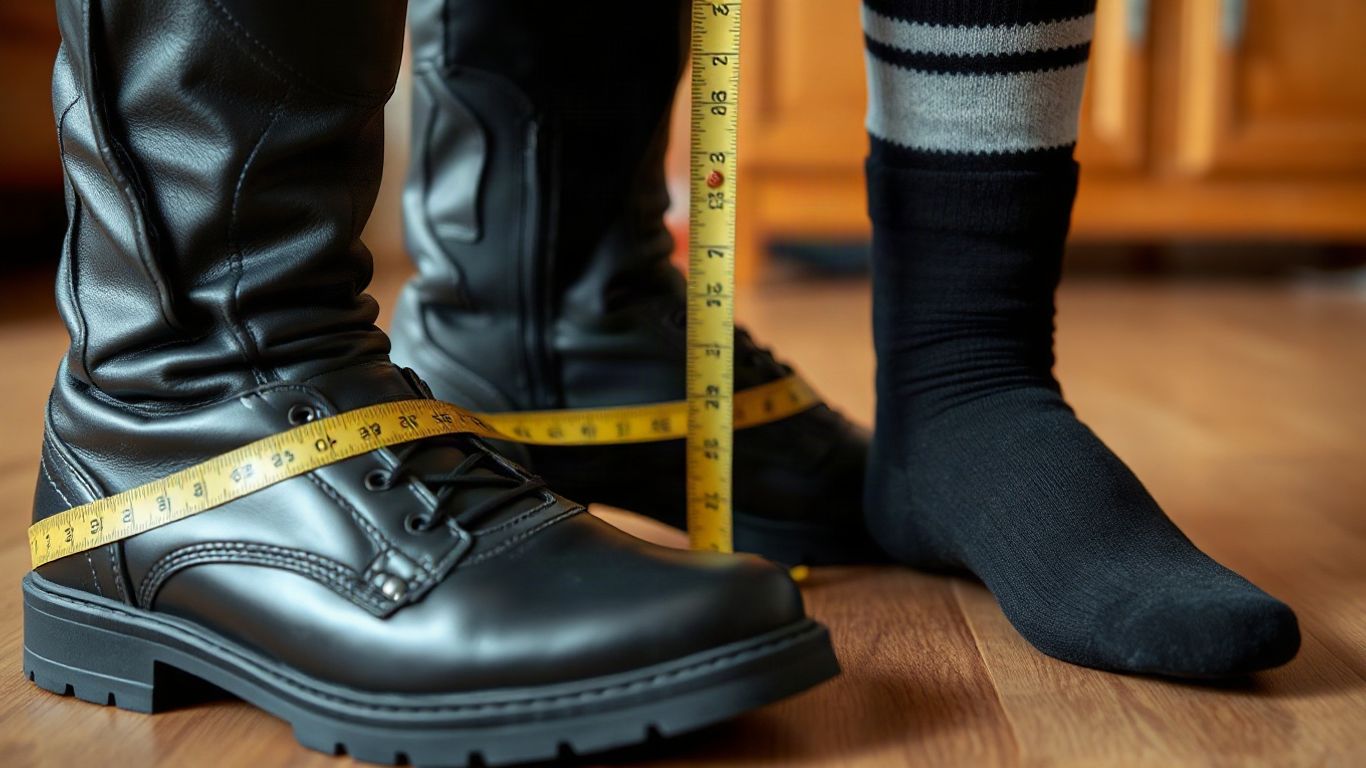
Remember that used boots may already have molded to another rider’s feet. That can feel comfortable if their shape is close to yours, but it can also create pressure in exactly the wrong place. Whenever possible, try the pair with the socks and trousers you normally ride in.
Measure your feet accurately
Measure both feet at the end of the day, when they are usually at their largest. Stand on paper in the socks you expect to wear, mark the heel and longest toe, and measure the distance between them. Record width as well, particularly if you often struggle with narrow or broad footwear.
Use the larger foot as your starting point. A measurement taken while sitting can understate the space you need because your foot is not carrying weight. Repeat the process if the results seem unusual, then compare them with the seller’s internal measurements where available.
Compare measurements with BMW sizing information
Sizing labels are useful, but they are not a complete fit assessment. Compare the marked size with the manufacturer’s sizing information when it is available, then ask the seller for insole length and width. Those details can expose a mismatch caused by a replacement insole, stretched upper, or incorrect listing.
Do not assume that a familiar number will fit the same way across every boot design. The shape of the toe box and height of the instep can change the experience considerably. Treat the label as a reference point and the measurements as the stronger evidence.
Allow room for riding socks
Try the boots with the socks you actually ride in, not thin everyday socks. Motorcycle socks can change volume around the foot and calf, especially in taller boots. You want secure contact without numb toes, pressure over the instep, or a heel that lifts noticeably when walking.
Some extra room is useful, but excessive space can let the foot move inside the boot. That movement creates friction and reduces control. Adjust the closures after putting on your riding trousers, since the leg opening may affect how comfortably the shaft sits.
Identify fit issues that cannot be fixed easily
Length and width problems are usually more serious than a slightly firm leather upper. Insoles can alter volume, and some materials relax with wear, but they cannot reliably create extra toe length or reshape a narrow protective shell. A boot that causes sharp pressure during a short fitting is a poor candidate for a long ride.
Pay attention to ankle mobility as well. If the boot forces your foot into an unnatural angle or the shaft cuts into your leg, do not count on minor adjustments to solve it. Walking away is often cheaper than trying to modify a protective boot beyond its intended shape.
Verify the seller and product details
A careful seller should be able to answer basic questions about size, use, storage, and condition. Listings with only distant photographs or generic descriptions leave too much room for misunderstanding. Keep communication in the selling platform where possible, and save the description and photographs until the transaction is complete.
The goal is not to interrogate someone selling used gear. It is to establish whether the person knows what they have and is willing to describe it honestly. Clear answers are useful evidence; evasive answers are useful evidence too.
Request clear photos from multiple angles
Ask for current photographs of both boots from the sides, front, rear, soles, interiors, and closures. Request close-ups of any scuff, tear, crease, or repair already mentioned. A fresh image with a handwritten date can also help confirm that the seller has the pair in hand.
Compare the photographs with the written description. If the soles appear worn in one image but are described as nearly new, ask for clarification before paying. Good photos reduce surprises, but they do not remove the need for a return policy or buyer protection.
Confirm the model, size, and production details
Ask for the exact model name, marked size, and any identifying label or product code visible inside the boot. Production details can help distinguish different versions that share a similar appearance. They may also clarify whether a feature belongs to the original design or was added later.
Do not rely on a seller’s title alone. Check that the pair shown is the pair being offered, including matching size markings and compatible closures. If the boots are sold as a set, confirm that both boots are the same model and condition.
Ask about ownership, use, and maintenance history
Useful questions include how long the seller owned the boots, how often they were worn, whether they were used in rain or off-road conditions, and how they were dried and stored. Ask directly about falls, repairs, replacement insoles, and persistent odors. A concise, specific answer is more helpful than a general assurance that they were treated well.
History cannot guarantee future performance, but it helps you interpret visible wear. A lightly used pair stored dry may justify a closer look at cosmetic flaws, while heavily used boots should be judged mainly by remaining structure and serviceable components.
Watch for counterfeit or inaccurately labeled listings
Be cautious when the model name, photographs, and size information do not agree. Incorrect logos, mismatched labels, unusual stitching, and a price far below similar listings all deserve further checking. The absence of a box is not proof of a counterfeit, but missing identifying details make verification harder.
Ask for additional photographs instead of sending payment to end a conversation quickly. If the seller refuses reasonable questions or pressures you to move outside the platform, treat that behavior as part of the risk assessment. A genuine bargain is not worth losing your payment or receiving the wrong product.
Calculate the true cost of used BMW boots
The listed price is only the starting point. Delivery, taxes, platform fees, cleaning supplies, and replacement parts can change the final figure substantially. Compare the complete cost with new and refurbished options, while remembering that a new pair also gives you clearer information about fit and condition.
Used gear is most attractive when its savings remain meaningful after those adjustments. A small difference may not justify uncertain waterproofing, limited returns, or hours spent finding replacement hardware. Make the comparison before you become attached to a particular listing.
Compare the price with new and refurbished pairs
Search for the same model or a closely comparable design in new and professionally refurbished condition. Note whether those alternatives include a warranty, return window, fresh insoles, or updated hardware. A used pair should offer enough savings to compensate for its unknown history.
Avoid comparing only against the highest new retail price. Seasonal sales and discontinued stock can narrow the gap, while an older used model may require more maintenance than expected. The fairest comparison is the total cost of a pair that meets the same riding needs.
Factor in shipping, taxes, and buyer protection
Calculate delivery to your address before agreeing to the purchase. Add applicable taxes, currency conversion charges, marketplace fees, and the cost of buyer protection if it is not included. Check who pays return shipping if the size or condition differs from the listing.
These details matter especially when buying from another region. A low sticker price can disappear after shipping, and returning heavy footwear may be expensive. Keep a written total so the decision is based on the final amount rather than the attention-grabbing headline price.
Budget for replacement insoles or hardware
Insoles are often easier to replace than structural parts, but they still affect fit and cost. Set aside money for new insoles if the originals are compressed, stained, or shaped to another foot. Also price likely replacements such as zipper pulls, buckles, laces, or fasteners before assuming they will be inexpensive.
Small repairs can be worthwhile when the boot is otherwise sound. Ask a repair shop or parts supplier for an estimate if the listing has a known defect. That gives you a practical ceiling for the offer and prevents a minor issue from becoming an open-ended expense.
Decide when a low price is not worth the risk
A very low price should make you inspect more carefully, not buy more quickly. Missing photos, uncertain authenticity, major sole wear, failed closures, and crash damage can each erase the saving. Several small concerns together are a strong reason to pass.
The safest bargain is the one you can evaluate clearly before you pay.
That principle keeps the decision grounded in evidence. If you cannot establish the model, condition, fit, and return options, keep looking; another pair will usually be easier to assess.
Buy, clean, and maintain the boots safely
Once you have chosen a pair, protect yourself during payment, delivery, and the first inspection. Keep records of the listing and communication, and examine the boots before removing tags, discarding packaging, or treating the materials. A careful start makes it easier to resolve a problem if the item does not match the description.
Used boots also benefit from restrained cleaning. Strong solvents, excessive heat, and aggressive brushing can damage finishes, adhesives, liners, and waterproof membranes. Clean according to the material and let the boots dry slowly in a ventilated place.
Use secure payment and shipping practices
Use the selling platform’s payment system or another method that provides documented buyer protection. Confirm the seller’s return terms before paying, and avoid arrangements that require payment by an irreversible method. Ask for tracking and inspect the parcel promptly after delivery.
Photograph the package and boots when they arrive, especially if the box is crushed or wet. Compare the received pair with the saved listing. If there is a serious mismatch, contact the seller through the platform before attempting repairs or cleaning that could complicate a claim.
Clean different boot materials correctly
Begin by removing loose dirt with a soft brush or damp cloth. For smooth leather, use a small amount of suitable cleaner; for textile panels, follow the care guidance and avoid saturating the lining. Remove insoles when possible and clean them separately so moisture does not remain trapped inside.
Do not put motorcycle boots in a washing machine or dry them directly against a heater. Let them air dry away from direct heat, checking periodically for hidden dampness. Gentle cleaning is slower, but it is less likely to turn an already-used boot into a damaged one.
Restore leather and preserve waterproofing
After smooth leather has dried, apply a compatible conditioner sparingly and test it on a hidden area first. Too much product can soften materials excessively or affect the finish. For textile or membrane boots, use a treatment intended for that construction rather than applying a heavy leather dressing.
Waterproofing products cannot repair a torn membrane, open seam, or separated sole. They can support maintenance when the boot is fundamentally sound. Reapply them according to the product directions, and allow the boots to dry fully before storing them.
Know when replacement or professional repair is necessary
Replace the boots when the sole is badly worn, protective inserts are cracked or missing, the shell has been crushed, or the waterproof construction has failed beyond practical repair. A cobbler or specialist repairer may be able to address stitching, soles, or hardware, but not every defect is safely repairable.
When in doubt, ask for an assessment before riding. Cosmetic scuffs can be acceptable; structural damage, unstable closures, and degraded materials are not. The cost of professional advice is small compared with relying on a boot that may fail when you need it.
Conclusion
Buying used BMW boots is mainly an exercise in matching needs with evidence: choose the right design, inspect the structure, confirm the fit, verify the seller, and calculate the full cost. Take your time with the unglamorous details, and a second-hand pair can be a sensible addition to your riding gear rather than an expensive gamble.