

Key Takeaways
A dependable workshop BMW parts supplier should help you make accurate choices, keep repairs moving, and control the real cost of each job.
- Confirm fitment with the VIN and the correct OEM part number.
- Compare genuine, aftermarket, remanufactured, and performance options by application.
- Check stock accuracy, delivery procedures, packaging, and backorder communication.
- Judge pricing by installed lifetime value rather than purchase price alone.
- Choose systems and service standards that can support a growing workshop.
Understand what a workshop BMW parts supplier should provide
A good supplier does more than place parts in a box. It should help a workshop identify the right component, understand the available quality levels, and obtain it within a workable repair schedule. The best arrangement is clear enough for routine servicing but capable of handling unusual applications and older vehicles.
OEM, genuine, aftermarket, and remanufactured options
A useful catalog separates genuine parts from OEM-equivalent, aftermarket, and remanufactured choices instead of presenting them as interchangeable. Each category can suit a different repair, budget, or customer expectation, but the description should make the differences visible. Remanufactured components may be appropriate for selected assemblies when their inspection, testing, warranty, and core requirements are clearly explained.
Ask whether the supplier identifies the manufacturer, warranty terms, and intended application for every alternative. That information lets the technician recommend a part honestly rather than choosing solely by the lowest displayed price.
Coverage across BMW models and generations
BMW workshops often deal with several generations at once, from older vehicles needing familiar mechanical components to newer models with more integrated electronics. Supplier coverage should therefore be judged by the depth of the catalog, not just the number of vehicle badges shown on a homepage. Look for precise engine, body, production-year, drivetrain, and market distinctions.
A broad range is useful only when the lookup process narrows it accurately. If a supplier can clarify superseded numbers and model changes, the parts desk spends less time guessing and the technician receives fewer unsuitable shipments.
Parts for routine maintenance and complex repairs
Routine filters, belts, plugs, fluids, brake components, and service hardware should be easy to find and consistently available. At the same time, a workshop needs access to less frequent items such as cooling-system assemblies, driveline components, modules, sensors, and repair hardware. A supplier that handles both ends of that spectrum reduces the number of separate purchasing routines.
Review the catalog using actual jobs from the workshop. If common maintenance items are convenient but difficult assemblies require vague descriptions or manual clarification, the apparent range may not translate into practical coverage.
Technical support for difficult applications
Technical assistance matters when a part varies by build date, engine code, transmission, or previous repair. The supplier should be able to explain what information is needed before an order is placed and provide a traceable answer when the application is unclear. Support does not replace the technician’s judgment, but it can prevent avoidable ordering errors.
Pay attention to the quality of questions the support team asks. A careful request for VIN details, photographs, measurements, or original numbers is usually more reassuring than an immediate guess.
Evaluate parts quality and vehicle compatibility
Compatibility is where a low purchase price can become an expensive workshop problem. The supplier’s catalog, staff, and policies should all reinforce the same process: identify the vehicle precisely, match the component carefully, and document the decision. Accurate fitment reduces rework before the part reaches the lift.

Checking VIN and OEM part numbers
Use the VIN whenever the application may vary by production date or equipment level. The OEM part number remains valuable as a second check, especially when a vehicle has a supersession history or when the old component is still available for comparison. Record both identifiers on the estimate or purchase order so the reasoning can be reviewed later.
A supplier should make it straightforward to confirm whether a replacement number supersedes the original. If the catalog offers several visually similar choices, ask for the exact distinction rather than assuming that a general model match is sufficient.
Comparing fitment guarantees and quality standards
A fitment guarantee has practical value only when its scope is clear. Check whether it covers an incorrect catalog match, a vehicle-specific incompatibility, or merely a part that arrives damaged. Quality standards should also be described in concrete terms, such as manufacturing source, inspection process, material specification, or testing procedure where applicable.
Do not treat attractive packaging or a familiar-looking photograph as proof of quality. Compare the evidence supplied for the part with the risk and labor involved in installing it.
Reviewing warranties, returns, and defective-part policies
Before ordering, understand how long the warranty lasts, what documentation is required, and who pays for return shipping. Defective-part procedures should explain whether the supplier needs photographs, test results, the removed component, or a supplier inspection. Clear policies help the service advisor set realistic expectations with the vehicle owner.
Returns also deserve close attention. A short window, restocking fee, or exclusion for opened electrical parts may be reasonable, but it should be visible before purchase rather than discovered after a failed installation.
Avoiding counterfeit and low-quality components
A credible supply chain should provide traceable product information and consistent packaging. Be cautious when a price is dramatically below the normal range, descriptions are incomplete, or branding and labeling vary between supposedly identical parts. Counterfeit components can create safety, reliability, and liability concerns that outweigh any initial saving.
For high-consequence systems, use a documented source and retain the invoice, packaging, and part identification. That small administrative step supports warranty discussions and gives the workshop a record if a customer later questions the repair.
Compare the supplier’s product range
Product range should be evaluated against the work a workshop actually performs. A long catalog is not automatically useful if the critical categories are thin, inconsistent, or difficult to search. Instead, map the supplier’s range to the workshop’s repair mix and identify where a dependable source could reduce purchasing friction.
Engine, transmission, and drivetrain components
Powertrain work requires careful attention to engine variant, transmission type, cooling requirements, and related hardware. A supplier should make it possible to source both the primary assembly and the supporting seals, mounts, sensors, fluids, and installation components that can affect the quality of the repair.
Ask whether the catalog explains what is included in a kit and what must be ordered separately. Missing ancillary parts are a common cause of delays, particularly when a vehicle is already disassembled.
Suspension, steering, and braking parts
These categories combine fitment with safety, so the supplier should distinguish axle position, suspension design, brake dimensions, and vehicle equipment where relevant. Consistent descriptions help the technician compare alternatives without relying on a generic photograph. It is also useful when the catalog identifies associated wear items that may be sensible to inspect during the same repair.
The workshop should still verify measurements and vehicle condition. Catalog information supports the decision, but it cannot replace inspection of the existing system.
Electrical, diagnostic, and electronic systems
Electrical parts call for more than a simple model match. Modules, sensors, control units, connectors, and diagnostic equipment may depend on software, coding, communication protocols, or vehicle configuration. The supplier should state what the component is intended to do and whether additional setup or verification is required.
A clear distinction between a replacement component and a diagnostic tool is especially helpful. It prevents the parts desk from promising that a purchased item will solve a fault that still requires testing.
Performance and workshop upgrade parts
Performance parts should be assessed by their intended use, compatibility, installation requirements, and effect on the rest of the vehicle. A workshop needs enough technical detail to discuss road use, track use, noise, ride quality, maintenance, and any supporting modifications. Products that fit physically may still be unsuitable for a customer’s priorities.
Treat upgrades as a separate recommendation from ordinary replacement parts. That keeps the estimate transparent and makes it easier to explain why a performance option costs more or requires additional labor.
Assess ordering, inventory, and delivery
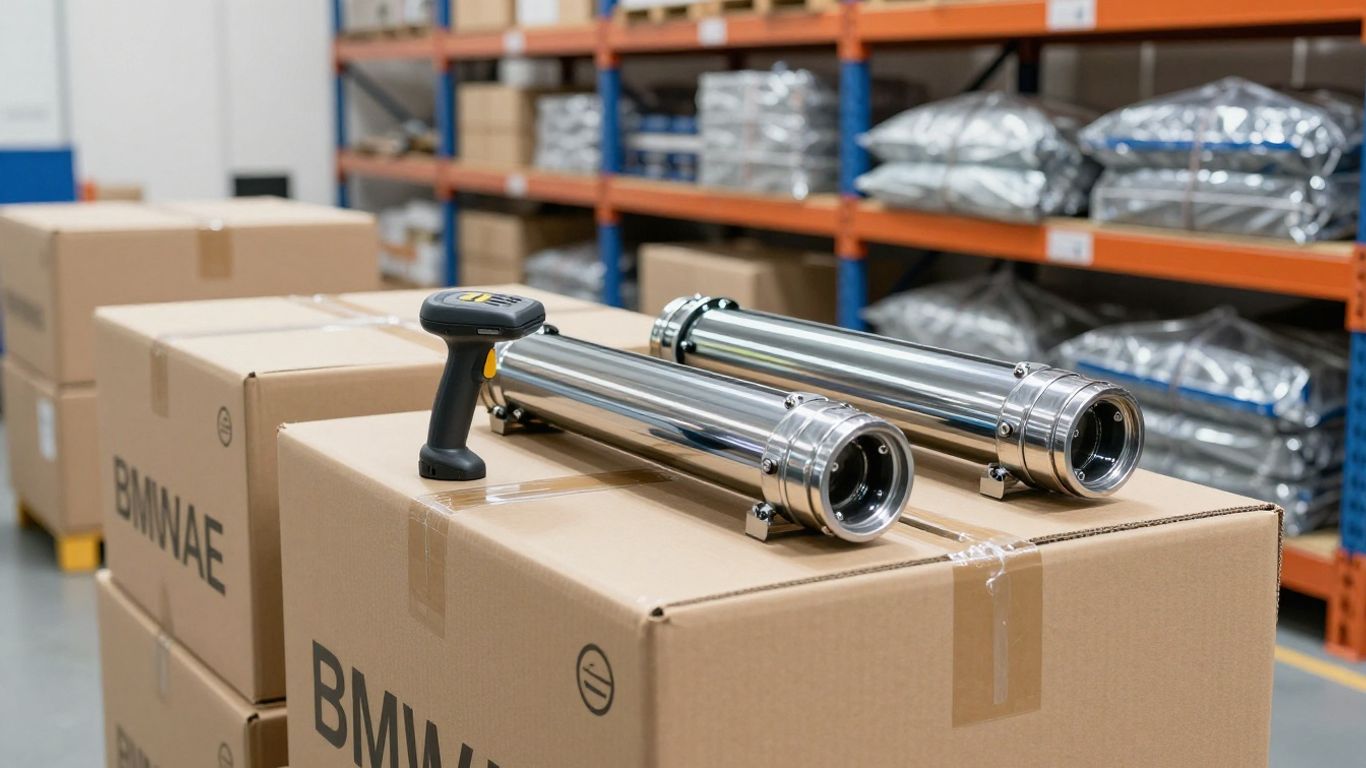
A part that exists in a catalog but cannot be delivered reliably has limited value to a working repair facility. Ordering quality includes stock accuracy, response time, communication, and protection in transit. These details shape whether a vehicle stays on schedule or occupies a bay while the workshop waits for clarification.
Real-time stock visibility and backorder handling
Stock indicators should be specific enough to guide a decision. Ideally, the workshop can distinguish available inventory from supplier stock, expected replenishment, and an unconfirmed estimate. When an item is backordered, the supplier should communicate the status promptly and offer a sensible alternative only when its compatibility is confirmed.
A backorder is manageable when it is visible early. Hidden shortages are much more damaging because they consume labor time and leave the customer without a reliable completion date.
Delivery speed for urgent workshop repairs
Urgent work needs defined delivery windows rather than vague promises. Ask about order cutoffs, same-day dispatch, weekend handling, local delivery, and the process for correcting an address or part error. The right choice depends on the workshop’s location and workload, so measure actual performance over several orders.
Fast delivery is not useful if the wrong part arrives. Speed should be evaluated alongside fitment accuracy, tracking, and the supplier’s ability to resolve an exception.
Bulk ordering and recurring supply programs
Regular maintenance work may justify scheduled purchasing, standing orders, or volume arrangements. These programs can reduce repeated data entry and make frequently used items easier to plan, but only if quantities, substitutions, price changes, and cancellation rules are clear. Avoid committing to volume that the workshop cannot rotate through sensibly.
Review recurring supply arrangements against real usage. A modest discount is not attractive if it creates excess stock, ties up cash, or leaves the workshop with parts for vehicles it rarely sees.
Packaging, tracking, and damage prevention
Packaging should suit the part’s size, weight, fragility, and surface finish. Heavy components need protection against movement, while electronic and precision parts need appropriate cushioning and handling. Tracking information should be available early enough for the workshop to plan labor and customer contact.
On arrival, inspect the shipment before installation and record visible damage immediately. This simple habit separates transit issues from later installation or diagnostic questions and makes claims easier to support.
Analyze pricing and total purchasing value
Price comparison is useful, but the number on the invoice is only one part of purchasing value. A cheaper component can cost more after extra diagnosis, repeated labor, delayed delivery, or an unhappy customer. A workshop should compare options using the likely life of the repair and the consequences of failure.
Comparing genuine BMW and aftermarket pricing
Genuine and aftermarket parts should be compared by application, construction, warranty, and expected service life rather than label alone. Some jobs justify the added cost of a particular source, while others may be well served by a carefully selected alternative. The decision should be visible on the estimate so the customer understands what was chosen.
Do not assume that every aftermarket part occupies the same quality tier. Manufacturer information, technical data, and supplier support are more useful than a broad category name.
Understanding trade discounts and volume pricing
Trade pricing can improve margins, but a discount is meaningful only against the final delivered cost. Check whether the price depends on account status, minimum quantities, shipping thresholds, or a temporary promotion. Ask how price changes are communicated when a recurring order is involved.
Volume pricing works best when it follows predictable demand. It should not encourage the workshop to buy more than it can store, install, or return under the agreed terms.
Calculating lifetime cost instead of upfront price
Lifetime cost includes purchase price, installation time, expected durability, maintenance, warranty administration, and the risk of a repeat visit. For a frequently serviced vehicle, a small difference in part quality can affect workshop capacity across many jobs. For a rare repair, availability and support may matter more than a theoretical long service life.
A simple internal comparison can use three questions: how much labor is exposed, what happens if the part fails, and how difficult is replacement? Those answers often reveal why the lowest quote is not the lowest-cost choice.
Factoring in shipping, returns, and warranty costs
Add freight, packaging fees, return shipping, restocking charges, core handling, and diagnostic time to the comparison. Warranty claims can also involve labor evidence, inspection delays, and customer communication. These costs may be occasional, but they affect the supplier’s value over a year.
Keep records of credits, rejected returns, damaged deliveries, and repeat orders. The pattern is more informative than one unusually cheap or expensive transaction.
Choose a supplier that supports long-term workshop growth
A supplier becomes more valuable when it fits the workshop’s daily systems instead of creating another isolated task. Better lookup, dependable communication, and measurable service reduce small interruptions that accumulate across a busy month. The aim is not to outsource technical judgment, but to make good purchasing decisions repeatable.
Online catalogs and easy parts lookup
An online catalog should support searches by VIN, OEM number, vehicle details, and useful product attributes where available. Clear diagrams, supersession notes, stock status, and kit contents can shorten the path from diagnosis to order. Search quality matters most when the workshop is busy and the vehicle is already waiting.
Test the catalog with difficult examples rather than only common service items. A system that handles edge cases gracefully is more valuable than one that looks polished during a simple search.
Account management and technical assistance
A dedicated account contact can help resolve recurring issues, clarify unusual applications, and review purchasing patterns. Technical assistance should remain specific and traceable, with written confirmation when the choice carries significant cost or safety implications. Good communication also includes honest notice when the supplier cannot confirm a fit.
Set expectations for response times and escalation. The arrangement should work when a routine question becomes an urgent repair decision.
Integrations with workshop management systems
If a supplier offers integration with workshop management software, assess exactly what it connects and which ordering or catalog functions it supports. Do not assume that an advertised connection includes estimates, inventory synchronization, invoicing, or automatic fitment verification unless those functions are explicitly documented. The practical test is whether it removes duplicate entry without weakening approval controls.
Where no direct integration exists, consistent part-number formats and downloadable order records may still help. A simple, dependable workflow is preferable to a complicated connection that staff avoid using.
Measuring supplier performance with service KPIs
Supplier performance should be reviewed with the same care as any other workshop process. Useful measures include correct-first-time delivery, on-time arrival, backorder frequency, return resolution time, damage rate, credit accuracy, and average response time for technical questions. Track these over enough orders to distinguish a pattern from a one-off event.
The best supplier is the one whose reliability remains visible when the workshop is under pressure.
Use the results in quarterly reviews and discuss specific examples with the supplier. A strong relationship can improve when both sides can see the operational issue clearly, while persistent failures provide a rational reason to change purchasing habits.
Conclusion
Choosing a workshop BMW parts supplier is a practical decision about fitment, quality, availability, cost, and communication. Compare suppliers against real repair demands, document what happens after the order is placed, and favor the one that consistently protects technician time and customer trust.