

Key Takeaways
Buying mechanic BMW used parts can save money, but the right component still depends on careful identification and inspection.
- Confirm fitment with the VIN, part number, model year, engine, and trim.
- Ask how a used component was inspected, tested, stored, and removed.
- Compare the total installed cost rather than the purchase price alone.
- Treat electronic, safety-critical, and heavily worn parts with extra caution.
- Use a qualified mechanic when installation involves programming, calibration, or specialized tools.
Understand what makes used BMW parts different
Used components can be a sensible way to repair an older vehicle without paying new-part pricing. They are not automatically interchangeable, however, and a part that looks correct may still differ in software, connectors, dimensions, or mounting points. The safest approach is to treat every purchase as a fitment decision, not merely a bargain hunt. A little research before ordering can prevent a costly installation failure.
Why BMW parts require precise compatibility
Many BMW systems work together through mechanical, electrical, and software connections. Two vehicles from the same model family can have different brakes, sensors, body panels, control modules, or suspension components because of changes in engine, trim, production date, or optional equipment. Exact compatibility matters because an apparently similar component may not communicate correctly or may require different hardware. Give the mechanic the full vehicle information before accepting a recommendation.
Common terms used by salvage yards and sellers
Salvage yards use terms that describe where a part came from, how it was handled, and what assurance accompanies the sale. “Used” generally means removed from another vehicle, while “recycled” often describes a component recovered for reuse. “Tested” should prompt a follow-up question: tested for what, by which method, and with what result? The following distinctions help make seller language more useful.
| Term | What it usually describes | What to confirm |
|---|---|---|
| Used | A component removed from another vehicle | Donor vehicle, mileage, and visible condition |
| Recycled | A recovered component prepared for reuse | Inspection steps and storage conditions |
| Tested | A part checked for specified operation | The exact test and documented result |
| Core | An old component retained for return or rebuilding | Core charge, return deadline, and eligibility |
These labels are starting points rather than guarantees. Ask for the donor vehicle details and the seller’s written warranty before treating a term such as “tested” as proof of future reliability.
OEM, aftermarket, refurbished, and recycled parts
OEM parts are made for the vehicle manufacturer’s original specifications, while aftermarket parts come from an independent manufacturer and can vary in design and quality. Refurbished parts have generally been repaired or reconditioned, but the work performed differs from one supplier to another. Recycled parts are commonly original components recovered from a donor vehicle. Comparing these categories means asking what was changed, what remains original, and whether the part carries a return policy.
When used parts are a smart choice
A used part can make practical sense when the vehicle is older, the component is no longer easily available new, or the price difference is substantial. Exterior panels, trim, wheels, mirrors, and some mechanical assemblies may be good candidates when their condition is documented. The decision is less attractive when labor is extensive, failure could create a safety issue, or the part’s history is unknown. Consider the likely service life alongside the upfront saving.
Identify the BMW part you need
Correct identification is the foundation of a successful used-parts purchase. Start with the vehicle rather than a photograph or a casual description from a listing. Gather the VIN, production information, engine details, trim, and the number printed on the old component. This information gives both a mechanic and a supplier a much better chance of locating the right replacement.
Use the VIN to confirm fitment
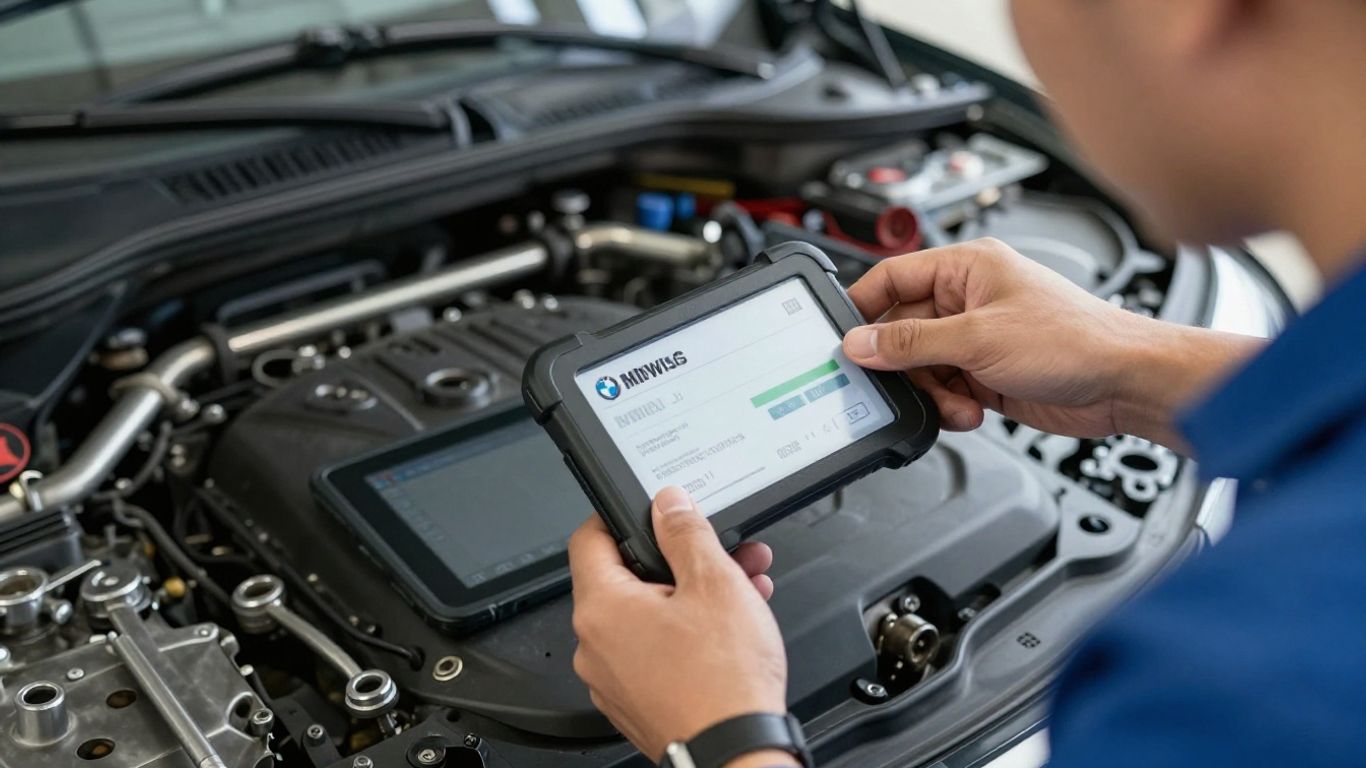
The VIN ties the search to a specific vehicle and can reveal details that a model name leaves out. Provide the complete VIN to the mechanic or supplier, then ask whether the proposed part was checked against it. VIN confirmation is especially useful when a model changed during a production year or when several powertrains shared the same badge. Keep the VIN private when posting publicly and share it directly with a reputable business.
Match the model year, engine, and trim
Model year alone rarely provides enough information. Engine type, transmission, body style, drivetrain, trim level, and factory options can all affect fitment. A cooling component, electronic module, or interior assembly may differ even when two vehicles look nearly identical from the outside. Write these details down before contacting sellers so that each quote is based on the same vehicle specification.
Read the part number and supersession details
Look for the part number on the component, its label, or the vehicle’s service documentation. A replacement number may supersede an earlier number, but that does not mean every older number is automatically interchangeable in every application. Ask the supplier to explain the supersession and to confirm the number against the VIN. Photograph labels and connectors before removal; those small details can resolve a dispute later.
Check left-hand and right-hand differences
Many body, suspension, lighting, and interior components are side-specific. “Left” and “right” are normally identified from the driver’s seated position, but listings can be unclear or use the seller’s viewpoint in a photograph. Confirm the side, mounting pattern, connector position, and any included hardware. A clear photo of the original part beside a reference point can help prevent ordering its mirror image.
Choose a reliable mechanic or used-parts supplier
The supplier and installer are part of the purchase decision. A low-priced component does not help if the seller cannot verify fitment or the mechanic discovers missing hardware after the vehicle is apart. Look for clear answers, written terms, and a willingness to discuss the part’s limitations. Good communication is often more revealing than a polished listing.
What to look for in a BMW mechanic
Choose a mechanic who regularly works on BMW vehicles and can explain the proposed repair in plain language. Ask whether the shop has the tools and diagnostic equipment needed for the particular system, and whether labor is quoted separately from the part. A careful mechanic will want the VIN and will flag programming, calibration, or one-time-use hardware before work begins. They should also be comfortable saying when a used component is a poor fit for the repair.
How salvage yards grade and test components
Grading systems vary, so never assume that an “A” or “excellent” grade has the same meaning everywhere. Ask whether the component was visually inspected, function-tested, cleaned, photographed before removal, or checked for corrosion. For engines and transmissions, request information about donor mileage and fluid condition when available. For electronic components, ask for the test procedure rather than accepting a general statement that the item worked.
Questions to ask before purchasing
A short conversation can expose missing information before money changes hands. Ask for the donor vehicle, mileage if known, part number, included hardware, storage history, test results, warranty period, and return conditions. Confirm whether the quoted price includes a core charge and whether shipping damage must be reported within a specific time. Written answers are preferable because they give the mechanic something concrete to review.
Warning signs of unreliable sellers
Be cautious when a listing has no part number, vague photographs, contradictory fitment information, or pressure to pay before questions are answered. A seller who refuses to state the return policy may leave you responsible for an unusable component. Excessive claims about universal fitment are another concern, particularly for modules, sensors, and side-specific parts. Walk away when the seller cannot identify the donor vehicle or explain how the part was tested.
Evaluate the condition and history of a used part
A used component should be judged on evidence, not on appearance alone. A clean exterior can hide corrosion, impact damage, worn seals, or electrical faults, while a dusty part may still be serviceable. Request close photographs of mounting points, connectors, labels, and surfaces that normally face away from view. If possible, have the mechanic inspect the component before installation.
Inspect visible wear, corrosion, and damage
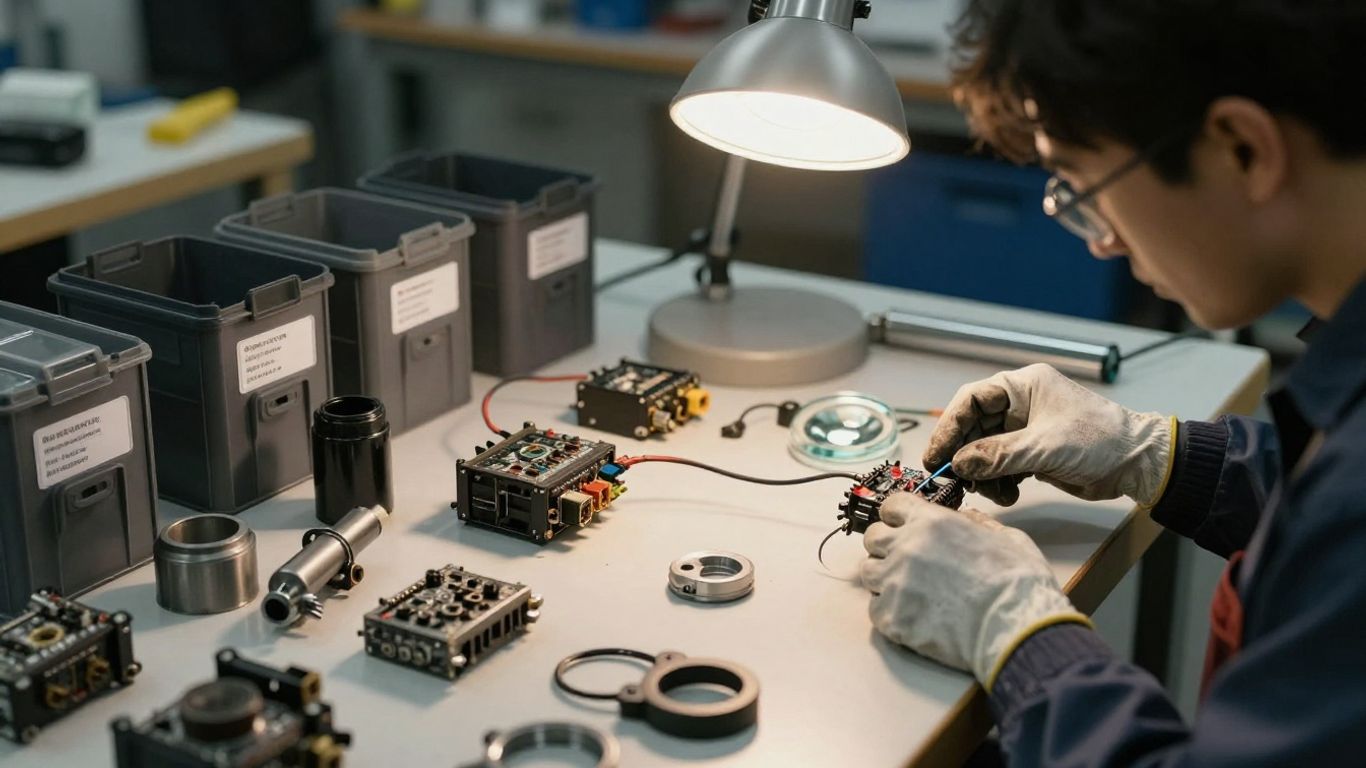
Look for cracks, bent brackets, stripped threads, fluid staining, deep scratches, and corrosion around fasteners or electrical contacts. Inspect rubber bushings, seals, pulleys, hoses, and plastic fittings because age can make them brittle even when the main assembly appears sound. Compare the replacement with the original before discarding the packaging. Any mismatch in shape, connector, or mounting point should pause the installation.
Review mileage and vehicle history
Mileage can help estimate wear, but it is only one piece of the history. A lower-mileage donor exposed to severe weather may be less desirable than a higher-mileage component that was properly maintained and stored. Ask whether the donor vehicle was involved in a collision, flood, fire, or long period of inactivity. When the history is incomplete, price the part as a higher-risk purchase rather than assuming the best case.
Check whether electronic parts were tested
Modules, sensors, instrument components, and other electronic parts deserve specific questions about testing. Confirm whether the component powered on, communicated with diagnostic equipment, and showed fault-free operation under the seller’s stated test conditions. Some parts may also require programming, coding, or calibration after installation. A written return policy is particularly valuable when compatibility cannot be fully confirmed until the vehicle is connected.
A used part is only a bargain when its risk is understood before installation.
That principle is useful when comparing two listings that look similar. The better choice may be the one with clearer testing, stronger return terms, and a known donor history rather than the one with the lowest advertised price.
Understand warranties, returns, and guarantees
Read the warranty before buying, including exclusions for labor, diagnostic fees, installation errors, and consequential damage. Check how long you have to report a defect, whether the part must be returned in its original condition, and who pays return shipping. Some guarantees cover replacement only, while others allow a refund. Ask whether the warranty applies if a mechanic installs the component or if programming is required.
Compare costs before buying mechanic BMW used parts
The purchase price is only one line in the repair budget. Installation time, diagnostics, programming, shipping, taxes, core charges, seals, fluids, and related hardware can change the result quickly. Ask the mechanic for an estimate that separates the component from labor and additional materials. This makes it easier to compare a used option with new OEM and aftermarket alternatives.
Calculate the total installed cost
Begin with the part price, then add labor based on the shop’s estimated installation time. Include diagnosis, required fluids, gaskets, fasteners, programming, alignment, and any likely follow-up work. If the component is difficult to access, a small purchase saving may disappear if it fails and the same labor must be paid twice. A written total helps you compare options on equal terms.
Compare used, new OEM, and aftermarket prices
Request comparable quotes for each category, using the same part number and fitment information. A new OEM component may cost more but offer predictable condition, while an aftermarket component may provide a different balance of price and warranty. A used original component can be attractive when its history is clear and the installation is straightforward. Do not compare a bare used part with a new assembly that includes hardware or accessories without adjusting the figures.
Factor in shipping, core charges, and taxes
Shipping can be significant for engines, transmissions, body panels, and other large components. Ask whether the price includes packaging, residential delivery, liftgate service, or insurance. Confirm the amount and refund rules for a core charge, including the deadline and condition requirements. Sales tax and shop handling fees should also appear in the final estimate, not emerge after the purchase is approved.
Know which parts should not be bought used
Some components deserve extra caution because failure can threaten safety or create extensive secondary damage. Airbag system parts, severely worn brake components, compromised tires, damaged seat belts, and parts with unknown flood or fire exposure are poor candidates when their history cannot be verified. Timing-related components and heavily stressed internal assemblies also require careful professional judgment. When the cost of failure is high, a new or professionally remanufactured option may be the wiser purchase.
Install and maintain used BMW parts safely
A sound component can still cause trouble if it is installed incorrectly or left unconfigured. Before work begins, confirm whether the repair involves torque specifications, fluid procedures, coding, programming, calibration, or alignment. Keep the old part until the replacement has been inspected and accepted. Careful installation protects both the vehicle and the value of the money already spent.
Decide whether professional installation is necessary
Simple trim or interchangeable hardware may be manageable for an experienced owner, but many repairs require specialized tools and procedures. Suspension, braking, steering, drivetrain, airbag, and high-voltage systems should be evaluated by a qualified professional. Ask the mechanic what the job includes and whether additional faults could be hidden until disassembly. The right time to choose professional installation is before the part is ordered, not after the vehicle is immobilized.
Confirm programming and calibration requirements
A replacement module or sensor may need programming, coding, initialization, or calibration before the vehicle operates correctly. Ask who will perform that work, whether it is included in the labor estimate, and what information the technician needs. Some systems may also require a wheel alignment or relearn procedure after mechanical work. Do not assume that a physically compatible part is ready to use immediately.
Test the vehicle after installation
The mechanic should inspect fasteners, fluid levels, connectors, and routing before starting the vehicle. After installation, check for warning lights, leaks, unusual sounds, vibration, steering changes, and proper operation of related systems. A controlled road test can reveal issues that do not appear in the workshop, but safety checks should come first. Report any new symptom promptly rather than waiting for it to worsen.
Keep records for future repairs and resale value
Save the invoice, part number, donor information, warranty, test results, mileage, and installation date. Note who performed programming or calibration and retain photographs when they document condition or fitment. These records help the next mechanic diagnose the vehicle and make warranty conversations easier. They can also give a future buyer a clearer account of the repair history.
Conclusion
Finding quality mechanic BMW used parts is a process of matching, questioning, inspecting, and pricing rather than simply choosing the cheapest listing. Use the VIN and part number to establish fitment, evaluate the seller’s evidence, calculate the full installed cost, and rely on a qualified mechanic for complex installation or programming. That measured approach makes a used component a more reasonable repair decision and reduces unpleasant surprises.